The video provides practical, actionable tips and resources for users of the AI model Claude, addressing common pain points like token limits and inefficient usage. The clear enumeration of skills and the promise of providing links upon commenting encourage engagement.
Summary
The video presents five skills for using Claude, an AI tool, more effectively. It covers a CLAUDE.md file for better coding behavior, a "caveman" mode for concise answers, NotebookLM for sourcing information, a Skill Creator for custom AI skills, and Whispr Analytics for processing voice notes into reports.
Structure
1Introduction to 5 Claude skills
2CLAUDE.md for coding
3Caveman mode for conciseness
4NotebookLM for sourcing
5Skill Creator for custom skills
6Whispr Analytics for voice notes
7
Original caption
5 Claude skills you absolutely cannot use Claude without ❌ #claude #claudeskills #github
More from @george.automates
Their other posts in the index, biggest breakout first.
Call to action for links
Product placement
The video discusses and showcases several tools and resources related to the AI model Claude, including CLAUDE.md, Caveman mode, NotebookLM, Skill Creator, and Whispr Analytics.
Call to action
Comment "skills" and I'll send you all 5 links
On-screen text
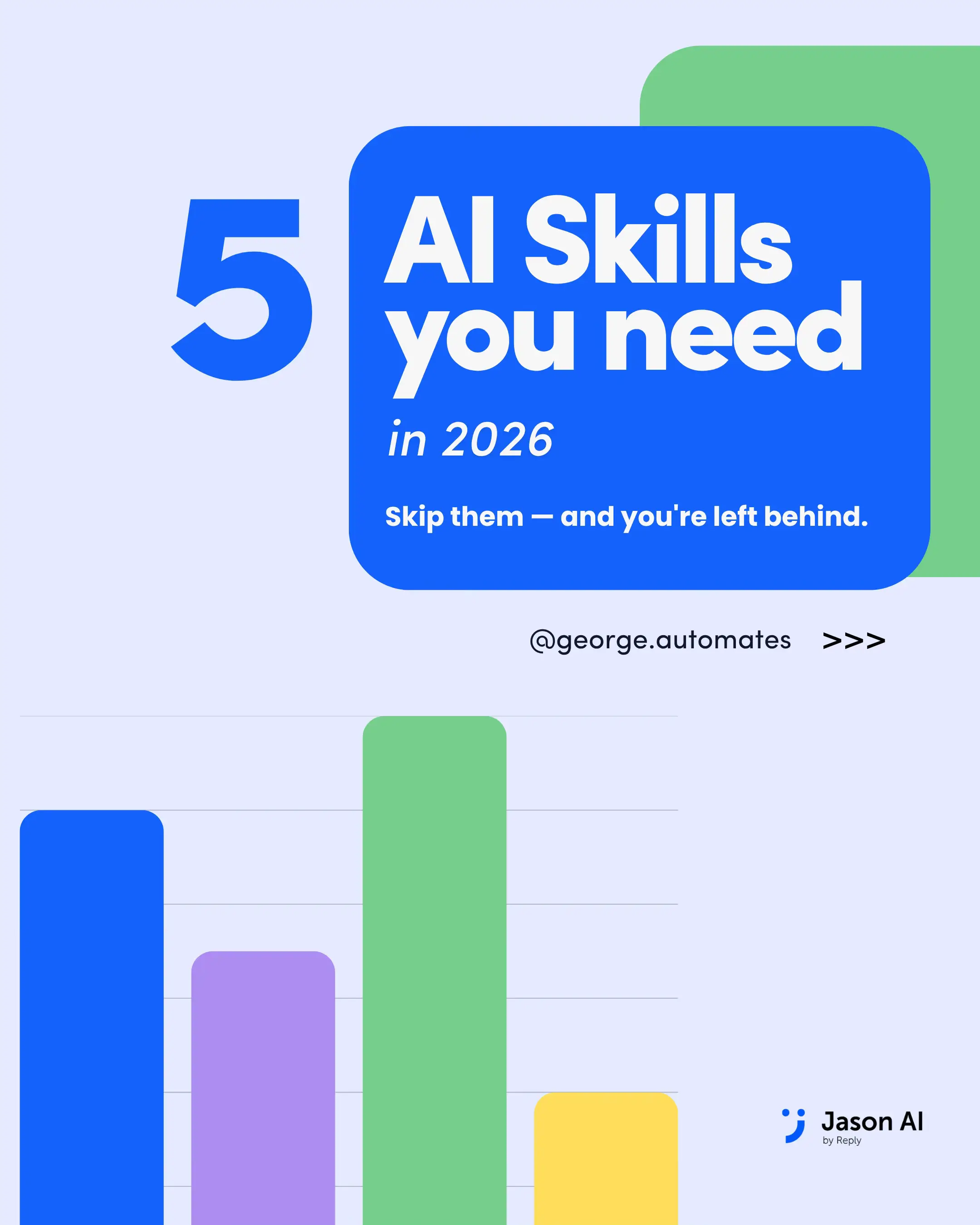
5 Claude skills
absolutely cannot
without in
2026
save this
Number 1
Karpathy's
CLAUDE.md
file that
worst habits
of every AI
110,000 stars on
GitHub
Number 2
caveman
cut 75% of
answers
no fluff
is the fix
Number 3
Notebook LM
lets Claude
Google's smartest
AI tool
source
The podcast
the summary
the slides
the mind map
Number 4
Skill Creator
Skill-creator
want to
and this skill
for you
Claude
more Claude
Number 5
Whispr Flow Analytics
Productivity & Workflow
Analyzes and manages Wispr Flow voice dictation data to provide users with advanced search, and automated exports.
Take
voice notes
into a
self-reflection report
patterns
obess over
insane for
founders and journalers
Comment
"skills"
send you
"skills"
all 5 links
Transcript
5 Claude skills you absolutely cannot use Claude without in 2026. Save this. Number one, Karpathy's CLAUDE.md. A single CLAUDE.md file to improve Claude code behavior, derived from Andrej Karpathy's observations on LLM coding pitfalls. It's the file that fixes the worst habits of every AI. 110,000 stars on GitHub. Just paste it in your project and Claude stops overcomplicating everything. Number two, caveman. Why use many token when few do trick. Caveman cuts 75% of your output tokens, keeps full technical accuracy. Brain still big. Mouth small. Same answers, but no fluff. If you keep hitting your Claude limit, this is the fix. Number three, Notebook LM. Lets Claude connect Google's smartest AI tool. Drop in any source. The podcast, the summary, the slides, the mind map. Number four, Skill Creator. A skill for creating new skills and iteratively improving them. At a high level, the process of creating a skill goes like this: Decide what you want the skill to do and roughly how it should do it. Write a draft of the skill. Create a few test prompts and run claude-with-access-to-the-skill on them. Help the user evaluate the results both qualitatively and quantitatively. While the runs happen in the background, draft some quantitative metrics or modify if you feel something needs to change about them. Then use the eval_viewer/generate_review.py script to show the user the results and quantitative metrics. Rewrite the skill based on feedback from the user's evaluation of the results (and from the quantitative benchmarks). Repeat until you're satisfied. It's OK to briefly explain terms if you're in doubt, and feel free to clarify comments. Creating a skill. Capture Intent. Start by understanding the user's intent. The current conversation might already contain the intent to "turn this into a skill". If so, extract answers from the conversation history first -- made, input/output formats observed. The user may need to fill the gaps, and should provide test cases. 1. What should this skill enable Claude to do? 2. When should this skill trigger? (what user phrases/contexts) 3. What's the expected output format? 4. Should we set up test cases to verify the skill works? Skills with objectively verifiable generation, fixed workflow steps) benefit from test cases. Skills with objectively verifiable generation, fixed workflow steps) benefit from test cases. Interview and Research. Proactively ask questions about edge cases, input/output formats, examples, etc. until you've got this part ironed out. Check available MCPs -- if useful for research (searching docs, finding similar skills, etc.). Anatomy of a Skill. SKILL.md (required). YAML frontmatter (name, description required). Markdown instructions. Bundled Resources (optional). scripts/ -- Executable code for deterministic/repetitive tasks. references/ -- Docs loaded into context as needed. assets/ -- Files used in output (templates, icons, fonts). Progressive Disclosure. Skills use a three-level loading system: 1. Metadata (name + description) -- Always in context (~100 words). 2. SKILL.md body -- In context whenever skill triggers (<500 lines ideal). 3. Bundled resources -- As needed (unlimited, scripts can execute without loading). These word counts are approximate and you can feel free to go longer if needed. Claude literally Claude making more Claude. Number five, Whispr Analytics. Take all your voice notes into a self-reflection report with your patterns, energy, what you obsess over. Insane for founders and journalers. Comment "skills" and I'll send you all 5 links.
 Claudeseen in 998 videos →