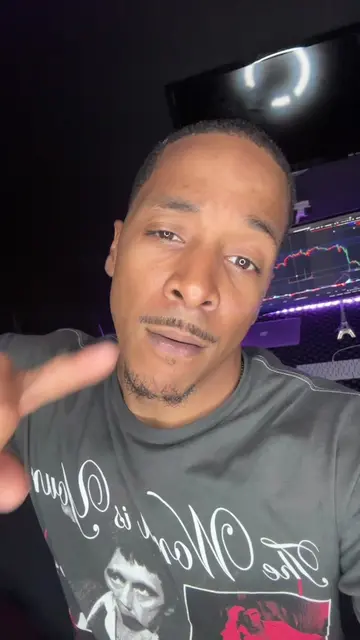
The video provides valuable educational content on trading terminology in a concise and easy-to-understand manner, using a popular AI tool (ChatGPT) as a reference. The creator's direct and engaging delivery, combined with clear visual aids (the list on screen), makes the information accessible to beginners.
Summary
The creator explains basic trading terminology using a list generated by ChatGPT. They cover terms like bid, ask, spread, market order, limit order, stop-loss order, take-profit order, volume, liquidity, volatility, bull market, bear market, support, resistance, long position, short position, and margin. The creator emphasizes the importance of understanding these terms for trading and highlights the benefits of using cash accounts over margin accounts.
3Explaining order types (market, limit, stop-loss, take-profit)
4Explaining volume, liquidity, and volatility
5
Original caption
Here’s some basic trading terminology you should know…long before trying any of the strategies I’ve posted…Like comment and share if you learned something today…@stocsncrypto #eachoneteachone #investingforbeginners #tradingtips #howtoinvest #stockstobuy #howtotradestocks #fyp #stockstobuy
More from @financiallyfashionable
Their other posts in the index, biggest breakout first.
Explaining market movements (bull, bear) and support/resistance
6Explaining positions (long, short) and margin
Product placement
tradingview.com: it is a website that displays financial market data, including stock charts and trading tools. It acts as a platform for users to analyze markets and make trading decisions. Removing it would change what happens in the video because the presenter is showing the website to explain trading terms. chatgpt.com: it is a website that provides AI-powered conversational services, used here to generate a list of trading terms. Removing it would change what happens in the video because the presenter is showing the website to explain trading terms.
Call to action
Like comment and share if you learned something today
On-screen text
Watch me explain some basic trading terminology
Transcript
Wait, don't scroll. I know you don't know me. but I'm about to push you on some free ass game. Hold on. Y'all already know. trading view.com. We looking at BTC, but we ain't really discussing the chart too much today. We going to talk about terminology. Hold on. It's some terms that you should know if you want to trade before you do a strategy anything. It's some basic terms that you should know. Wait, hold on. So I just went to chat GT. and type in 20th century stock trading terms, every trader should know. And it gave me a list. So we going to go through the list. Y'all know what the stock is. If you don't know what bed and ask is, I'm going tell you. The bed is where the buyers are, the ask is where the sellers are. Is that a symbol? The spread, the difference between the bed and the ask. This is important. options contracts mostly, but you can see a spread in pretty much every broker. Wait, hold on. Market order, limit order, stop loss, take profit. A market order. It's very simple. You just go in, push the buy button and buy it. That's a market order. A limit order is when you set a specific price that you want to buy at, then you press the buy button. It will not trigger us a buy until it gets to that point. A stop loss, a stop loss order is as simple as it sounds. It's the lowest point that you are willing to go before you get out of the trade. That's a stop loss order. A take profit order is the exact opposite of a stop loss. Take profit is where you want to get out of your trade. Very simple. Let's go to the next one. Wait, hold on. volume, the number of shares traded during a specific period. Don't get volume confused with the amount of people buying because it will confuse you. Volume is the amount of shares being traded. Not the amount of people trading those shares. Liquidity. How fast you can get in and out of a stock. Most new traders are liquidity. Volatility. This is a good one. Wait, hold on. Volatility. I trade volatile stocks. The stock need to go up, it need to go down. I don't want sideways movements. Not at all. Volatility means the stock is going up and going down. That's what Trump's been doing to the market for the past week. a bull market, prices are going up, bear market, prices are going down, very simple stuff. Support and resistance, that's the next one. Support is what the buyers are, the price don't really typically want to go below that and resistance is where the sell a lot. The price will go up there, but typically doesn't go past that. That's a simple definition of support and resistance. When people say you're going long, that mean you buying the market. When people say you're going short, that mean you selling the market. Now, most people can't sell the market unless you buy in put. If you don't know what a put is, I'll explain that later. But most people just know how to go long and that's where most people go wrong. You really need to be able to play the market both ways because the market just don't go down. It just don't go up. It does go sideways too. But three ways. You need to go up, you need to go down and if it's going sideways, just don't trade. Margin. Leverage, we ain't going to talk about leverage. We just want talk about margin. Margin is when you trading with somebody else's money. I don't do that. I have all cash accounts because I like cash accounts. And just to give you a tip, if you open up a cash account, the day trading rule just not apply to you. However much money you have at the end of the day in your trading account, you can trade as much as you want, as long as you're run out of money. There is no three-day trading rule with a cash account. That's why I don't use margin. Now, That's GT. You see how quick I did that? I googled it for y'all and then explained it for y'all. You could do that same thing. You could if you wanted to, but you know, I guess.