On-screen text
Most Think It's Just July 14...
Most people think there's just one
big date for ISO 20022—the
new financial messaging
standard set to shake up global
banking.
But XRP Holders Know Better
But that's a half-truth.
Because while July 14
is important...
the real tidal wave hits in November.
And most people aren't ready for
what that means.
So let's break this down in plain English.
Imagine ISO
20022 as a brand-new
language for money.
A universal translator that lets
banks, payment systems,
and even cryptocurrencies
communicate on the same level.
It's not just a tech update—it's like
switching the global
financial system from fax
machines to real-time
encrypted texting.
The Real Shift Hits in November
Now here's where it gets real:
On July 14, 2025, the United States
flips the switch.
The Fedwire Funds
Service—the
system that handles trillions in
daily interbank payments—will
begin using ISO 20022
exclusively.
That means every major U.S.
bank will now speak this new
financial language.
But that's only the first phase.
The second date, and the one
nobody's talking about, is
November 22, 2025.
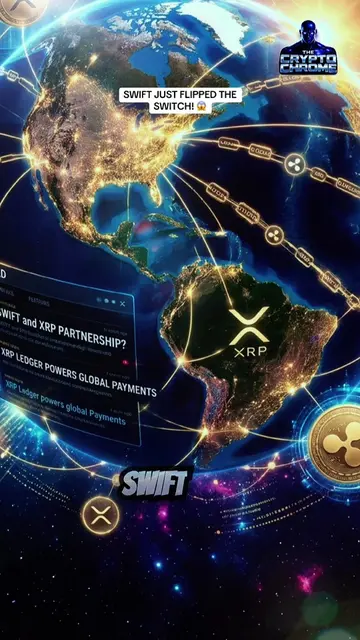
That's when SWIFT—the
backbone of global money
transfers—officially
drops support for the old message
system.
After that, any bank, anywhere in
the world,
will need to be ISO 20022
compliant
to process international
payments.
So what does this have to do with crypto?
Well, not all
cryptocurrencies are ready for this
new era.
But a select
few are already ISO
20022-compatible.
XRP Is Ready. Are You?
These are the projects that built
themselves to plug directly into the
financial system of the future.
Leading the pack is XRP.
This isn't hype—it's fact.
Ripple,
the company behind XRP,
literally sits on the ISO
20022 standards committee.
From the start,
XRP was designed to handle fast,
low-cost cross-border
transfers.
And now,
the rails it
was built to run on are becoming the
global standard.
Only a Few Coins Are Ready...
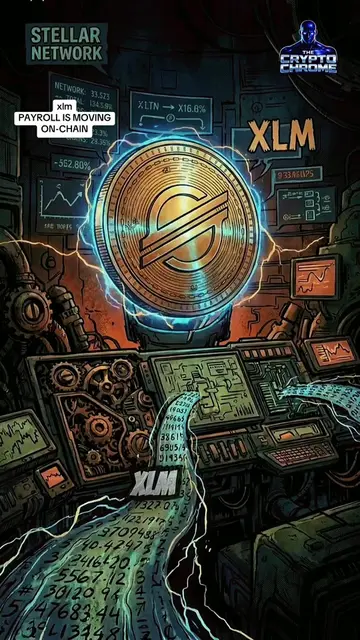
Then there's Stellar
(XLM)—built for speed
and financial inclusion.
Hedera
(HBAR)—an
enterprise-grade powerhouse
already aligned with ISO
protocols.
XDC Network—a blockchain
tailored for global trade finance.
Algorand (ALGO), Quant
(QNT), Cardano (ADA), IOTA,
even Verge (XVG)—each of
them has integrated
or achieved alignment with
the ISO 20022 standard.
But here's what might surprise
you: Bitcoin (BTC),
Ethereum (E.T.H), and Solana (SOL)
aren't on the compatibility list.
They're the giants
of crypto, but they weren't built
with financial messaging in
mind.
They speak their own language,
not the one banks are switching
to.
That doesn't make them
obsolete—but it does make
integration harder.
And in a world that's rapidly
standardizing,
assets that can't plug in might start
getting left behind.
Meanwhile, Zebec (ZBCN) is
catching up fast.
Here's where it gets interesting.
Zebec isn't on the certified list—yet.
But they're actively building
toward it.
With partnerships
like Stellar and appearances at
ISO-aligned conferences,
Zebec ZBCN is doing the
groundwork to become fluent
in the new financial
language.
They're like a promising student
in an elite class—already
studying the textbook
while the rest of the class hasn't
even shown up.
So if you thought July 14 was the finish
line, think again.
That's just the warm-up.
The real
change—the one that could rewrite
the rules of global
finance—arrives in November.
And the coins
that are ISO 20022-native?
They won't just survive...
they'll lead.
Want more crypto videos?
Check out my playlist.
Remember this post is brought to
you by the Crypto Chrome.
Like, follow, share and repost this
video if you believe
that crypto is the future, and the
future is now.
Like
Follow
Repost
Like
Coment
Share
Share