Loading video…
All breakouts
7.4Text-HeavyListicle hookAI Tools
Hook
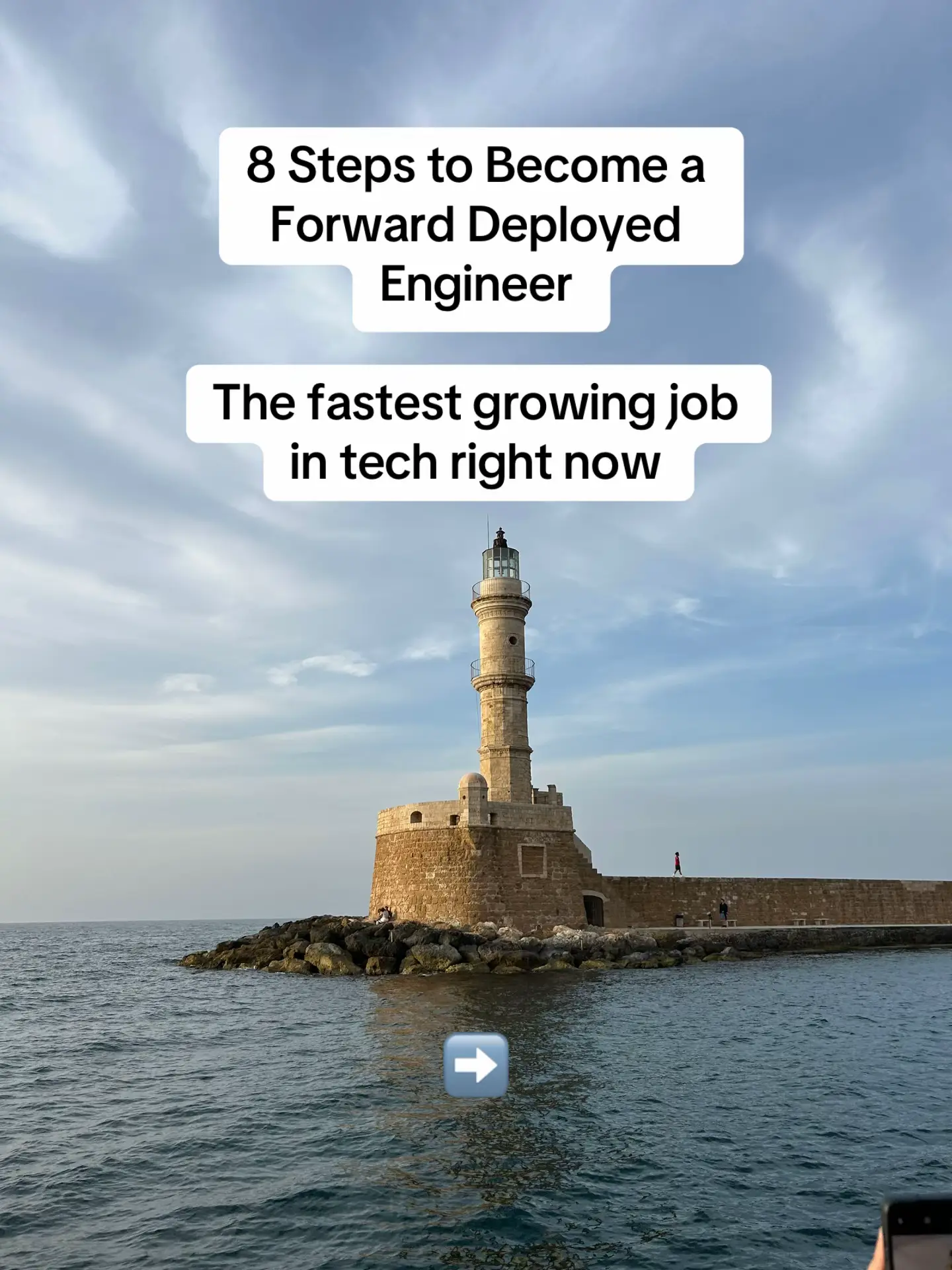
8 Steps to Become a Forward Deployed Engineer
@mohtheaiguy
2.5K followers · usually 341 views a post
Views
2.6K
Likes
86
Comments
2
Shares
4
Promoted product
Forward Deployed Engineer
Why it worked
The post provides a clear, step-by-step guide to a high-demand, high-paying job in tech, leveraging a visually appealing format with concise text overlays. It taps into career aspirations and the growing interest in AI-related roles.
Summary
This photo post outlines 8 steps to becoming a Forward Deployed Engineer (FDE), a rapidly growing job in tech. It details the necessary skills, experience, and mindset required for the role, emphasizing practical application and problem-solving.
Structure
- 1Introduction to the FDE role and its growing demand
- 2Building engineering foundations and gaining experience
- 3Learning AI and agentic systems
- 4Mastering systems integration
- 5Developing customer-facing and business translation skills
- 6Getting comfortable with ambiguity and problem-solving
- 7Learning to scope fast and define plans quickly
Original caption
Most people in tech have never heard of a Forward Deployed Engineer. That’s exactly why you should become one. FDE job postings grew over 1,000% in a single year. OpenAI, Anthropic, Palantir, Salesforce, Databricks, Ramp, they’re all hiring for it and competing hard. The median salary is around $174k and senior roles at frontier labs go well beyond that. The reason demand exploded is simple. Companies have spent billions deploying AI and most of it never made it to production. Not because the models were bad, but because no one could bridge the gap between a powerful product and the messy reality of enterprise infrastructure. That’s what an FDE does. You embed directly with customers, write production code inside their environment, manage stakeholders, and make sure the thing actually works. It’s part engineer, part consultant, part startup CTO. The role was pioneered by Palantir in the early 2010s and until 2016 they had more FDEs than software engineers. Now every serious AI company is building a dedicated FDE function. If you want a role that puts you close to revenue, close to real problems, and close to the cutting edge of AI deployment, this is it. Here are 8 steps to get there. #ForwardDeployedEngineer #AIEngineering #TechCareer #FDE #AIJobs
More from @mohtheaiguy
More breakout videos from this creator.