Loading video…
All breakouts
18.6Talking HeadHow-To hookAI Tools
Hook
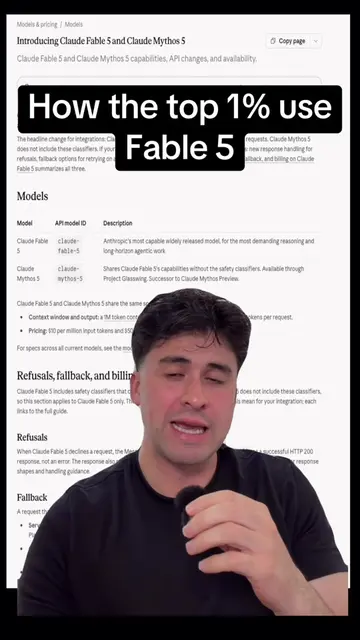
This is how the top 1% are using Claude's Fable 5
@luispdoesai
1.8K followers · usually 521 views a post
Views
11.8K
Likes
306
Comments
11
Shares
40
Why it worked
The video provides actionable, advanced techniques for using an AI model, appealing to users looking to optimize their AI interactions beyond basic prompting. The "top 1%" framing and the promise of a "value-packed breakdown" create intrigue and encourage viewers to watch until the end.
Summary
The video explains six advanced techniques for using Claude Fable 5 to improve AI performance. These include model routing, verifier sub-agents, dynamic workflows, worktrees, accumulating skills, and safety boundaries. The creator emphasizes that these methods allow users to leverage the AI more effectively than basic prompting.
Structure
- 1Introduction to advanced Claude Fable 5 usage
- 2Model Routing Stack
- 3Verifier Sub-Agent
- 4Dynamic Workflows
- 5Worktrees
- 6Skills That Accumulate
- 7Safety Boundary
- 8Conclusion and recommendation
Product placement
The video discusses and shows diagrams related to 'Claude Fable 5', an AI model, and its advanced usage patterns.
Original caption
This is how the top 1% are using Claude Fable 5. Not prompting it and closing the tab. Actually running it as a system that gets smarter every single run. Six things most people skip and it shows. Watch till the end. #AITools #ArtificialIntelligence #Claude #Fable5 #AIAutomation
More from @luispdoesai
More breakout videos from this creator.