Loading video…
All breakouts
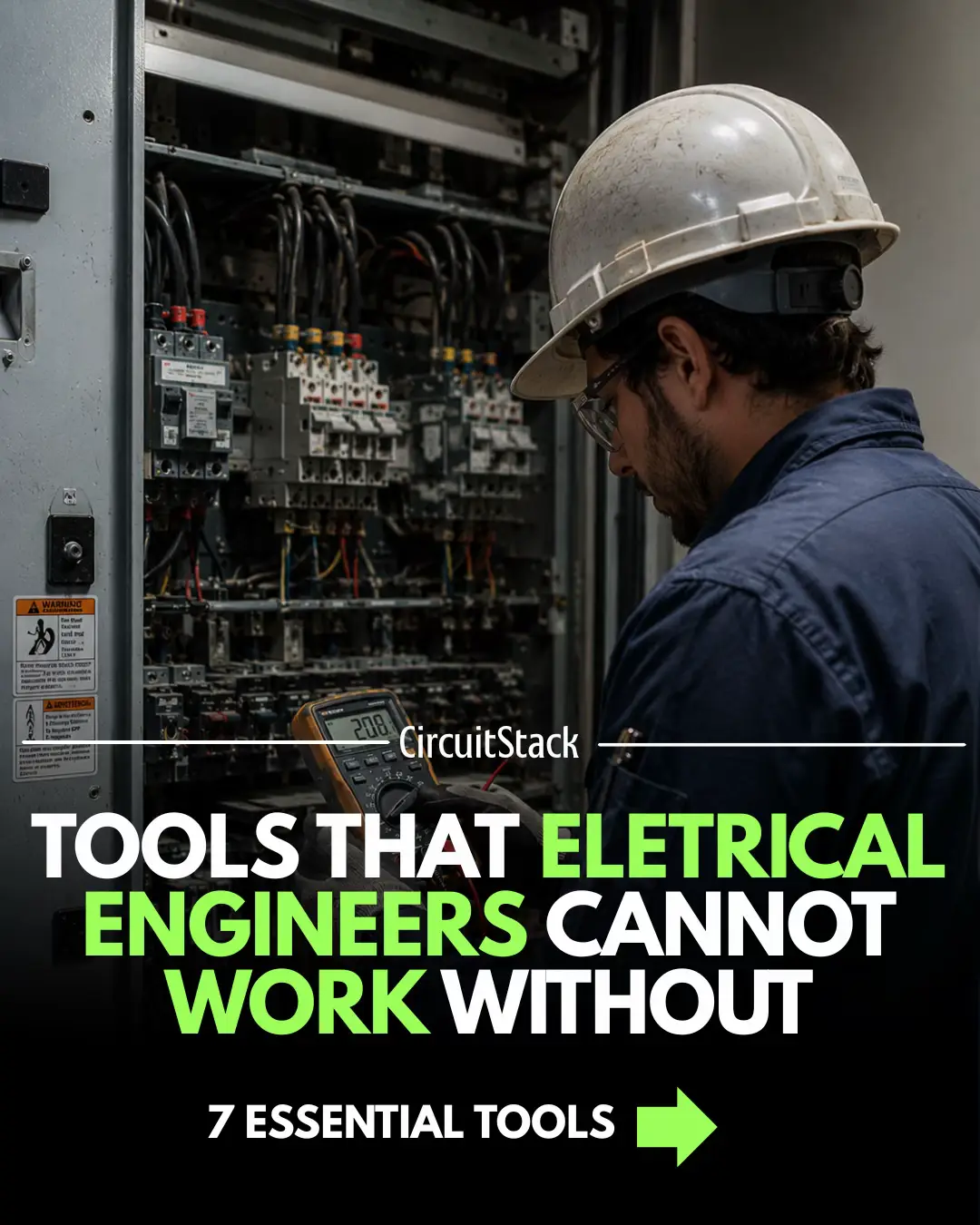
6.9Text-HeavyOther hookEducation
Hook
CircuitStack
@futureengineerhub
2.3K followers · usually 1.5K views a post
Views
9.5K
Likes
228
Comments
3
Shares
8
Why it worked
The post provides clear, concise, and valuable information about essential tools for a specific profession. The visual presentation of each tool, combined with a brief explanation of its use, makes it easily digestible and shareable for individuals interested in electrical engineering.
Summary
This photo post showcases seven essential tools for electrical engineers, detailing the function of each. It covers multimeters, oscilloscopes, breadboards, soldering irons, wire strippers, function generators, and power supplies, explaining their importance in testing, building, and troubleshooting circuits.
Structure
- 1Introduction of the topic: Tools for Electrical Engineers
- 2Showcase of Multimeter and its function
- 3Showcase of Oscilloscope and its function
- 4Showcase of Breadboard and its function
- 5Showcase of Soldering Iron and its function
- 6Showcase of Wire Strippers and its function
- 7Showcase of Function Generator and its function
- 8Showcase of Power Supply and its function
Product placement
Original caption
Electrical engineering is not just about solving equations on paper. A huge part of the field is knowing how to test, measure, build, and troubleshoot real circuits. Tools like multimeters, oscilloscopes, breadboards, soldering irons, wire strippers, function generators, and power supplies help engineers turn designs into working hardware. Each tool has a different job. Some help you measure what is happening in a circuit, some help you safely power it, and others help you build and repair connections. If you are learning electrical engineering, these are 7 tools you should get familiar with early. Which one do you think is the most important? #ElectricalEngineering #EngineeringStudent #Electronics #CircuitDesign #Tech
More from @futureengineerhub
More breakout videos from this creator.