Loading video…
All breakouts
6.5OtherHow-To hookEducation
Hook
Understanding 2-Wire 3-Wire & 4-Wire Transmitters
@noman.itaa
42.8K followers · usually 10.7K views a post
Views
44.0K
Likes
1.7K
Comments
11
Shares
156
Why it worked
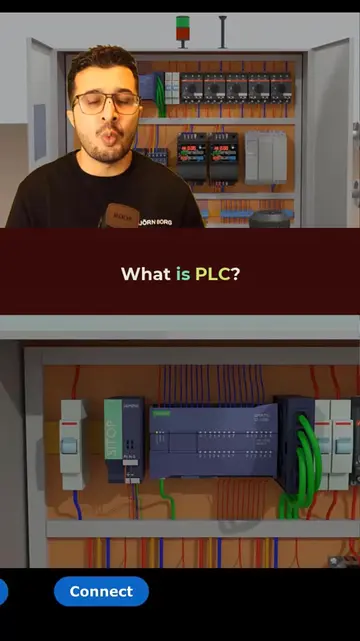
The video provides a clear and concise visual explanation of a complex technical topic, making it easily understandable for a target audience interested in industrial automation. The use of diagrams and clear labeling aids in quick comprehension and retention of information.
Summary
The video explains the difference between 2-wire, 3-wire, and 4-wire transmitter configurations in industrial automation. It visually depicts how each configuration connects a transmitter to a power supply and a PLC, highlighting their distinct wiring setups.
Structure
- 1Introduction to transmitter configurations
- 22-Wire Transmitter Configuration explained
- 33-Wire Transmitter Configuration explained
- 44-Wire Transmitter Configuration explained
- 5Visual comparison of the three types
Product placement
SIEMENS: it appears as a PLC brand, which is a type of industrial computer. Removing it would not change what happens in the video. It merely appears.
PLC: it appears as a type of industrial computer. Removing it would not change what happens in the video. It merely appears.
ITAA: it appears as a logo at the bottom left. Removing it would not change what happens in the video. It merely appears.
Muhammad Noman: it appears as a name at the bottom right. Removing it would not change what happens in the video. It merely appears.
On-screen text
Understanding 2-Wire 3-Wire & 4-Wire Transmitters
2-Wire Transmitter Configuration
Power Supply
+ (DC) -
4-20mA
SIEMENS
3-Wire Transmitter Configuration
Power Supply
+ (AC/DC) -
PLC
4-Wire Transmitter Configuration
Power Supply
+ (AC/DC) -
PLC
ITAA
in
Muhammad Noman
Original caption
Difference Between 2-Wire, 3-Wire & 4-Wire Transmitters If you work in industrial automation, you’ve probably used all three—but do you know when each one is the best choice? Here’s a simple breakdown: 2-Wire Transmitter (Loop Powered) • Power and 4–20 mA signal share the same two wires • Powered directly from the current loop • Simple, reliable, and cost-effective Best for: • Long cable runs • Hazardous areas • Pressure, level, temperature, and flow transmitters Avoid when: • The device requires more power than the loop can provide • Additional outputs or high-power electronics are needed 3-Wire Transmitter • Separate +24 VDC supply, signal output, and common • More power available than 2-wire devices • Isolation depends on the manufacturer Best for: • Higher power sensors • Panel-mounted equipment • Short to medium cable runs Avoid when: • Excellent noise immunity or guaranteed isolation is required 4-Wire Transmitter • Separate power and signal connections • Typically provides galvanic isolation • Can be powered by AC or DC Best for: • High-performance analyzers • Gas analyzers and specialty instruments • Long cable runs in electrically noisy environments • Applications requiring signal isolation Avoid when: • Lower installation cost is important • Space is limited • A simple loop-powered solution is sufficient Choosing the right transmitter improves reliability, measurement accuracy, and long-term system performance. Have you worked with all three types? Which do you use most often? #Automation #Instrumentation #IndustrialAutomation #PLC #DCS
More from @noman.itaa
More breakout videos from this creator.