Loading video…
All breakouts
3.7App DemoOther hookEducation
Hook
AT THE PAGE
@declanmidd
42.2K followers · usually 3.6K views a post
Views
9.2K
Likes
586
Comments
5
Shares
16
Promoted product
WebHawk
Why it worked
The video effectively demonstrates a practical cybersecurity technique using a specific tool, appealing to users interested in ethical hacking and web security.
Summary
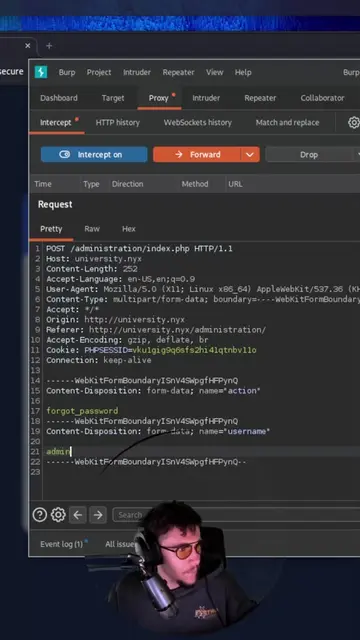
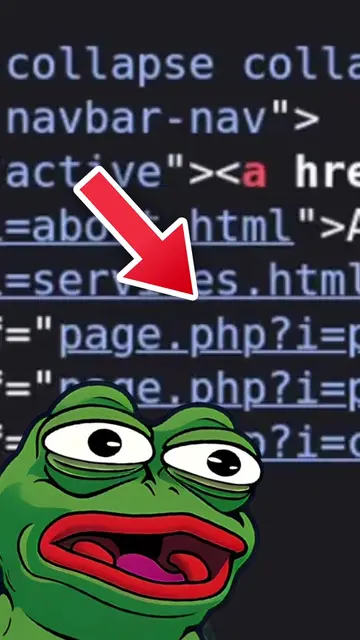
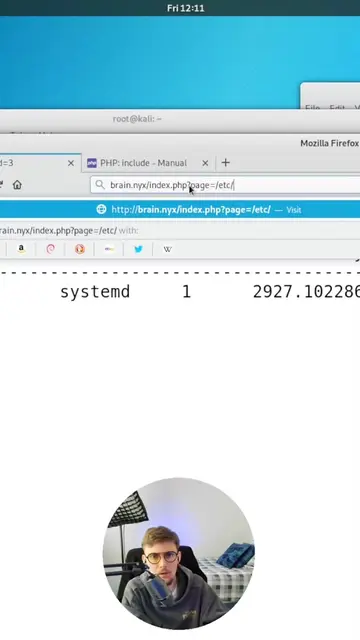
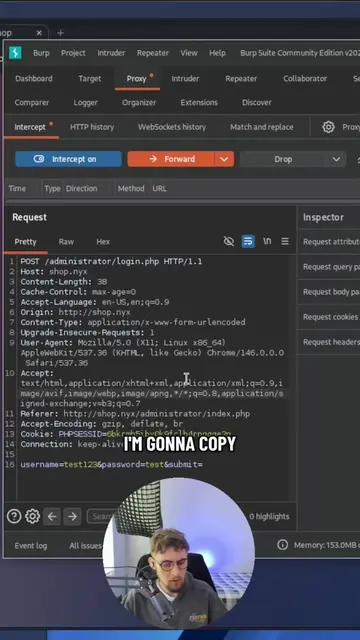
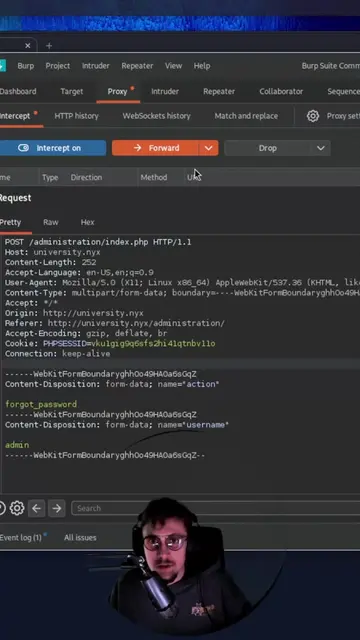
The video demonstrates how to use the WebHawk tool to identify Local File Inclusion (LFI) vulnerabilities on a target website. It shows the tool testing various LFI payloads and identifying a high-interest parameter that indicates a potential vulnerability.
Structure
- 1Identify potential LFI vulnerability with WebHawk
- 2Analyze 'page' parameter interest as 'high'
- 3Confirm LFI vulnerability with a successful technique
- 4Run WebHawk tool to crawl and scan
- 5Test different LFI payloads and encodings
Product placement
Original caption
🦅 WebHawk Hunting for LFI Vulnerabilities | Ethical Hacking In this clip, I’m using WebHawk, an LFI (Local File Inclusion) testing tool designed to help identify potential Local File Inclusion vulnerabilities during an authorized web security assessment. LFI vulnerabilities can allow unintended server files to be exposed if user input isn’t properly validated, making them an important class of web application security issues to detect and remediate. WebHawk helps automate parts of the testing process, making it easier for security professionals to assess applications and identify potential weaknesses more efficiently. ⚠️ Disclaimer: This demonstration was performed in an authorized lab/CTF environment for cybersecurity education only. Never test systems you do not own or have explicit permission to assess. 💬 Comment: WEBHAWK if you want to see more cybersecurity tools! 🦅 #CyberSecurity #EthicalHacking #WebHawk #LFI #WebSecurity
More from @declanmidd
More breakout videos from this creator.