Loading video…
All breakouts
6.8Text-HeavyListicle hookAI Tools
Hook
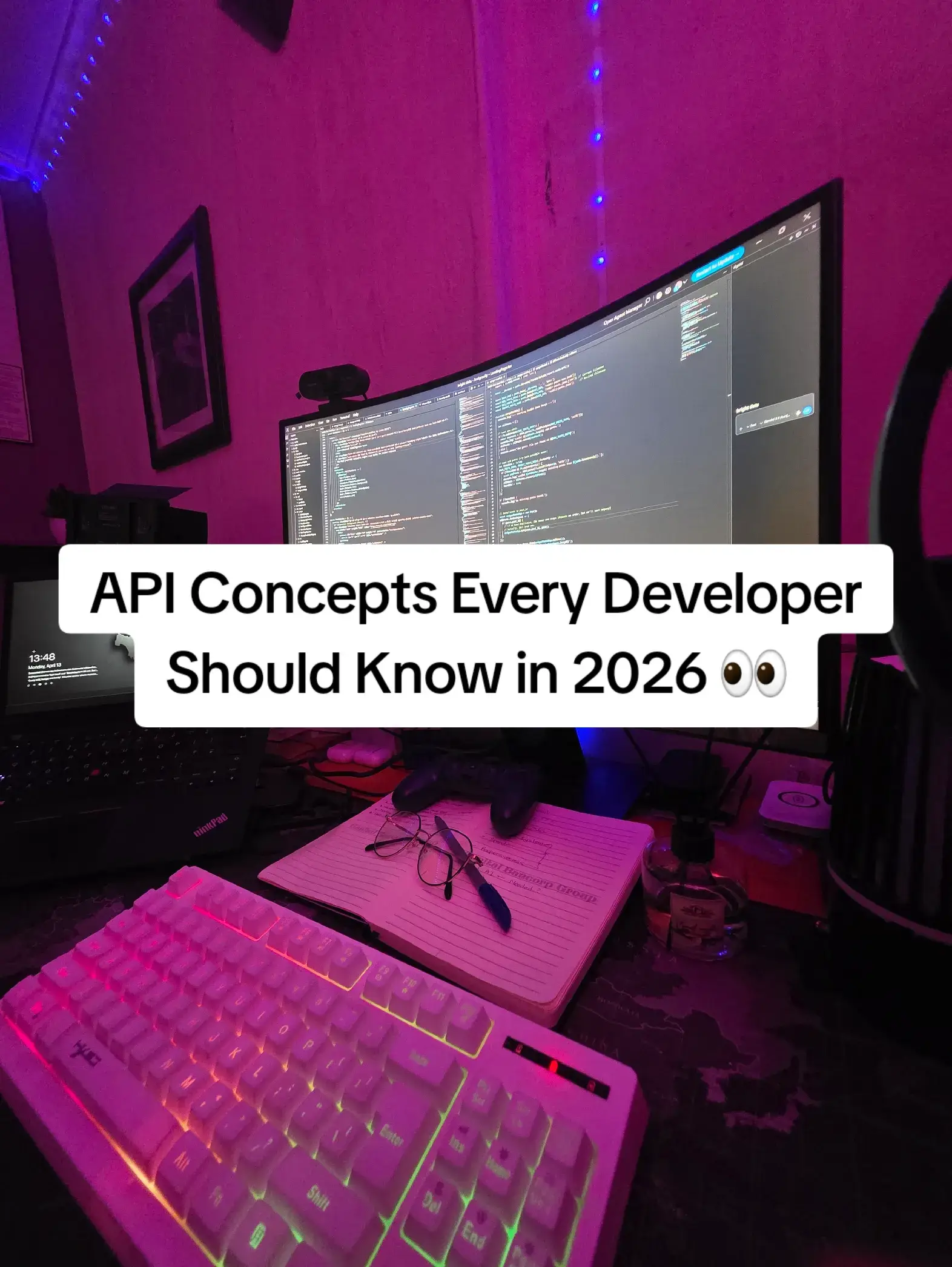
API Concepts Every Developer Should Know in 2026 👀👀
@its_baqi
77.5K followers · usually 3.1K views a post
Views
21.3K
Likes
1.4K
Comments
5
Shares
67
Promoted product
—
Why it worked
The video provides concise and valuable information on essential API concepts for developers, presented in an easily digestible format. The use of clear on-screen text and a visually appealing background likely contributed to its engagement and shareability within the developer community.
Summary
This slideshow explains key API concepts relevant to developers in 2026. It covers REST APIs, GraphQL, JWT, Rate Limiting, Pagination, Webhooks, API Versioning, and Idempotency, providing brief explanations for each.
Structure
- 1Introduction to API Concepts
- 2Explanation of REST APIs
- 3Explanation of GraphQL
- 4Explanation of JWT
- 5Explanation of Rate Limiting
- 6Explanation of Pagination
- 7Explanation of Webhooks
- 8
Original caption
#codingtiktok #coding #programming #softwareengineer #developer
More from @its_baqi
More breakout videos from this creator.