Loading video…
All breakouts
5.3Text-HeavyContrarian hookEducation
Hook
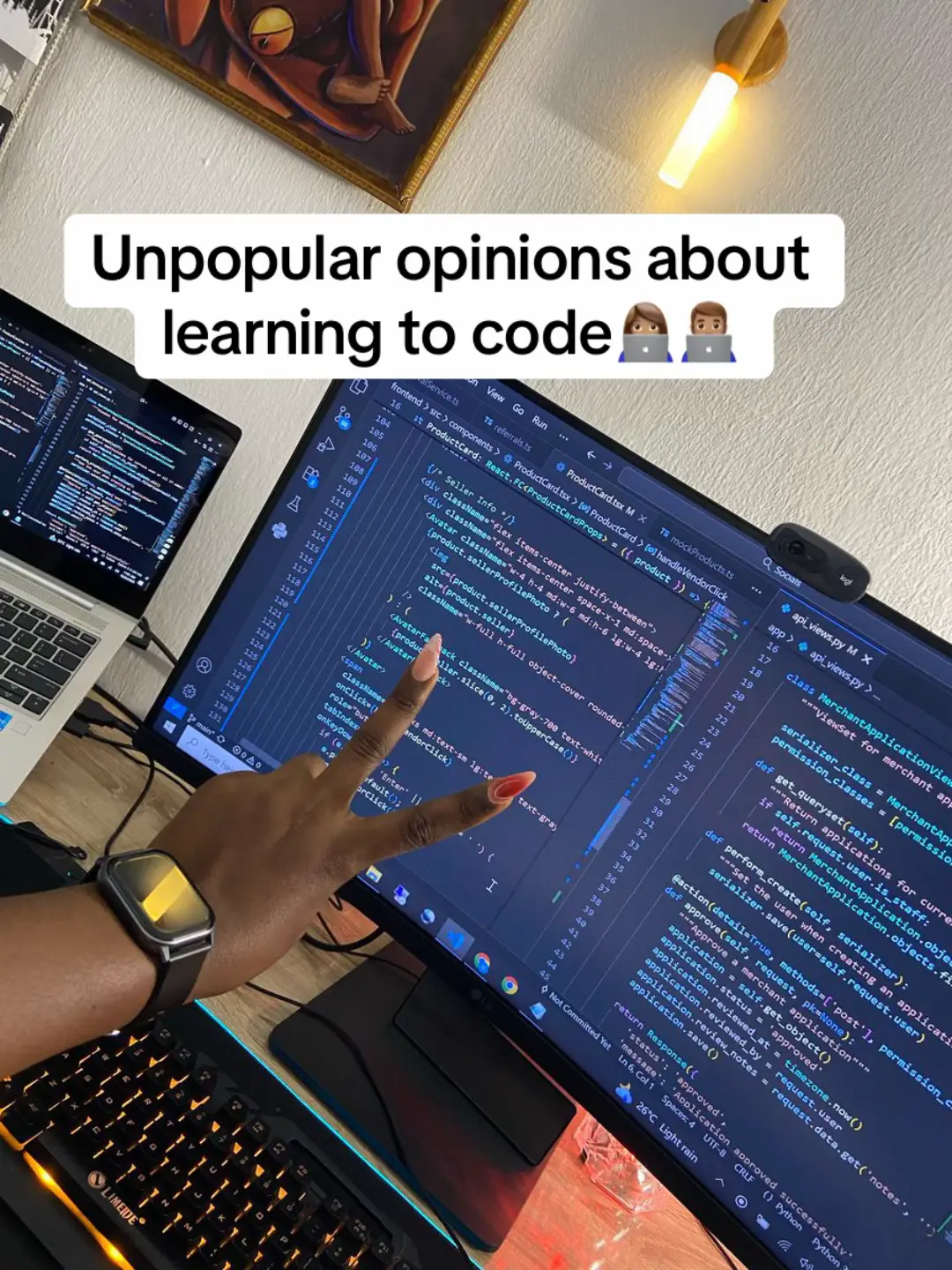
Unpopular opinions about learning to code 👩🏽💻👨🏽💻✨
@websitedesigner.ng
55.5K followers · usually 3.2K views a post
Views
16.8K
Likes
1.3K
Comments
27
Shares
27
Why it worked
The content directly addresses common anxieties and misconceptions aspiring developers have, offering reassuring and practical advice that challenges conventional wisdom. The "unpopular opinions" framing creates intrigue and encourages engagement from those who might feel discouraged by typical advice.
Summary
This slideshow presents nine unpopular opinions about learning to code, challenging common assumptions about the necessity of expensive equipment, life-changing outcomes, formal education, and daily practice. It emphasizes practical application, portfolio building, and understanding over rote learning and certifications.
Structure
- 1Introduction of unpopular opinions
- 2Challenging the necessity of coding for everyone and expensive tools
- 3Debunking the idea that coding automatically changes lives or requires a degree
- 4Addressing practice frequency, certificates, and code copying
- 5Highlighting the importance of real-world application and understanding
- 6Concluding that advanced math is not essential for many development roles
On-screen text
Unpopular opinions about learning to code 👩🏽💻👨🏽💻✨
1. Coding is not for everyone.
Enjoying technology does not automatically mean you will enjoy writing software. There are so many non-coding tech skills you can learn
2. You do not need an expensive laptop to start coding.
A basic computer is enough for learning and building many beginner projects. A laptop with 6GB RAM, 512GB disk, core i5 is okay for a start
3. Learning to code will not automatically change your life.
You still need to turn the skill into useful products, services, or opportunities. Above all you need to know how to market your skills or nothing for you.
4. You do not need a computer science degree to become a good developer.
Real projects, practice, and experience can take you very far. More on those instead.
5. You do not need to code every day.
What matters more is practising consistently and actually understanding what you build. If you miss a day, it's not the end of your learning.
6. Certificates are overrated.
Most people care more about what you can build than how many courses you completed. Focus more on building your portfolio and experience
7. Copying code is not always bad.
It only becomes a problem when you use it without understanding how it works. So don't feel bad when getting codes off Google, GitHub or AI
8. You do not need to understand everything before building projects.
A lot of concepts only make sense when you use them in real work. That's when real learning starts.
9. You can become a developer without being good at advanced mathematics.
Most web development work does not require complex maths. Your knowledge of basic maths is fine.
Original caption
Unpopular opinions about learning to code 👩🏽💻👨🏽💻✨ #learntocode #learncoding #coding #programming #computerscience
More from @websitedesigner.ng
More breakout videos from this creator.