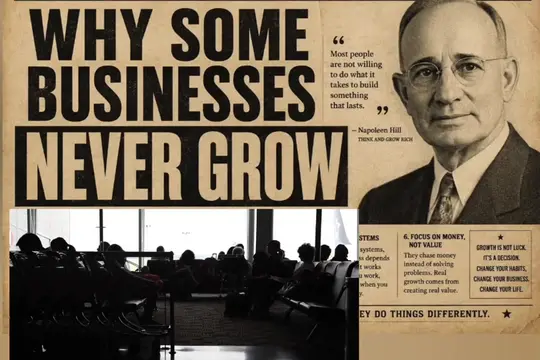
The video provides actionable advice and a clear framework for understanding wealth creation, resonating with viewers seeking financial improvement. The use of numbered points and relatable examples makes the concepts easy to grasp and apply.
Summary
This video explains the "Law of Value" as the principle that money flows towards those who create value by solving problems and developing useful skills. It emphasizes that true wealth comes from providing value to others, not just from working hard or appearing successful. The video encourages viewers to invest in themselves, develop valuable skills, and focus on solving problems to increase their earning potential and financial well-being.
Structure
1Introduction to the Law of Value
2Money as a reward for value and problem-solving
3Income connected to value and skills
4Focusing on becoming valuable, not just appearing so
5Finding and solving problems for opportunities
6The power of scalable value creation
7Becoming a person people want to pay
8Distinguishing value from price
Original caption
THE LAW OF VALUE — Why Money Flows Toward People Who Create Value Why do some people struggle financially despite working incredibly hard, while others seem to attract opportunities and wealth? The answer is value. In this video, you'll discover why money tends to follow people who solve problems, develop valuable skills, create useful products, and make life better for others. You'll learn: • Why working harder isn't always enough • How valuable skills can increase your income • Why solving problems creates financial opportunities • The difference between looking successful and becoming valuable • How to start creating more value with what you already know • Why investing in yourself can become one of your greatest financial assets Stop asking, “How can I get more money?” Start asking: “What valuable problem can I solve?” If you're serious about improving your financial intelligence, building wealth, understanding money, and developing the mindset required for success, subscribe to this page. 🔔 Use the SUBSCRIBE button to become part of the community and get access to more valuable money lessons, exclusive content, and eBooks created to help you develop a stronger financial mindset. Create value. Solve problems. Become valuable. #LawOfValue #MoneyMindset #WealthCreation #FinancialIntelligence #FinancialFreedom
More from @napoleon.hill.sec
More breakout videos from this creator.
9Investing in self-development for financial growth
10Building wealth through value creation and continuous improvement
Product placement
Napoleon Hill's "Think and Grow Rich" book APPEARS on screen, but it does not ACT in the video. Removing it would not change what happens in the video.
On-screen text
THE LAW OF VALUE
THE LAW OF VALUE
Transcript
The Law of Value. Why money flows toward people who create value. Why do some people struggle financially despite working incredibly hard, while others seem to attract opportunities and wealth? The answer is value. In this video, you'll discover why money tends to follow people who solve problems, develop valuable skills, create useful products, and make life better for others. You'll learn: • Why working harder isn't always enough • How valuable skills can increase your income • Why solving problems is key to wealth. What's the difference? Value. The marketplace doesn't simply reward effort. It rewards useful results. And once you understand this principle, you may never look at money the same way again. Today, we're going to break down the law of value, how it works, why it determines your earning potential, and most importantly, how you can use it to increase your income. Number one: Money is a reward for value. Let's start with a simple truth. Money is a medium of exchange. Someone gives you money because they believe what they're giving you is worth something. You buy food because the food satisfies a need. You pay a mechanic because you need your vehicle repaired. You pay a lawyer because you need legal expertise. You pay a designer because you need something created. You pay a teacher because you want knowledge. You pay a business because it solves a problem you don't want or know how to solve yourself. In other words, money moves towards solutions. If you want more money, don't begin by asking, "Where can I find money?" Ask, "What problem can I solve?" That question can completely change your financial life. Number two: Your income is connected to your value. Imagine two people. Person A works for eight hours every day, but performs a task that thousands of people can easily replace. Person B works for four hours, but has developed a rare skill that helps businesses generate more customers. Who is likely to earn more? Often, person B, not necessarily because person B works harder, but because the marketplace places a higher value on the problem person B can solve. This is why developing yourself financially is so important. You don't just work harder; you need to become more useful. Learn skills, improve your communication, understand sales, learn marketing, understand money, learn how businesses work, learn how to solve problems. Because every valuable skill you develop increases the number of problems you can solve, and every problem you can solve represents a potential opportunity. Number three: Stop trying to look rich. One of the biggest financial mistakes people make is trying to look valuable instead of becoming valuable. They want the expensive phone, the designer clothes, the expensive lifestyle. The appearance of success. But appearance doesn't create wealth. Value does. Imagine having a $5 million car, but no reliable income. Or a modest car, but possessing a skill that generates $1 million every month. Which person has greater financial power? The second person. Because wealth is not simply about what you own, but about what you can produce. Don't spend your entire life trying to convince people you're successful. Spend your time becoming successful. Number four: Find a problem people will pay you to solve. Here's something practical. Look around you. Problems are everywhere. People don't have enough time. Businesses struggle to find customers. Small businesses struggle with social media. People need transportation. People need food. People need education. People need entertainment. People need convenience. People need information. People need things repaired. Every problem represents a potential business opportunity. The question is not, "Is there money in the world?" The question is, "What problem can I solve better, faster, cheaper, or more conveniently than others?" That's where opportunity begins. Number five: The bigger the value, the bigger the opportunity. Think about it. If you help one person save $1,000, that's useful. But if you develop a system that helps 10,000 people save $1,000, you've created something much bigger. Scalable businesses can become extremely valuable because they aren't just exchanging time for money. They are creating systems, products, services, information, technology, or experiences that can serve many people. That's why successful entrepreneurs focus so heavily on systems and scale. Number six: Be a person people want to pay. Ask yourself these questions: What am I good at? What problems do people regularly ask me for help with? What problems have I solved before? What skills do I have that businesses are currently paying for? What can I learn within the next six months? What can I offer that genuinely improves someone's situation? These questions can help you discover opportunities. And don't underestimate small beginnings. You don't need to start with a massive company. You can start with one customer, one service, one product, one skill, one solution. Then improve, then expand, then build systems, then serve more people. Number seven: Give more value than people expect. Here's another powerful principle. Don't constantly ask, "How much can I take?" Ask, "How much can I give?" If someone pays you $100,000, and your service helps them make $1 million, your value is immense. If someone pays you $100,000, and they receive almost nothing useful in return, the price doesn't make the service valuable. Value is connected to what the customer receives in return. Number eight: Invest in yourself. If you want to increase your financial value, you need to invest in yourself. Read, study, practice, learn from people who understand what you want to accomplish. Make mistakes, correct them, try again. Your greatest financial asset may not be your bank account. It may be your ability to create income because money can disappear, markets can change. But if you possess valuable skills and the ability to solve problems, you can rebuild. That's why personal development is not just motivational entertainment. It can be an economic strategy. Number nine: Don't confuse value with price. Something can be expensive and still provide little value. Something can be affordable and provide enormous value. Value is connected to what the customer receives in return. If someone pays you $100,000, and your service helps them make $1 million, your value is immense. But if someone pays you $100,000, and they receive almost nothing useful in return, the price doesn't make the service valuable. Value is connected to what the customer receives in return. Number ten: The final lesson. Bring everything together. Money doesn't magically appear because you desire it. You need to create something people value. You need to develop skills, understand markets, become useful, and most importantly, keep improving. So the next time you're thinking, "How can I make more money?" ask, "How can I become more valuable?" Because your ability to create value increases your opportunities and can lead to greater wealth. Don't just dream about wealth. Learn how wealth is created. Financial intelligence, business, investing, wealth creation, financial planning, and the principles that successful people use to build wealth. Make sure you use the subscribe button on this page. Your subscription gives you access to more valuable financial content designed to help you think differently about money and make smarter financial decisions. Don't just consume motivation. Build financial intelligence.