Loading video…
All breakouts
507OtherOther hookEntertainment
Hook
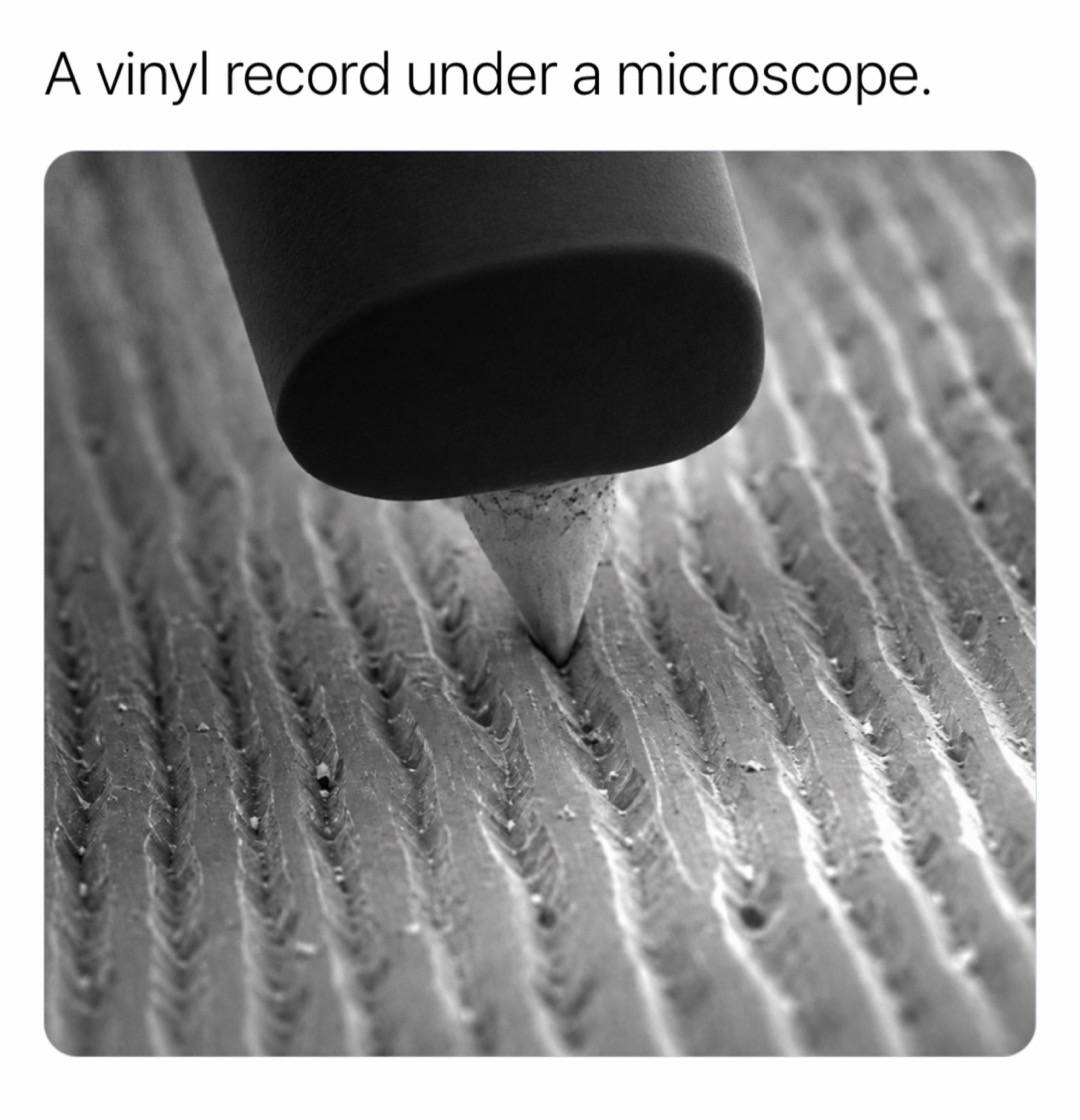
A vinyl record under a microscope.
@dailyhowthingswork
10.9K followers · usually 1.4K views a post
Views
727.0K
Likes
26.2K
Comments
61
Shares
2.0K
Why it worked
The post uses high-quality, visually satisfying microscopic imagery to satisfy curiosity about a familiar object, which is a classic format for educational engagement.
Summary
This post provides a microscopic look at the grooves of a vinyl record and explains the physical process of how a stylus converts those grooves into sound. It serves as an educational piece about analog audio technology.
Structure
- 1Introduce the subject of a vinyl record under a microscope
- 2Show the stylus interacting with the record grooves
- 3Display close-up imagery of the record's physical structure
On-screen text
A vinyl record under a microscope.
Original caption
A vinyl record stores music as physical movement carved into one continuous spiral groove. During playback, the stylus follows the groove's tiny variations and vibrates in response to every change in shape. The cartridge converts those vibrations into an electrical signal, which is amplified and played through speakers as sound. In stereo records, the two groove walls carry separate audio channels. Even the smallest dust particle, scratch, or damaged section can affect the stylus and become audible, which explains the familiar crackles and pops associated with vinyl.
More from @dailyhowthingswork
More breakout videos from this creator.