Loading video…
All breakouts
5.6Text-HeavyHow-To hookEducation
Hook
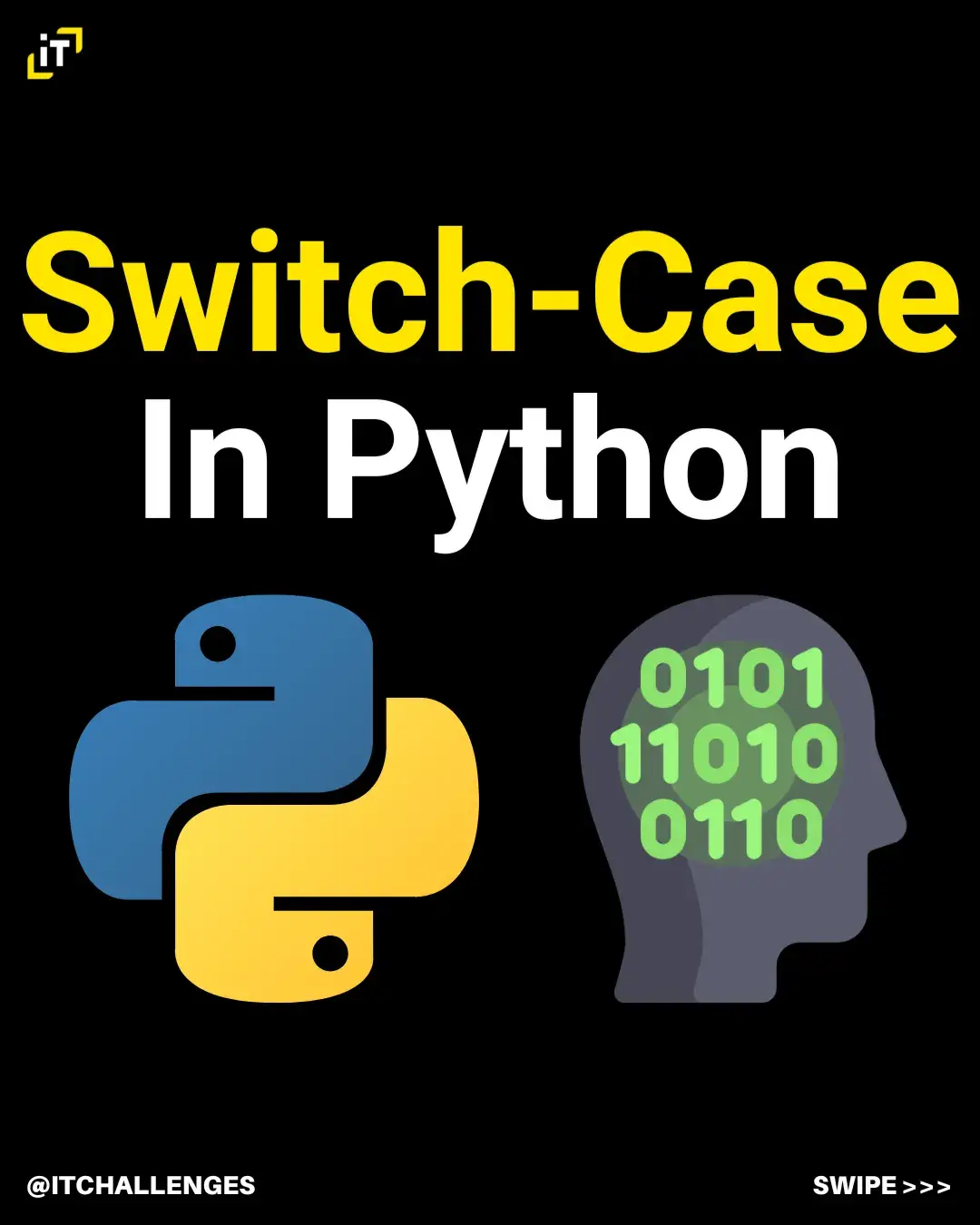
Switch-Case In Python
@itchallenges
13.0K followers · usually 2.5K views a post
Views
12.3K
Likes
361
Comments
5
Shares
11
Promoted product
IT Challengeshttps://zaap.bio/itchallenges ↗
Why it worked
The post provides valuable, concise educational content on a popular programming topic (Python switch-case statements), using clear visuals and code examples. It caters to a niche audience interested in programming and offers further content through the creator's profile, encouraging engagement and profile visits.
Summary
This post explains how to implement switch-case statements in Python. It first shows the traditional method using dictionary mappings and then introduces the newer 'Structural Pattern Matching' feature available from Python 3.10, demonstrating its usage with examples including wildcards and combined literals.
Structure
- 1Introduction to switch-case in Python
- 2Traditional method using dictionary mappings
- 3Introduction to Structural Pattern Matching (Python 3.10+)
- 4Example of match-case with simple cases
- 5Example with wildcard for default case
- 6Example combining multiple literals
Original caption
#python #pythonprogramming #pythoncode #pythoncoding #coding #programming
More from @itchallenges
More breakout videos from this creator.