Loading video…
All breakouts
12.6Talking HeadHow-To hookEducation
Hook
How to get REAL SCIENCE RESEARCH
@ivy_roadmap
113.3K followers · usually 7.6K views a post
Views
148.9K
Likes
12.3K
Comments
122
Shares
1.5K
Promoted product
Ivy League Roadmaphttps://stan.store/ivy_roadmap ↗
Why it worked
The video provides actionable, step-by-step advice on a high-value topic (getting research experience for college admissions) that is often perceived as difficult. By offering a clear, free learning resource (CS50) and a structured outreach strategy, it empowers students to take concrete steps towards their goals, making the advice highly practical and shareable.
Summary
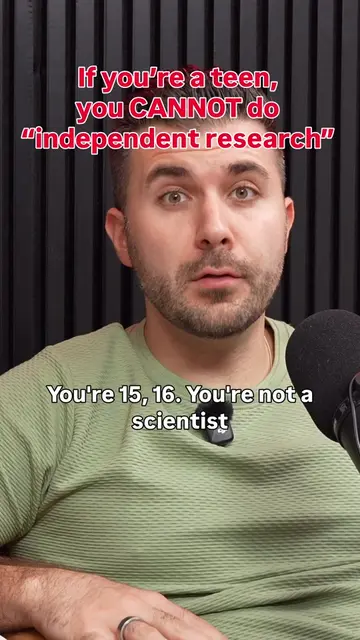
This video explains how high school students can secure science research opportunities as an "Ivy League admissions hack." The creator advises learning Python for data analysis, taking the free CS50 course on EdX, and then systematically researching and contacting professors with personalized emails. The strategy emphasizes demonstrating relevant skills and asking for referrals to increase the chances of securing a research position.
Structure
- 1Introduction: Science research as an Ivy League admissions hack.
- 2The challenge: Labs often don't allow high school students to do hands-on work.
- 3The solution: Focus on data analysis using programming languages like Python.
- 4Recommended resource: Free CS50 course on EdX for learning Python.
- 5Strategy: Compile a list of professors, research their work, and send personalized emails.
Original caption
SCIENCE RESEARCH IS AN IVY ADMISSIONS HACK!!! Ivy League colleges love it when aspiring stem students do science research because it is one of the few ways you can show true excellence in the field that you hope to join. Follow my advice step-by-step so that you can do science research while you’re in high school and have the best odds of being accepted into an Ivy League college. #scienceresearch #research #ivyleague #admissions
More from @ivy_roadmap
More breakout videos from this creator.