Loading video…
All breakouts
4.0Text-HeavyHow-To hookEducation
Hook
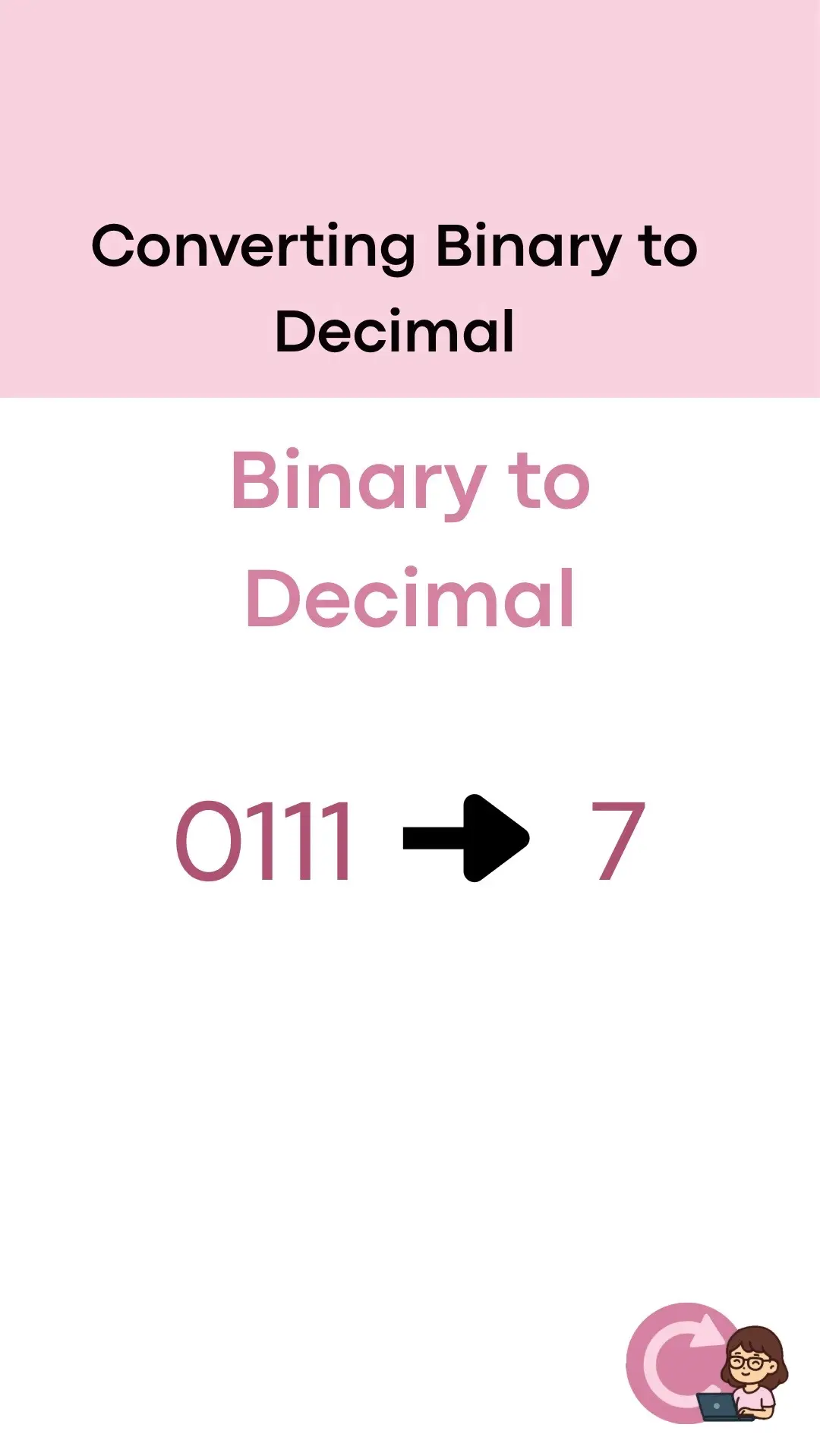
Converting Binary to Decimal
@thelearningloops
1.3K followers · usually 3.2K views a post
Views
10.7K
Likes
279
Comments
5
Shares
136
Why it worked
The content is highly educational and directly addresses a common point of confusion in computer science, making it valuable for students and learners. The clear, step-by-step visual explanation simplifies a complex topic, increasing its shareability among those seeking to understand number systems.
Summary
This slideshow explains how to convert binary numbers to decimal numbers. It breaks down the process into three steps: writing out powers of 2, calculating those powers where the binary digit is 1, and summing the results. A table of common binary to decimal conversions is also provided.
Structure
- 1Title slide: Converting Binary to Decimal
- 2Introduction with example: 0111 -> 7
- 3Step 1: Write out powers of 2
- 4Step 2: Calculate powers of 2 for '1' digits
- 5Step 3: Sum the results
- 6Table of binary to decimal conversions
- 7Branding slide: The Learning Loops
On-screen text
Converting Binary to Decimal
Binary to Decimal
0111 -> 7
1. Write Out Powers of 2
from right to left write out the powers of 2 for each digit
1 0 0 1
2³ 2² 2¹ 2⁰
Start from the power of 0 and keep counting up until your binary number has no more digits
2. Calculate Powers of 2
Calculate the powers of 2 where the binary digit is 1
1 0 0 1
2³ / / 2⁰
8 1
We don't need to calculate the power of 2 where the digit is 0 because when we multiply it with it's binary digit, the result is 0
ex: (2² x 0) = 0
3. Sum the results
Add up the result of each power previously calculated
1 0 0 1
2³ / / 2⁰
8 1
+
9
The decimal form of the binary number 1001 is 9
Binary to Decimal
Binary | Decimal
0000 | 0
0001 | 1
0010 | 2
0011 | 3
0100 | 4
0101 | 5
0110 | 6
0111 | 7
1000 | 8
1001 | 9
1010 | 10
1011 | 11
1100 | 12
1101 | 13
1110 | 14
1111 | 15
The
Learning_Loops;
@thelearningloops
Original caption
How to Convert Binary to Decimal #binary #numbersystems #computerscience #cs #thelearningloops
More from @thelearningloops
More breakout videos from this creator.