Loading video…
All breakouts
7.7Text-HeavyStory Open hookB2B
Hook
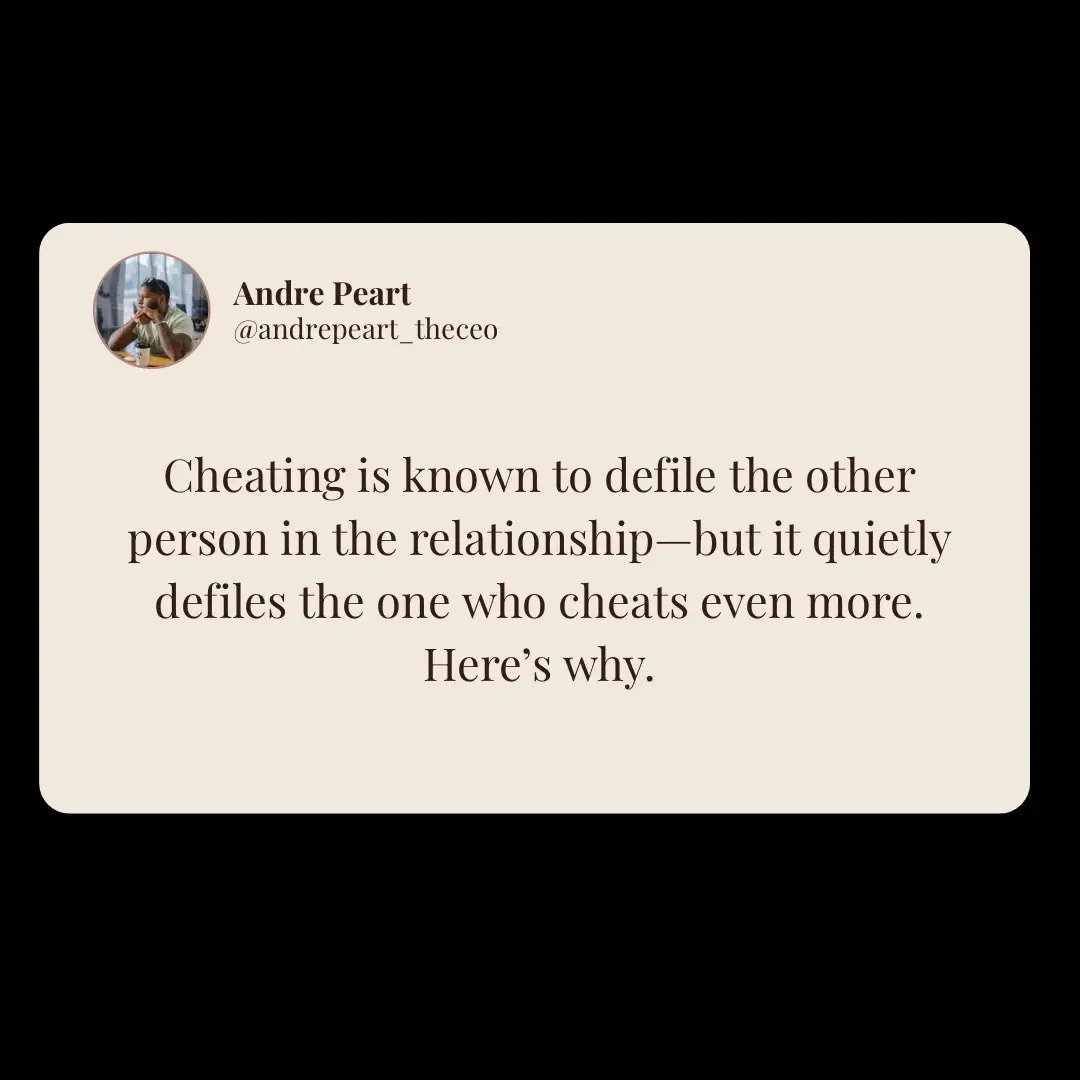
Cheating is known to defile the other person in the relationship—but it quietly defiles the one who cheats even more. Here's why.
@andrepeart_theceo
2.0K followers · usually 1.3K views a post
Views
10.0K
Likes
150
Comments
2
Shares
25
Why it worked
The post uses a provocative topic (cheating) and frames it as a self-help/personal growth issue, appealing to a desire for self-improvement and understanding complex human behaviors. The sequential reveal of reasons creates a narrative flow that encourages swiping through all the slides.
Summary
This slideshow explores the self-destructive nature of cheating, arguing that it harms the cheater more than the person being cheated on. It details how cheating erodes integrity, creates false comfort, and hinders personal growth.
Structure
- 1Introduction: Cheating defiles the cheater more than the betrayed.
- 2Reason 1: Cheating trains you to cope by betrayal instead of confrontation.
- 3Reason 2: Cheating creates false comfort and erodes integrity.
- 4Reason 3: Cheating interrupts growth and delays real progress.
- 5Reason 4: Cheating is spiritual, mirroring deception and destruction.
- 6Conclusion: Cheating reveals we are not who we think we are.
On-screen text
Andre Peart
@andrepeart_theceo
Cheating is known to defile the other person in the relationship—but it quietly defiles the one who cheats even more. Here's why.
Andre Peart
@andrepeart_theceo
Cheating keeps you comfortable in relationships you should've left. By the time their flaws start to bother you, you've already trained yourself to cope by betraying instead of confronting.
Andre Peart
@andrepeart_theceo
Cheating creates false comfort. Rather than leave or heal a relationship, you outsource relief—and that habit quietly erodes your own integrity and clarity.
Andre Peart
@andrepeart_theceo
Cheating takes the same time it would've taken to heal the relationship or leave it. But the comfort it offers doesn't just end love—it interrupts growth and delays real progress in life.
Andre Peart
@andrepeart_theceo
Cheating isn't just relational—it's spiritual. It mirrors the work of the enemy: deception, theft, and destruction. Left unchecked, it damages both life on earth and our walk with God
Andre Peart
@andrepeart_theceo
“In all, cheating shows us we are not who we think we are.”
Original caption
“Whoever commits adultery destroys himself.” — Proverbs 6:32 Cheating doesn’t only harm the person betrayed. It quietly corrodes the one who betrays—integrity, clarity, and spiritual alignment included.
More from @andrepeart_theceo
More breakout videos from this creator.