Loading video…
All breakouts 2 videos2 creators
6.1Talking HeadListicle hookAI Tools
Hook
1. AI powered apps inside claude
@qbuilder
11.2K followers · usually 1.2K views a post
Views
7.8K
Likes
297
Comments
8
Shares
54
Promoted product
Claude Projects
Summary
The creator showcases three advanced features of Claude Projects: building AI-powered apps within the chat interface, enabling persistent storage for artifacts to retain data between sessions, and integrating multiple GitHub repositories for Claude to access the entire project stack at once. These features transform Claude from a simple chatbot into a comprehensive development environment.
Transcript
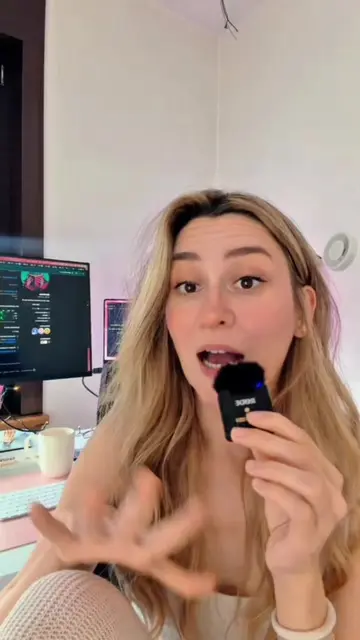
Three things inside Claude Projects that most people have no idea you can do. First one, honestly, blew my mind when I discovered it. So you can build a nap inside Claude where the app calls Claude's own API to do AI powered things. Basically, the app is calling itself. You can create a tool right inside the chat that has its own AI brain. Let's say I want a quick app that analyzes my Instagram comments and tells me what my audience is really asking for. And I built it as an artifact. So it calls Claude's API and it's an Audience Decoder. Paste in your Instagram comments, hit Analyze Comments, and it'll call Claude to group the comments by theme and suggest three video ideas based on what people are asking about. Make it look clean with a dark theme. This is for you. Let me first check the frontend design skill. So I created a file, read a file. Your Audience Decoder, paste in your IG comments, hit Analyze Comments, and it'll call Claude to group the comments by theme and suggest three video ideas tailored to your audience asking for. The 'sample' button pre-fills with 18 example comments. These samples are generated after the kind of comments you'd get on your code. Code content. The outputs include a title, opening hook, reasoning, and a dark theme. So it calls Claude's API and it's an Audience Decoder. Reading through comments... and it's a working AI powered tool that I built without writing a single line of backend code. The second one is something most people think is impossible. Persistent storage. Artifacts can save data that persists between sessions. Everyone thinks when you close a chat, everything disappears. But if you build an artifact with persistent storage, your data is still there next time you come back. So I could build a content tracker that logs what I post every day with the platform and the pillar. It should save between sessions so when I come back tomorrow my data is still there. No database needed. No backend. An artifact that remembers. And the third one is for anyone who builds across multiple repos. Claude sees your entire stack at once. So instead of Claude only seeing one repo at a time, you can connect more than one GitHub repo to a single Claude project. So instead of Claude only seeing one repo at a time, it can see your entire stack. I have my operating system repo, my skills repo, and whatever products I'm building, all loaded into one project. When I ask Claude to help me with something, it has the full picture. It knows my system, my skills, and the product code all at the same time. So these three things together turn projects from a chatbot into a full development environment. How to set all of this up, follow along.
Original caption
Three things inside Claude Projects that most people don’t know exist. First: you can build apps inside Claude where the app calls Claude’s own API, so you’re building AI-powered tools right inside the chat, no backend needed. I built a comment analyzer that reads my audience’s comments and tells me what they actually want to see next, and it took me five minutes. Second: artifacts can save data between sessions. Everyone thinks Claude forgets everything when you close a chat, but with persistent storage your data is still there when you come back. I use it to track what I’ve posted and what’s still pending without any external tool. Third: you can load multiple GitHub repos into one project. Your whole stack as context, I have my OS repo, my skills repo, and my product code all in one place, and Claude sees everything at once. Here’s the prompt I used to build the comment analyzer: “Build me a tool where I can paste my Instagram comments and it analyzes them, groups them by theme, and tells me the top 3 video ideas my audience is actually asking for. Use the Anthropic API to power the analysis.” #ai #Tech #developer #claudeai #tips
More from @qbuilder
More breakout videos from this creator.