Loading video…
All breakouts Locked — create a free account to open.Open on TikTokPro
No preview available · watch on TikTok below
1.8Education
Post
Post by @matt_martin_06
@matt_martin_06
11.3K followers · usually 1.8K views a post
Views
3.2K
Likes
112
Comments
0
Shares
1
We’re still analyzing this post.
Original caption
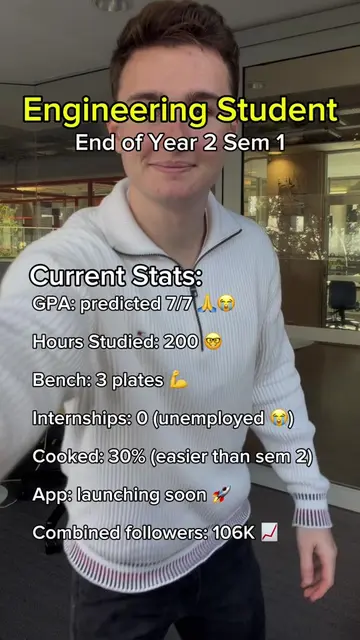
I graduated high school in the top 0.05% of my state. The thing that got me there wasn't being smart. It was one habit most students are too proud to start. 👇👇 Most people study like this: learn everything first, then test yourself at the end. I did the opposite. I tested myself before I was ready, on purpose. Here's why that works. Every wrong answer is feedback. And the speed you get feedback at is the speed you improve at. The gap between making a mistake and finding out you made it is the thing that quietly decides how fast you learn. Most students leave that gap wide open. They revise for weeks, then find out at the exam what they got wrong. By then it's too late to fix. The top students aren't smarter. They just close that gap faster. They fail early, fix it on the spot, and move on. So across my last two months of exams, I stopped waiting until I "felt ready." I'd attempt a problem, get it wrong, mark it straight away, and fix it before moving on. It felt worse at first. I got more wrong than friends who were still re-reading their notes, and I had to get over the pride of looking like I knew less. But I was collecting a hundred tiny corrections a day. They were getting none. This isn't just a study thing. Fast feedback is everywhere the best people are: - chefs taste the sauce as they cook, not after - pilots train in simulators that correct them in real time - athletes scrimmage instead of only watching film The tighter the loop, the faster the improvement. This is the exact reason I built Derive. On paper, the gap between making a mistake and noticing it can be twenty minutes, or never. Derive catches the mistake the moment you make it and shows you what went wrong, so the loop closes instantly instead of at your next study session. Comment "derive" and I'll send you the link. I post everything I learn about studying smarter as an engineering student. Follow along if you want more 🙂 #study #math #engineering #stem #student
More from @matt_martin_06
More breakout videos from this creator.