On-screen text
10 Albums to Get You Into Instrumental Hip Hop
1. DJ Shadow — Endtroducing.....
One of my five favorite albums of all time. Endtroducing..... turned crate-digging into composition itself — Shadow built an entire album's architecture from other people's castoffs, stitching dollar-bin funk breaks, spoken-word fragments, and half-remembered orchestral swells into something that felt less like a record and more like memory itself, edited. There are no original instruments here, only the patient art of recontextualization: a needle drop becomes a hook, a stray vocal becomes a thesis statement. It proved a sampler could be a compositional instrument with its own emotional register — and closed the genre's founding argument before it had fully opened: that the most expressive sound in hip-hop might be the sound of someone else's forgotten record, finally being heard.
2. The Avalanches — Since I Left You
Where Endtroducing..... mined melancholy from samples, Since I Left You mines euphoria — thousands of fragments (some say upward of 3,500) braided into a single uninterrupted flow, disco strings bleeding into a child's record-store narration bleeding into a horse-race announcer. The Avalanches treat the sample not as quotation but as raw material for a new organism, every seam smoothed until the album plays like one long, delirious sentence. It's instrumental hip-hop stretched toward maximalism and joy rather than introspection — a mixtape reimagined as a single, sustained exhale.
THE AVALANCHES
SINCE I LEFT YOU
3. J Dilla — Donuts
Donuts breaks the most basic rule of sampling — that a loop should resolve cleanly — and turns the glitch into a signature. Dilla chops soul and funk records mid-phrase, lets the seams show, drags the snare a fraction behind the beat until the track seems to stumble forward on purpose. Recorded largely from a hospital bed in the final months of his life, its 31 tracks rarely run past two minutes, fragments rather than songs, more sketchbook than statement. A producer treating imperfection as a form, building a posthumous monument out of loops that never quite resolve — the sound of a sentence finishing somewhere off the page.
DILLA JAY DEE
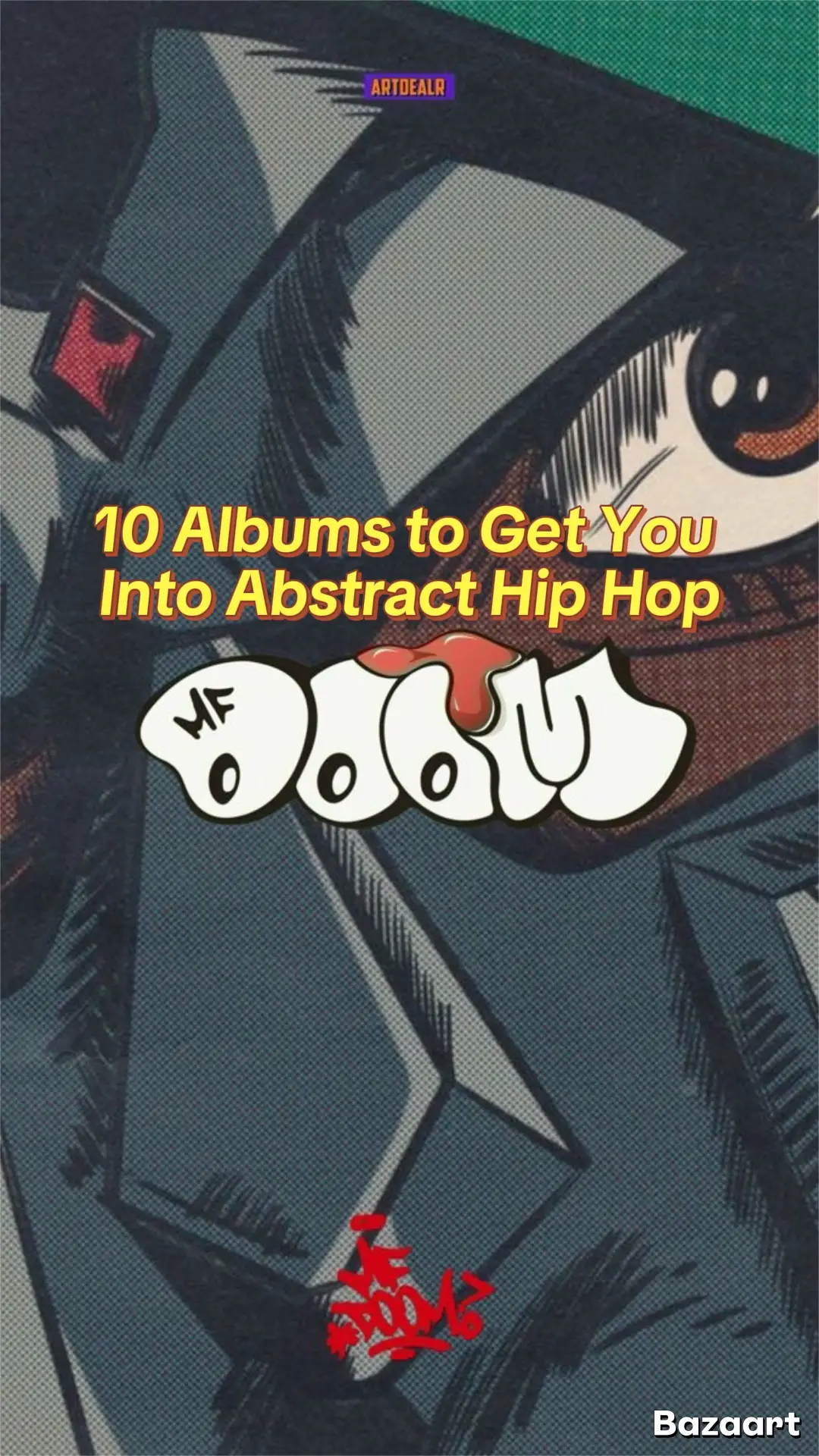
4. MF DOOM — Metal Fingers Presents Special Herbs: The Box Set Vol. 0-9
Strip away the rhymes from a DOOM record and what's left is its own artifact — that's the conceit behind Special Herbs, the producer-only catalog DOOM released as alter-ego Metal Fingers, each volume named for a spice as if the beats were ingredients in some larger recipe. The tracks are dusty, murky, built from horror-score strings and warped soul loops that always sound slightly haunted, miniature mood pieces that never needed a verse to justify their existence. By isolating the instrumentals from his own mythology, DOOM made an argument the genre rarely states outright: the beat was always the real character, and the MC just a guest in another villain's lair.
5. Nujabes — Modal Soul
Modal Soul folds the harmonic sophistication of jazz directly into hip-hop's rhythmic chassis — Nujabes voices chords like a pianist, not a crate-digger, layering modal jazz changes, bossa nova warmth, and soul vocal samples into productions that feel composed rather than collaged. It's a different kind of genre-breaking: less rupture than refinement, instrumental hip-hop reimagined as a vehicle for harmonic beauty, unhurried where its peers chase grit. A quiet blueprint for a generation of lo-fi and chillhop producers who never quite matched its precision.
6. Madlib — Shades of Blue: Madlib Invades Blue Note
Invited by Blue Note to raid its own vault, Madlib turned the assignment into a meditation on archival authority — reworking classic sessions from Donald Byrd, Wayne Shorter, and Ronnie Foster alongside his own jazz pastiches recorded under a half-dozen invented alter egos. The result blurs the line between remix and original composition until it's unclear which tracks are genuine '60s recordings and which are Madlib's lo-fi forgeries, a confusion that doubles as commentary on sampling itself: who owns a groove once it's been chopped, looped, and resold as something new? Instrumental hip-hop staged as historiography, a producer rewriting a label's canon from inside its own filing cabinet.
7. Yayayi — Yayayi
Yayayi treats anonymity and illegibility as production choices in their own right — the producer behind it remains a cipher, and the eighteen tracks carry titles made of slashes, brackets, and symbols that refuse to be read aloud. The album splits cleanly in two: a first half of slow, eerie, repetitive loops that feel like a machine thinking out loud, and a second half built from chopped-and-screwed acapellas, vocals dragged down into something molten and unrecognizable. A record born entirely of internet-era SoundCloud culture, instrumental hip-hop pushed toward pure texture and disorientation — where even the song titles are part of the static.
8. DJ Rozwell — None of This Is Real
None of This Is Real doesn't just experiment with sound, it experiments with the listening contract itself — the album comes with instructions to play it on shuffle, with a long crossfade, so no two listens unfold the same way. DJ Rozwell builds an elaborate fictional mythology around the music (the tracks are framed as audio recovered from zip disks found in a condemned apartment) and fills it with dungeon-synth drones, glitched-out fragments, and chopped-and-screwed vignettes ranging from twelve seconds to three minutes. A record that treats sequencing as compositional material rather than packaging — a meme-culture answer to the concept album, suggesting the genre's true new frontier might not be the beat at all, but the structure surrounding it.
9. Handsomeboy Technique — Adele Land
Adele Land takes The Avalanches' sample-collage maximalism and routes it through a Kyoto DJ's love of disco and funk, building a plunderphonic party record out of fragments stitched so tightly the seams disappear into pure momentum. Morino's samples don't sit and brood, they dance — disco strings, vocal snippets, and breakbeats collapsed into something closer to a remix set than a traditional album, joy treated as a structural principle rather than a mood. Evidence that the sample-collage strain could travel anywhere emotionally, landing here as sun-bright celebration rather than melancholy archaeology.
Handsomeboy Technique
Adelie Land
10. Hideki Naganuma — Jet Set Radio
Composed for a Dreamcast game about graffiti gangs on rollerblades, Jet Set Radio became one of the genre's stranger landmark texts: a soundtrack built from the same crate-digging instincts as any backpack-rap producer, but filtered through big beat's distorted breaks and an anything-goes sample policy pulling from funk records, political speeches, and old cartoons alike. Naganuma chops vocal snippets into rhythmic confetti and stacks them over aggressive, rock-inflected breaks, treating the sample less as homage than raw color. The video game score did comfortably alongside DJ Shadow and Madlib in the genre's bloodstream says something about instrumental hip-hop's elasticity — proof the form could absorb an entirely different medium's logic and still come out sounding like itself.
JET SET RADIO ORIG
Some Other Picks:
DJ Shadow — The Private Press
DJ QUAAQUALO — SUBLIMESCHITT
Soft Lipa — Winter Sweet
Various Artists — Niewidzialna nerka
DJ Shadow — Preemptive Strike
DJ Shadow — Live! In Tune and on Time
lokera — Asphodel Fields
SpaceGhostPurrp — Dark Angel Instrumentals
Yayayi — Sorry, square-brackets are not allowed in album titles. Please remove the square-bracket from your album title
Lil Ugly Mane — Three Sided Tape Volume One
Jay Dee — The Official Jay Dee Instrumental Series Vol.2: Vintage
Uyama Hiroto — Freeform Jazz
Pete Rock — PeteStrumentals
Odd Nosdam — Burner
Nujabes — Spiritual State
The Rockwood Escape Plan — Dreamcast Summer Songs
Meat Beat Manifesto — Storm the Studio
Clams Casino — Instrumental Relics
Knx — Anthology
Beat Conducta — Vol. 5: Dil Cosby Suite
OPEN 24hr
Bazaart