Loading video…
All breakouts
58.4Talking HeadOther hookOther
Hook
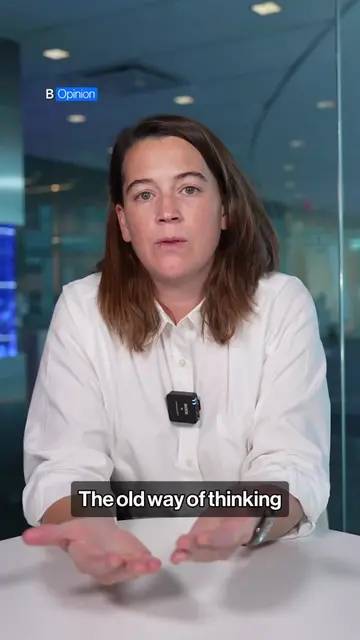
I'm a professor of constitutional law at Harvard
@bloombergopinion
336.0K followers · usually 3.4K views a post
Views
201.1K
Likes
29.4K
Comments
552
Shares
1.0K
Why it worked
The video provides high-level, expert commentary on a complex, timely news event, establishing immediate authority and delivering a clear, concise breakdown of the implications.
Summary
Noah Feldman explains two recent, contradictory Supreme Court rulings regarding the independence of the Federal Reserve. He argues that the court's inconsistent application of originalism versus pragmatism undermines the rule of law.
Structure
- 1Introduction to the Supreme Court's contradictory rulings on Fed independence
- 2Explanation of the 'independent agency' concept and the conservative majority's stance
- 3Analysis of the 5-4 decision exempting the Federal Reserve
- 4Critique of the court's inconsistent use of originalist and pragmatic arguments
- 5Implications for future political challenges to the Fed's independence
On-screen text
B Opinion
Noah Feldman
Legal columnist
and Harvard Law Professor
Transcript
I'm a professor of constitutional law at Harvard and I'm here to tell you that as of today the Supreme Court has let us know that the independence of the Federal Reserve Bank is hanging on by a single vote. In a 6-3 ideological opinion the Supreme Court first held that there is no such thing as an independent agency anymore in the United States today. This is something that goes back 100 years. An independent agency is any agency where the president can hire the people who run it but can't fire them unless he has good cause. And the whole idea there is we actually care about expertise and non-partisanship. So the conservative majority killed that. However, at the same time, in a separate 5-4 decision the court said that that does not apply to the Federal Reserve. They tried to give an originalist explanation for why this should be the case having relied on a somewhat bogus originalist theory to explain why there are no more independent agencies. What they said was in the 1790s and early 1800s the first and second banks of the United States were somehow in a relevant way enough like the Federal Reserve that that justified having independence. And the truth is it's not a very good originalist argument. It's basically a pragmatic argument designed to say that if we don't have Fed independence it'll be very, very bad for the economy. And indeed, it would have been bad at the time too if the bank of the United States didn't have independence. And they've got Alexander Hamilton on their side for that. But the bottom line is it's an argument for what we should do not an argument for the way things were several hundred years ago. Both opinions were written by John Roberts the chief justice but in the first one he had all the conservatives on his side and in the second one — preserving the independence of the Fed — he only had one conservative, Brett Kavanaugh and then he had the court's three liberals. The upshot is that the Supreme Court has given us two extremely contradictory opinions. And Justice Amy Coney Barrett, dissenting in the second one specifically said these cases are seriously in tension with each other. On the one hand, the justices want to act like we should go back in time and live as though we all wore powdered wigs. On the other hand, they still want to be practical and pragmatic to a certain degree — at least some of them do — and save us from economic disaster. You really can't have it both ways. In practice, this means that Donald Trump is still going to have a another crack, I suspect, at trying to undermine the Fed's independence. The Supreme Court invited him to try again to fire Lisa Cook, one of the members of the board of governors whom Trump doesn't like and whom he tried to fire in the first place. He didn't give her any opportunity to respond to the charges against her the first time. Now he has to give her that opportunity, but once he does he can still try to fire her. And we're off to the races again. If one member of the liberal team of three or if Chief Justice Roberts or if Justice Brett Kavanaugh were to happen to retire or get sick or have to step down from the Supreme Court the result would be that there would then — probably if they were conservative appointed — be enough votes to end Fed independence. I'm not a fan of originalism so in theory, I should be happy to see the pragmatists winning in the 5-4 decision. But the reality is if they're hypocritical and they use originalism when they think it serves a conservative end and then want to fall back on pragmatism they're undermining the rule of law and they're undermining the seriousness of the undertaking of the Supreme Court. It's bad for the country, it's bad for the economy, it's bad for all of us.
Original caption
The #SupremeCourt has issued two opinions that affect the independence of the US #FederalReserve, creating an extremely high-risk strategy, explains Harvard Law’s @Noah Feldman. #LisaCook #Fed
More from @bloombergopinion
More breakout videos from this creator.