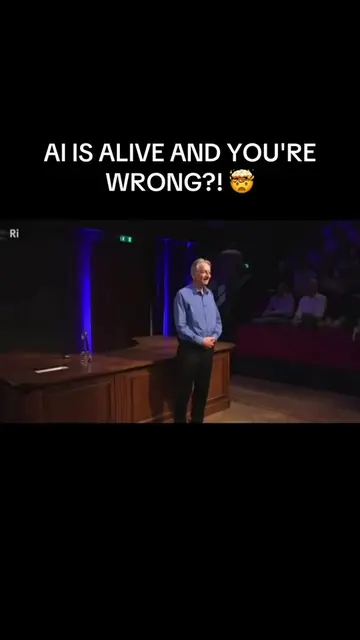
I don't see Kobe but I bet he's from Africa. Is anyone from Africa? No one's from Africa. No, well so much the better. No, I don't. Because they would know the answer. Here's the puzzle. How many countries in Africa does the equator cross? Yeah, six. What happened? The miracle is that I have communicated with you through language and your language system commanded your visual system to execute a program that involves scanning across that line, counting as you go. And your vision system came back to your language system and said, six. Not a miracle. And without understanding that miracle, we'll never have a full understanding of the nature of intelligence. But that kind of problem solving is the I wish we could teach you a lot about. We can't teach you about understand. We can give you your ops for that. Alright, so that's about the definition and some examples. What's it for? We can deal with that very quickly if we're engineers. It's for building smarter programs. It's about building a toolkit of representations and methods possible to build smarter programs and you you will find these days that you can't build a big system without having embedded in it somewhere the ideas about in this subject. If you're a scientist, there's a somewhat different motivation, but it amounts to studying the same sorts of things. Scientist, you're interested in what it is that that enables us to account a computational account of intelligence. That's the part that I do. But most of this is gonna be about the other part, the part that makes it possible for you to build smarter programs. And some of it will be about what it is that makes us different from the chimpanzees with whom we share an enormous fraction of our DNA. It used to be we shared 95% of our DNA with chimpanzees. Then it went up to 98. Thank God it stopped about there and then went back a little bit. I think we're back down to 94. So how about a little bit history of AI? So we can see how we are today. This will also give you a little bit about in this course. It all started with Lady Lovelace, the world's first programmer who wrote programs about 100 years before computers to run them. But it's interesting that even in 1842, people were hassling her about whether computers could get really smart. And she said, the Analytical Engine has no pretensions to originate anything. It can do whatever we know it to perform. Screwball idea that persists to this day. Nevertheless, that was the origin of it, the beginning of the discussions. And then nothing much happened until about 1950 when Alan Turing wrote his famous paper which introduced the Turing test. Of course, Alan Turing had previously won the Second World War by breaking the German code, the Ultra code, for which the British government rewarded him by suicide to be homosexual. Turing wrote his paper in 1950 and that was the first milestone after uh Lady Lovelace's comment in 1842. And then uh the modern era really began uh with a paper written by 1960 titled Steps Toward Artificial Intelligence. And it wasn't long after that Jim Slagle, a nearly blind graduate student wrote a program that did symbolic integration, not adding up area under a curve, but doing integration just like you learn to do in high school when you were a freshman. We're going to program, to understand exactly how it could write one yourself. To reach time to look back in time to look at that program because in one day it discussing talking about it itself a miniature artificial intelligence course because it's so rich with important ideas. So that's the Dawn Age, early Dawn Age, age of speculation. So in that the integration program took the world by storm because not everybody can do integration and someone everyone thought that oh well, if we can do integration today, the rest of intelligence will be figured out tomorrow. Too bad for our our side, it didn't work out that way. Here's another uh Dawn Age program, the Eliza thing. But I imagine you'd prefer a demonstration. It right. Do you prefer a demonstration? Okay. Let's see if it demonstrate it. Okay. So that's the Dawn Age, early Dawn Age, age of speculation. So in that the integration program took the world by storm because not everybody can do integration and someone everyone thought that oh well, if we can do integration today, the rest of intelligence will be figured out tomorrow. Too bad for our our side, it didn't work out that way. Here's another uh Dawn Age program, the Eliza thing. But I imagine you'd prefer a demonstration. It right. Do you prefer a demonstration? Okay. Let's see if it demonstrate it.