Loading video…
All breakouts
66.9Text-HeavyProblem Callout hookEducation
Hook
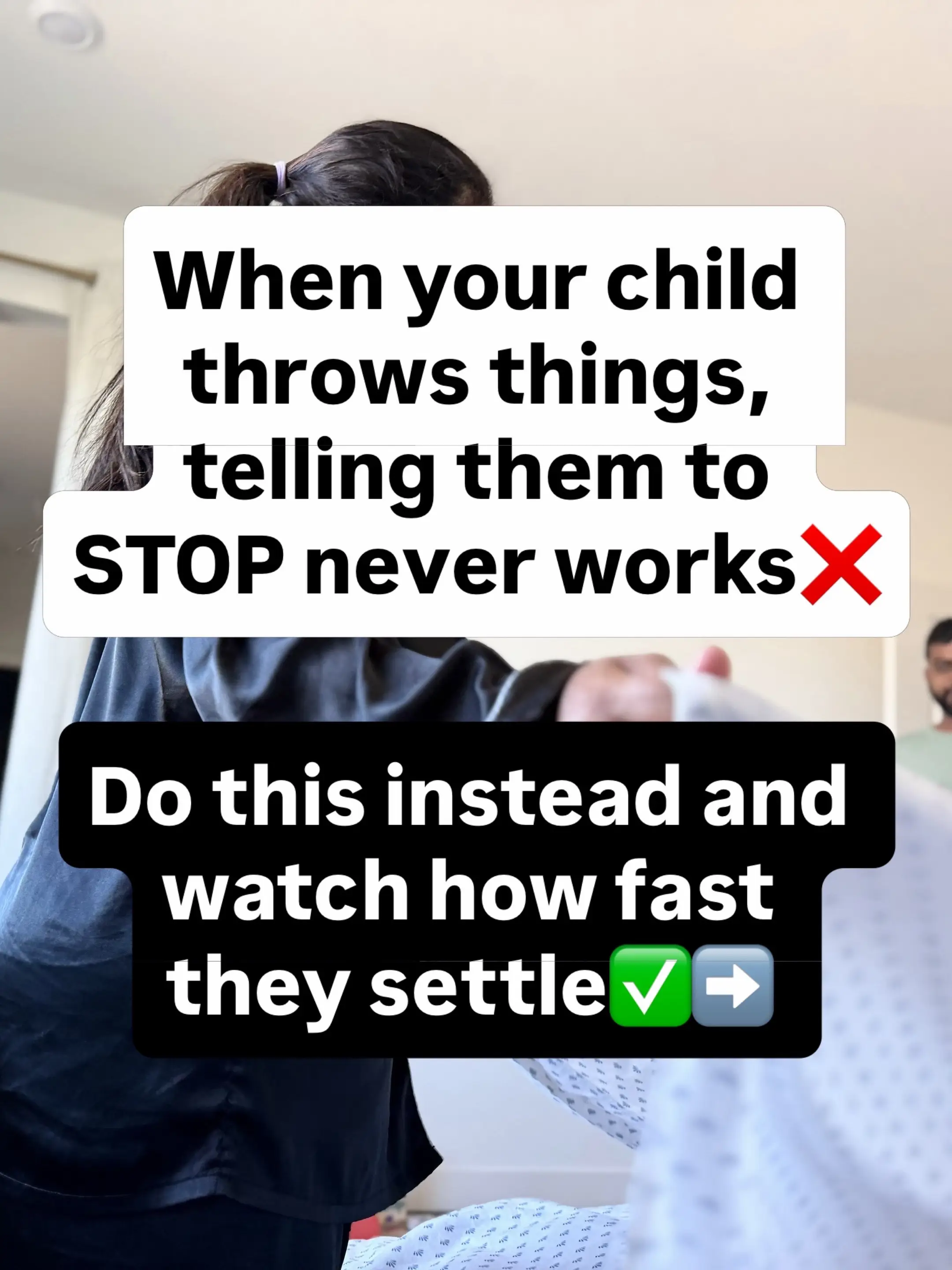
When your child throws things, telling them to STOP never works
@mommyandmishti
5.2K followers · usually 605 views a post
Views
39.9K
Likes
260
Comments
7
Shares
174
Why it worked
The content provides practical, empathetic advice for a common parenting challenge, resonating with parents who struggle with their child's emotional outbursts and offering a neuroscience-based perspective that validates their child's behavior.
Summary
This video explains that telling toddlers to stop throwing things is ineffective because the throwing is a physical release of overwhelming emotions. It suggests instead validating their feelings and teaching them coping mechanisms like breathing exercises, which helps them manage anger and develop emotional regulation skills for the future.
Structure
- 1Introduction: The ineffectiveness of telling toddlers to stop throwing.
- 2Explanation: Throwing as a physical release of overwhelming emotions.
- 3The core problem: Unseen feelings that grow and return.
- 4Solution Part 1: Addressing the feeling in the moment.
- 5Solution Part 2: Building skills for the future when calm.
- 6Long-term impact: Raising adults who can manage anger.
Call to action
Follow @mommyandmishti for more neuroscience based insights on your child's behavior
On-screen text
When your child
throws things,
telling them to
STOP never works
Do this instead and
watch how fast
they settle
Your toddler doesn't get
the toy they want, and
suddenly it's airborne
The cup, the blocks,
sometimes flung right at
you or a sibling.
Your instinct is "we do
NOT throw." You said it
firmly. And it changes
nothing
Telling an angry toddler
to "stop throwing" is
like telling a shaken
soda can NOT to fizz
The pressure is already
there. It has to go
somewhere
The part of the brain that
hits the brakes isn't built
yet
So the feeling comes, the
arm moves, and it's thrown
before any thinking
happens
That big, hard movement is
actually their body trying
to calm itself
But here's the
part that matters
most
The throw is not the real
problem. It's a feeling too big for
words
1. Frustration that they can't
do something
2. Feeling powerless
3. Unheard
4. Completely overwhelmed
The throw is the only sentence
they have right now
So when we jump
straight to "stop
throwing," we answer
the WRONG thing
We manage the hand,
and miss the feeling
underneath it entirely
And a feeling that goes
unseen doesn't settle. It
grows. And it comes
back bigger
Here's what you
can do instead?
Help them with the feeling first, right there in the moment
1. Get down low and name
what you see: "You're SO
frustrated. You really wanted to
do it yourself."
2. Then help with the actual
thing: "That's so hard. Let's do it
together."
Being understood is what starts
to bring them down
Later, when
everyone's calm,
you build the skills
for next time. This
is where the REAL
change happens
1. Tell them when you feel that
big, you can tell me 'I'm mad,' or
stomp
2. Start with a breathing game,
when there's no big feeling in the
room:
"Let's do dragon breath. Big
breath in... now blow the fire out,
as hard as you can. Rooaar."
Or "smell the flower, blow out
the candle."
Make it silly and fun, over and
over, until their body knows it by
heart
Then next time, you
don't wait for the
throw. You catch the
storm early and
breathe WITH them:
"I can see it
building. Let's do our
dragon breath
together."
This is so much bigger
than a thrown cup.
You're teaching them
their big feelings aren't
too much
They can be
understood, breathed
through, and given
somewhere to go
You're raising an
adult who can feel
anger without
exploding or
burying it. Most of
us were NEVER
taught how.
Share this with your partner.
They need to know this too
Follow @mommyandmishti for
more neuroscience based insights
on your child's behavior
Original caption
it’s not really the throwing that gets to us. it’s what the throwing stirs up in us😑 for a lot of us, anger wasn’t something we were allowed to have as kids. it was “don’t you dare,” or a slammed door, or a silence that taught us to make ourselves smaller. so when our own child hurls their anger across the room, so freely and so loudly, a part of us doesn’t just want to stop the behaviour. a part of us feels that old panic. anger is dangerous. shut it down. but here’s what i keep coming back to🧠 they’re not throwing because we’re failing them. they’re throwing because they haven’t learned yet what to do with a feeling that big. and we get to be the first people who show them that anger isn’t something to be ashamed of. it’s something you can feel, and move through, without hurting anyone or losing anyone’s love. that’s a gift a lot of us are still trying to give ourselves😢 so tell me 👇 what happened in your house when YOU got angry as a kid? were you allowed to feel it, or did you learn to hide it? i read every single one. this one runs deep for a lot of us. 💛 & if you’re new here? i’m Anuradha, and i help you understand what’s really going on in your child’s brain so you always know what to do🧠 Follow along for more neuroscience based insights on child’s behavior✅
More from @mommyandmishti
More breakout videos from this creator.