Loading video…
All breakouts
290Talking HeadBefore / After hookEducation
Hook
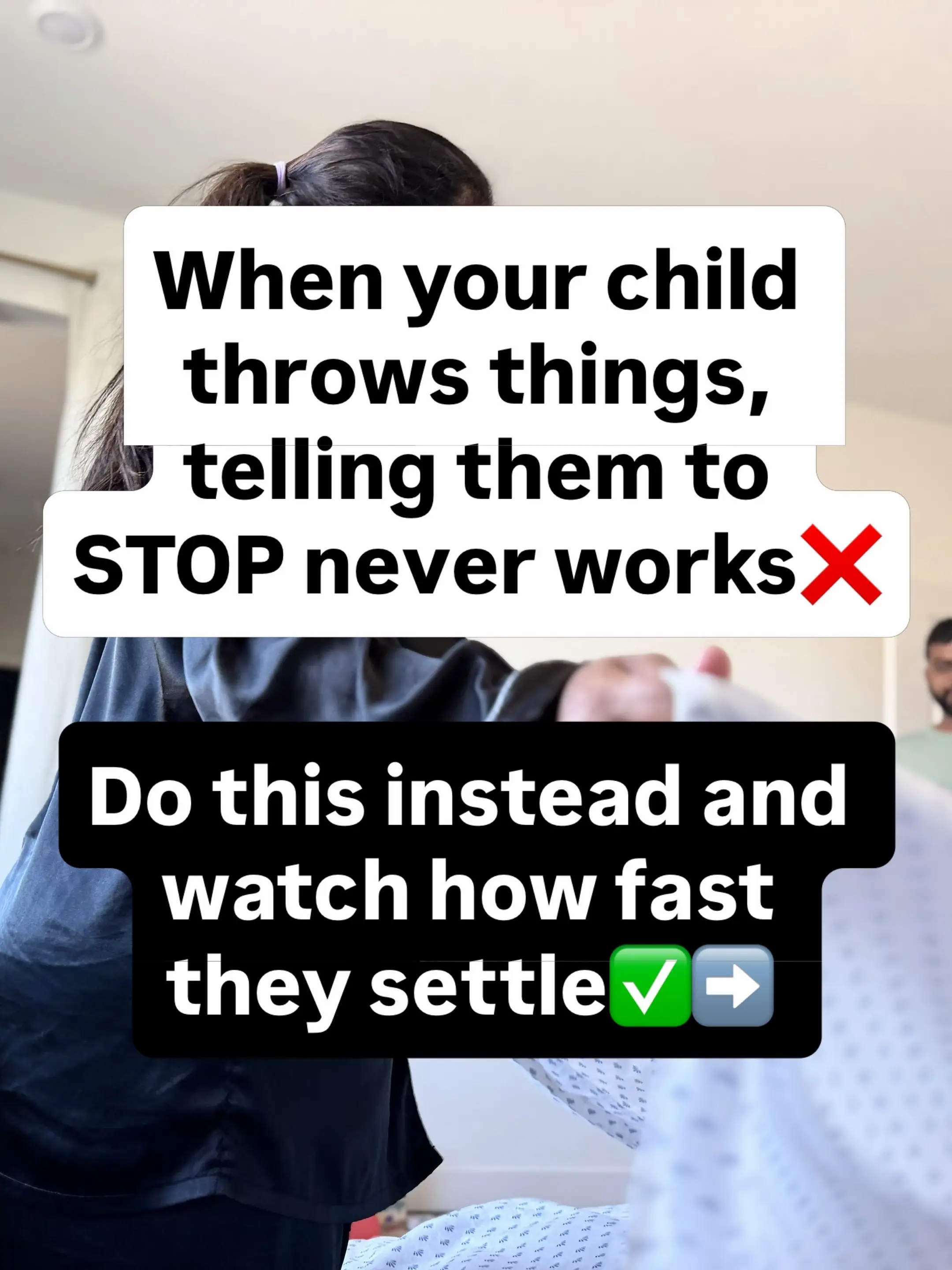
I stopped saying “Go Ask, if you can play” when my daughter wanted to play with other kids
@mommyandmishti
5.2K followers · usually 605 views a post
Views
173.4K
Likes
1.5K
Comments
31
Shares
832
Promoted product
Social Skills Guide
Why it worked
The video offers a relatable parenting problem and a simple, actionable solution that promises a positive outcome, resonating with parents seeking to improve their child's social interactions.
Summary
The creator explains a parenting technique for helping children join playgroups. Instead of teaching kids to ask permission, she advises teaching them to observe, approach, and then start playing, which has led to her daughter integrating more quickly with other children.
Structure
- 1Problem: Kids struggle to join playgroups when asking permission.
- 2Solution: Teach kids to observe, approach, and then play.
- 3Result: Daughter integrates faster with other children.
- 4Call to action: Join waitlist for a Social Skills guide.
Call to action
Join SOCIAL SKILLS guide waitlist
Original caption
Most of us teach our kids to walk up and ask, “Can I play with you?” But when kids are already deep into a game, that question can actually make joining harder. Think about it: if a group of people are already in the middle of a conversation and someone suddenly walks over and asks, “Can I join?”, everyone has to stop and make space. Kids can experience play the same way. So instead of teaching my daughter to ask first, I taught her to: 1. Watch what the kids are doing 2. Move closer 3. Start doing something similar beside them 4. Talk once she’s already part of what’s happening And I didn’t just explain this once. For a few weeks, we practiced it together🙌🏻 Earlier, she would run straight toward other kids and ask, “Can I play with you?” If they said no, she didn’t always know what to do next. So instead of saying, “Go ask if you can play,” ❌ ✅I’d say, “Look, they’re going down the slide. Let’s go slide too,” or, “Look what they’re building. Want to go see?” I kept modeling it. Now, one of the first things she does at the playground is look around, see what the other kids are doing, find something that interests her, and go over. Most of the time, the interaction happens naturally from there. And this is the biggest shift for me: “Can I play?” puts the attention on the child. Joining around the activity keeps the attention on the play. I don’t want her to only know the “right” sentence. I want her to know how to watch, find an opening, and join in✅ Of course, it won’t work every single time. Sometimes the kids are older, already deep in their game, or simply don’t want someone else joining. And that’s okay too. I just don’t want one “no” to automatically become “They don’t like me.”🧠 Sometimes there’s another way into the game. And sometimes there’s another game. Joining play is only one of the 7 social skills we expect kids to somehow just know. I’m sharing the rest one by one. Stay close if you want to know the rest🧠
More from @mommyandmishti
More breakout videos from this creator.