Loading video…
All breakouts Locked — included with Pro.Open on TikTokPro
Preview coming soon · watch on TikTok below
Pro links straight through to the original post.
6.0
Post
Post by @f9finance
@f9finance
59.6K followers · usually 993 views a post
Views
5.9K
Likes
121
Comments
3
Shares
9
Insights are coming soon — this post is queued.
Original caption
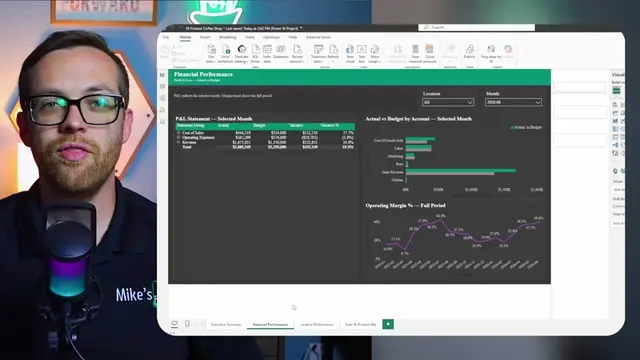
OpenAI just launched ChatGPT Work, so I put it head-to-head against Claude Cowork on real finance work the day it dropped. This is a same-day, apples-to-apples test of two AI agents for finance: ChatGPT Work running GPT-5.6 Sol, and Claude Cowork running Opus 4.8. I pointed both at the exact same folder, the same skills, and the same files, then handed them three real finance jobs off my coffee shop dataset. Job 1: reconcile 18 months of location-manager commentary sitting in Google Drive against the P&L on my laptop, and flag where the story and the numbers disagree. Job 2: build a board-ready, five-slide CFO deck from the P&L and the comments. Job 3: set up a scheduled task that checks the bank file every morning and flags anything unusual. Both are capable, and the outputs landed close. Claude Cowork came back one to two minutes faster on every job, wrote to Word natively with cleaner formatting, and asked sharper clarifying questions before it built the deck. ChatGPT Work kept defaulting to markdown and had a few day-one rough edges, but it’s brand new and it picked up my entire Claude setup instantly. That last part is the real story for anyone doing AI for finance: because my skills and prompts live in portable markdown, moving between tools cost me nothing. You are never locked in. If you’re weighing chatgpt for finance against claude for finance, or just trying to decide which agent to build your FP&A automation on, this is the side-by-side. ⏱️ Chapters 0:00 — ChatGPT Work vs Claude Cowork 0:58 — First look at ChatGPT Work for finance 3:19 — Plan mode 5:46 — Job 1: reconciling commentary 10:25 — Job 2: building a CFO deck with AI 14:50 — Job 3: a scheduled task 17:50 — The verdict 🛠️ Tools Used ChatGPT Work (GPT-5.6 Sol, high) Claude Cowork (Opus 4.8, high) Google Drive (connector) Microsoft Excel + PowerPoint
More from @f9finance
Their other posts in the index, biggest breakout first.