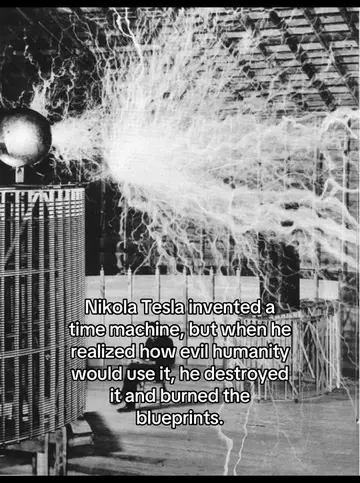
Let's get right into it. Number 10. The Telharmonium. The Telharmonium was an idea in 1897. A man named Thaddeus Cahill built a machine that streamed live music into people's homes through telephone lines. It was called the Telharmonium and it was a 200-ton monster that needed its own building. The concept was simple: rich New Yorkers could subscribe and music would be piped directly into their dining rooms. It was the world's first electronic synthesizer, creating music from electrical signals by spinning massive metal wheels. It actually worked. Restaurants piped it in for background music. But the machine was so powerful it bled into other phone lines, making calls with surprising piano concertos. The phone companies were furious. Then radio showed up, offering free music through the air. The Telharmonium went bankrupt. The machines were sold for scrap. The world's first music streaming service was erased because the technology around it wasn't ready yet. Number 9. Starlight. In the 1980s, a hairdresser from Yorkshire named Maurice Ward invented a material that could withstand a nuclear blast. He called it Starlight. You could hold a blowtorch to it for five minutes, and the other side would be cool enough to touch. NASA and the Ministry of Defense tested it. In a simulated nuclear blast, the material survived. Ward had no chemistry degree or lab. He mixed it in his kitchen. He was inspired by a plane crash where passengers died in the fire, not the impact. But Maurice Ward was deeply paranoid. He refused to hand over the formula to anyone. He wouldn't let companies have a sample large enough to reverse engineer. He sat in on every test personally. Boeing, the government, NASA, they all wanted it. Ward said no. Fearing a corporation would buy the formula and lock it in a vault, he kept it secret. As a result, nothing happened. Ward died in 2011, taking the secret with him. His family claims to have the recipe, but nothing has ever come to market. The most heat-resistant material ever demonstrated to the public was lost to one man's paranoia. Number 8. The Chrysler Turbine Car. In 1953, Chrysler built a car that could run on almost anything that burns: gasoline, diesel, kerosene, perfume, vegetable oil. The President of Mexico even ran one on tequila. It worked perfectly. The Chrysler Turbine Car had a jet engine crammed under the hood. Turbines don't care what you feed them, they just burn. The car was also incredibly smooth, with almost no vibration, and had 60% fewer moving parts than a piston engine, meaning it barely needed maintenance. Chrysler gave 55 of them to regular families to test drive. People loved them. But after the test, Chrysler crushed almost all of them. The official reason was taxes on the imported bodies, but many believe the oil industry wasn't thrilled about a car that didn't need their specific product. Only nine of these cars survive today, mostly in museums. As a reminder that we could have had cars that run on tequila, we decided we didn't want them. Number 7. Roman self-healing concrete. Modern concrete cracks after a few decades. Roman concrete, made 2,000 years ago, gets stronger over time. The Pantheon in Rome is still standing after 2,000 years. The secret wasn't just that Roman concrete resists cracks. It actually heals them. When water seeps into a crack, the lime clasts dissolve, creating a mineral that fills the crack back in. Scientists spent decades trying to figure out how structures built in seawater were getting stronger over time. The secret was hot lime mixing. The Romans mixed volcanic ash with quicklime while still hot, creating tiny white chunks called lime clasts. For years, scientists thought this was just sloppy mixing. Turns out, those chunks were the point. When water seeps into a crack, the lime clasts dissolve, creating a mineral that fills the crack back in by itself. The concrete has a built-in repair kit. We completely lost this recipe for nearly two millennia. Scientists only cracked the code in 2023. Number 5. Phage Therapy. In the early 1900s, scientists found viruses that exist only to hunt and kill bacteria. They're called phages. They don't attack human cells. They just destroy specific, dangerous bacteria. Think of them as tiny medical drones. They were used to cure deadly infections like cholera and dysentery. But in the 1940s, penicillin showed up. It was easier to make, store, and sell. Big Pharma could mass-produce antibiotics and make a fortune. Phage therapy was shelved. The research disappeared. Except in the Soviet Union. Soviet scientists in Georgia developed phage therapy for decades. While the West popped penicillin, they were using phages. Now, bacteria have become resistant to our antibiotics. Superbugs kill over a million people a year. And scientists are scrambling back to phage therapy. There are patients today with untreatable infections being saved by phages. A treatment we abandoned 80 years ago. Number 4. China's Treasure Fleet. In the early 1400s, China's treasure fleet dwarfed anything in Europe. Their biggest ships were about 400 feet long. Columbus's Santa Maria was 85 feet. Under Admiral Zheng He, this massive fleet sailed to Africa, the Persian Gulf, and Southeast Asia, decades before European explorers. They established trade and demonstrated China's power. Then, a group of Confucian officials convinced the new emperor that trade was a waste of money. They convinced him to shut it all down. They didn't just stop the voyages. They banned ocean-going ships, burned the records, the logs, and the navigation charts. Within a generation, China went from king of the seas to having no navy. 50 years later, Columbus sailed west, discovering routes that Zheng He had already mapped. China had a 50-year head start on global exploration. They threw it away because a few men decided curiosity was too expensive. Number 3. Electric streetcar networks. In the 1920s, over 1,000 American cities had massive networks of electric streetcars. They were clean, quiet, cheap, and already built. Then, General Motors and other tire and oil companies formed a company called National City Lines. Their job was to quietly buy up these transit systems and dismantle them. They were convicted of conspiring to monopolize the transit business. Their punishment was a $5,000 fine. The tracks were ripped out, and the streetcars were replaced with GM buses running on standard oil and Firestone tires. Suddenly, cities were stuck with loud, polluting, gas-guzzling buses that people hated. Number 2. The destruction of the House of Wisdom. In 1258, Baghdad's House of Wisdom was the greatest library on Earth. It wasn't just a library; it was a global center for science, math, and Persian astronomy. For 500 years, it was humanity's hard drive. Then the Mongols showed up. Under Hulagu Khan, they laid siege to Baghdad. When it was over, they didn't just destroy a building. They destroyed a civilization's progress. They threw hundreds of thousands of books into the Tigris River. Witnesses said the river ran black with ink for days. Most of what was lost was the only copy. Greek texts translated into Arabic, Indian mathematics, Persian astronomy knowledge that took centuries to rediscover. Number 1. Wardenclyffe Tower. Imagine no cords, no outlets, no charging cables, just free electricity floating through the air. That was Nikola Tesla's plan. He started building his Wardenclyffe Tower on Long Island in 1901. It was meant to pump electricity directly into the earth, turning the planet into one giant wireless power source. Anyone, anywhere, could tap into it for free. No electric bills, no power lines. Tesla went to his investor, J.P. Morgan, who wrote him a check. But then Morgan asked one simple question: "Where do we put the meter?" If electricity is free like the air, how do you charge people for it? Morgan realized there was no way to profit. He pulled funding and ensured no one else would fund Tesla either. Tesla was left with a half-finished tower. In 1917, his tower was blown up with dynamite and sold for scrap to pay his debts. The man who wanted to give the world free energy died broke. Morgan, meanwhile, went on to make billions. The power companies, who profited from selling electricity, likely preferred it that way. The destruction of the House of Wisdom wasn't just destroying a building; it deleted a civilization's progress. The Mongols threw hundreds of thousands of books into the Tigris River. Witnesses said the river ran black with ink for days. Most of what was lost was the only copy. Greek texts translated into Arabic, Indian mathematics, Persian astronomy knowledge that took centuries to rediscover. The man who wanted to give the world free energy died broke, while the power companies made billions.