Loading video…
All breakouts
63.9Text-HeavyCuriosity Gap hookCreator Economy
Hook
NOW I UNDERSTAND WHY PEOPLE SPEND HOURS STARING AT THE SAME PAINTING IN MUSEUMS.
@what_the_canvas_holds
9.4K followers · usually 952 views a post
Views
94.7K
Likes
12.3K
Comments
23
Shares
399
SoundTikTok sound · less
Why it worked
The video effectively uses a popular painting and a poignant, unexpected narrative to evoke emotion and curiosity, making viewers pause and reflect on the deeper meaning behind the artwork.
Summary
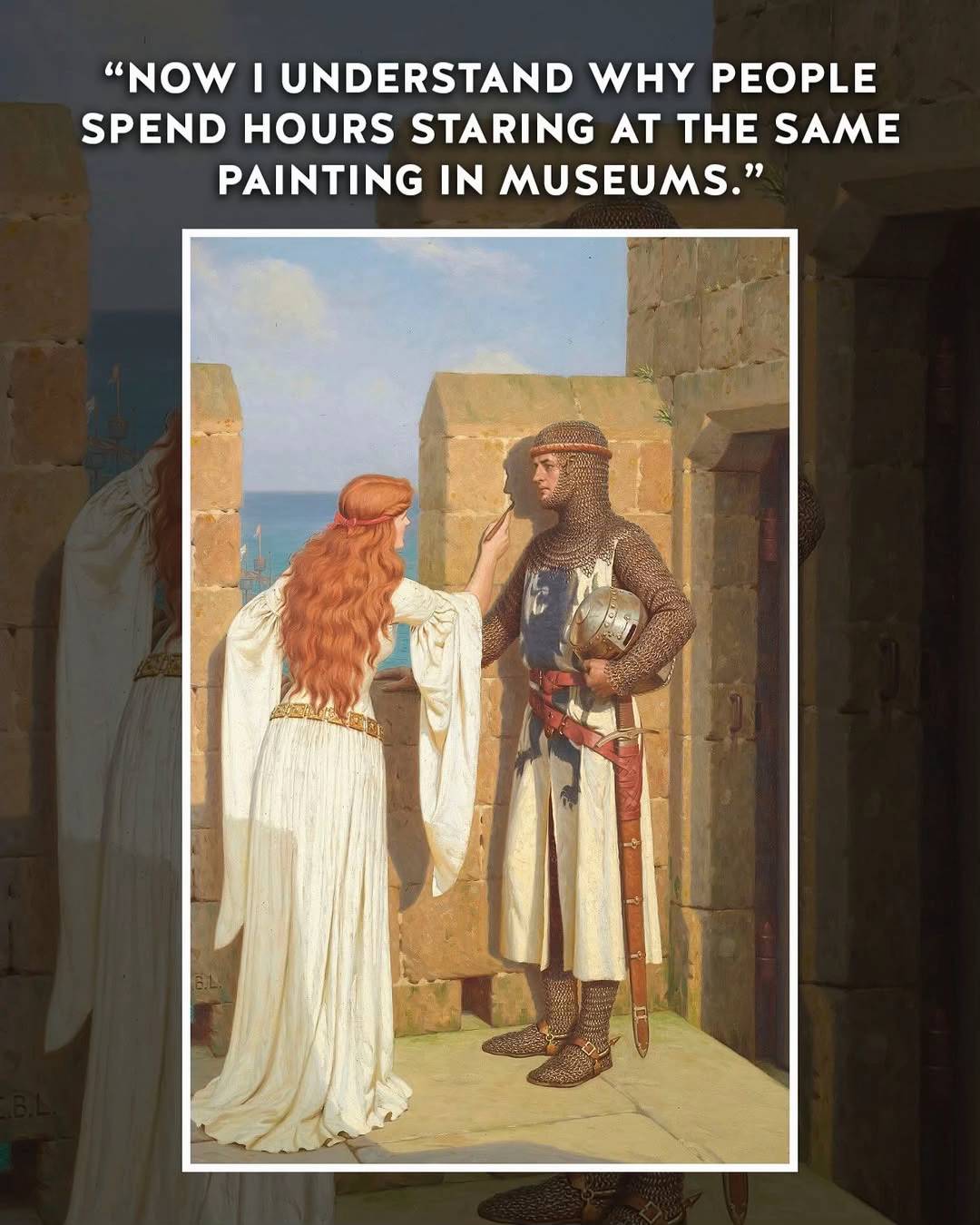
This TikTok slideshow analyzes the painting "The Shadow (1909)" by Edmund Blair Leighton, revealing its heartbreaking story. It explains that the woman is tracing her lover's shadow because he is leaving for war and may never return, making the painting a depiction of grief for someone still alive.
Structure
- 1Introduction to the painting and its perceived romanticism
- 2Revelation that the scene is not romantic
- 3Explanation of the knight's departure for war
- 4The woman's action of tracing the shadow
- 5The symbolic meaning of shadows and loss
- 6The heartbreaking realization of the painting's true meaning
On-screen text
NOW I UNDERSTAND WHY PEOPLE SPEND HOURS STARING AT THE SAME PAINTING IN MUSEUMS.
This looks romantic.
But it's not..
The knight is leaving for war
The ship behind them is already waiting
He stares at her like he already knows he may never return
So she ignores his face completely
Instead,
she carefully traces his shadow on the wall
Because shadows stay...
after people disappear
This may be the last piece of him she will ever keep
And that is what makes this painting heartbreaking.
She is already grieving a man who is still alive
The Shadow (1909)
By - Edmund Blair Leighton
Original caption
The Shadow (1909) by Edmund Blair Leighton — Cardiff Council collection, Wales She’s not flirting with him. She’s building a ghost. Leighton was England’s great myth-machine of chivalry, known for works like God Speed, The Accolade, and The Dedication. Yet, in this piece, he reaches back 2,000 years to retell the origin of drawing itself through the Greek tale of Butades’ daughter, who traced her lover’s shadow on the wall before he sailed to war. By swapping ancient Corinth for a medieval castle and adding crusader ships in the harbor below, he creates a poignant connection to the past. The canvas stands over 5 feet tall (161 cm) and was bequeathed to Cardiff by a widow from Penarth, where it resides today. Look closely: her charcoal touches the wall precisely where his profile falls — she’s not sketching his face; she’s capturing his absence, already rehearsing for his death. He stands perfectly still, dressed for departure, holding his helmet and the hilt of his sword. The red band at his brow and the belt at his waist echo like a wound waiting to happen. Notice the title: not “the knight,” nor “the lady,” but “the shadow.” The thing on the wall outlasts the man. In my view, this painting reflects grief yet to unfold. She loves him but is already treating him as a memory; he allows this because they both understand that the harbor awaits. Every romance portrayed is essentially a pre-emptive elegy. A pop culture echo: akin to the Pensieve in Harry Potter — bottling a person before they’re lost. What’s she truly drawing — him, or the space he’s about to vacate? Follow @what_the_canvas_holds for more stories behind the world’s greatest paintings. #EdmundBlairLeighton #TheShadow #ArtAnalysis #Grief #Painting
More from @what_the_canvas_holds
More breakout videos from this creator.