Loading video…
All breakouts
13.9Talking HeadDirect Question hookFinance
Hook
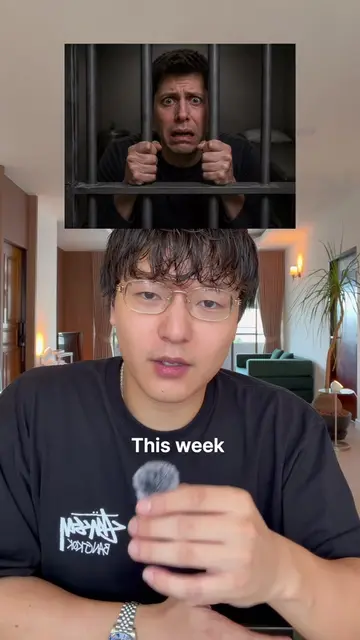
Singapore does what?!
@rainy.yaps
8.9K followers · usually 4.1K views a post
Views
50.2K
Likes
2.5K
Comments
39
Shares
294
Why it worked
The video uses a high-stakes, counter-intuitive hook about a national government's financial strategy, which appeals to viewers interested in macroeconomics and finance. The clear, visual breakdown of complex concepts makes the information accessible and highly shareable.
Summary
The video explains the strategic reasoning behind Singapore's two sovereign wealth funds, GIC and Temasek. It details how GIC invests entirely abroad to protect the currency, while Temasek invests domestically to maintain government influence over critical infrastructure.
Structure
- 1Introduction to Singapore's wealth funds
- 2Explanation of GIC's strategy to avoid domestic inflation
- 3Explanation of Temasek's strategy to maintain domestic control
- 4Comparison of the two funds' different approaches
- 5Conclusion on the government's dual-fund strategy
Call to action
If you found this useful, then make sure to follow.
On-screen text
SINGAPORE DOES WHAT?!
Singapore
wealth funds
on the planet
from spending
almost any of
it at home
GIC
TEMASEK
foreign reserves
not Sing dollars
Sing dollar first
stronger
a lot more money
in circulation
at home
and abroad
two totally
different mechanisms
GIC
100%
invested abroad
Temasek
52%
domestically
48%
internationally
Singapore Airlines
DBS
PSA International
SMRT
FOLLOW FOR MORE
Original caption
Singapore’s government refuses to spend most of its wealth fund at home. On purpose. 🇸🇬 It runs two separate funds — GIC and Temasek — built to solve for two completely different risks. 👀 One stays out entirely to protect the currency and prices. The other buys real influence over the industries the country runs on. 🔑 Two funds, one government, zero overlap in strategy. 🧠 Follow for more breakdowns like this. 🔔 #singapore #stocks #gic #temasek #stockmarket
More from @rainy.yaps
More breakout videos from this creator.