Loading video…
All breakouts
3.5Text-HeavyResult / Flex hookFinance
Hook
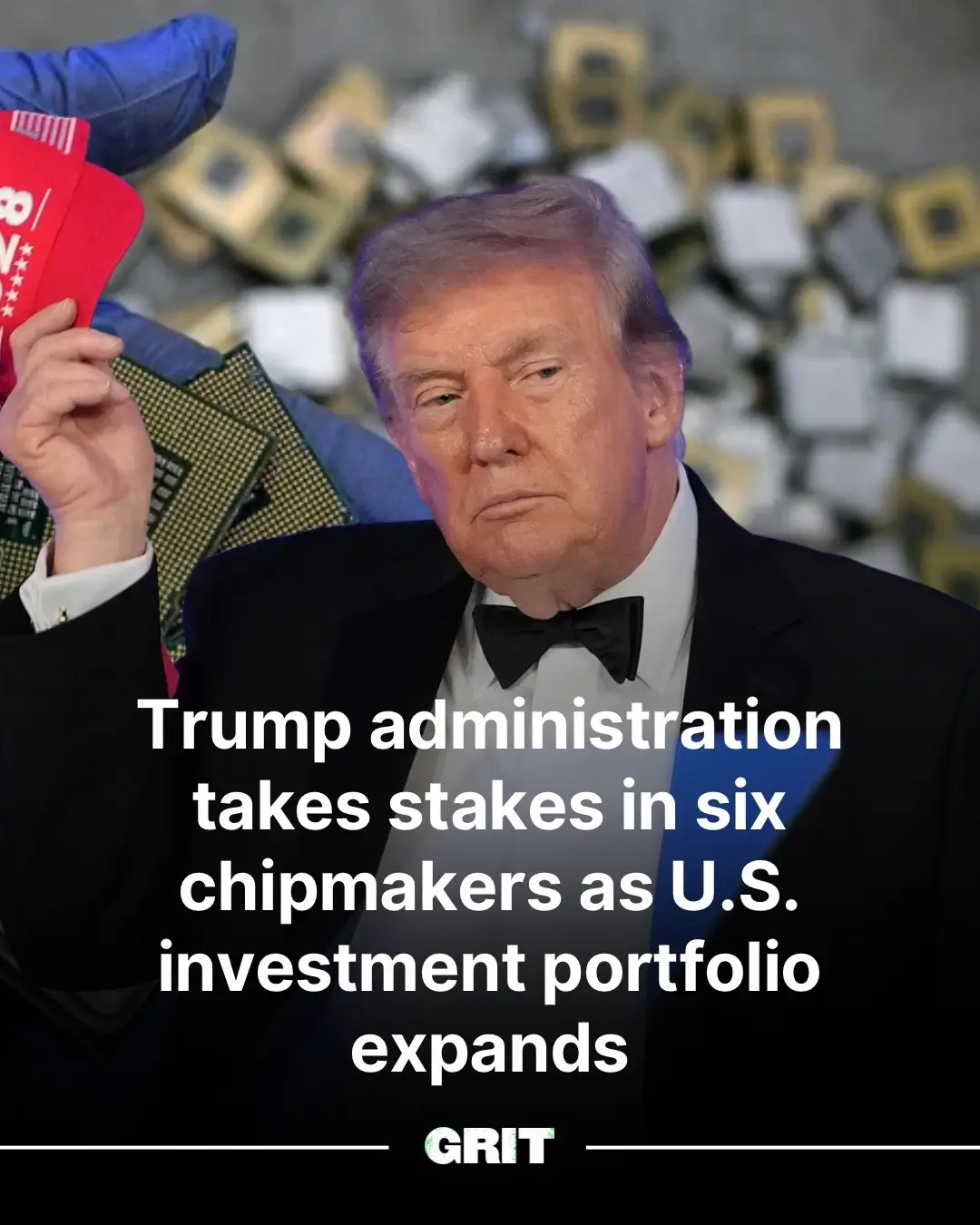
Trump administration takes stakes in six chipmakers as U.S. investment portfolio expands
@gritcapital
214.6K followers · usually 6.3K views a post
Views
16.6K
Likes
156
Comments
4
Shares
14
SoundTikTok sound · Sun
Why it worked
The post leverages a timely and significant news event (government investment in critical industries) with clear, data-driven visuals that simplify complex financial information, making it easily digestible and shareable.
Summary
The U.S. government is expanding its investment portfolio by taking equity stakes in six chipmakers, shifting from traditional grants to a more strategic investor role. This move aims to secure critical industries for national security and the AI economy, with significant capital deployed across various sectors.
Structure
- 1Introduction of US government taking stakes in chipmakers
- 2Explanation of the shift from grants to equity investments
- 3Overview of the U.S. Government Deal Tracker by sector
- 4Detailed breakdown of government capital deployed by sector and deal type
Product placement
GRIT (appears as a logo on slides 1, 2, and 3; it is the creator's brand and provides the news/insights, so removing it would change the attribution of the content but not the content itself). CHIPS Act (mentioned in the caption and on slide 3; it is a government funding program for semiconductor manufacturing, and removing it would change the context of the investment). Intel (mentioned on slide 3 as receiving equity stake; it is a chipmaker that is part of the government's investment strategy, and removing it would change the specific details of the investment).
On-screen text
Trump administration
takes stakes in six
chipmakers as U.S.
investment portfolio
expands
GRIT
U.S. Government Deal Tracker
Total USG Investment by Sector
Critical Minerals
Defense
Energy
Health Care
Industrial Metals
Natural Resources and Infrastructure
Semiconductors
Golden Share
Loan
Offtakes
Price Floors
Grants
Loans
Equity
Tools Used Across Deals
Washington's Investment Portfolio -- Government Capital Deployed by Sector
Selected programmes, 2025-2026 (not all are direct equity -- see deal type)
Pharmaceuticals
(onshoring commitments)
Quantum Computing
(CHIPS Act, May 2026)
Critical Minerals
(9 equity deals, Jan-Apr 2026)
Drones & Autonomous
(FY27 DAWG request)
Navy Shipbuilding
(FY27 budget request)
AI / Data Centre
(Stargate - facilitation only)
Semiconductors
(Intel CHIPS stake)
Nuclear Energy
(Westinghouse partnership)
$0.8B | Procurement / pricing deals
$2.0B | Direct equity (9 companies)
$2.1B | Equity + loans + offtake
$3.9B | Budget + active equity talks
$4.2B | Budget appropriation
$6.0B | Facilitation -- not direct equity
$8.9B | Direct equity (9.9%)
$80.0B | Partnership/participation interest
0
20
40
60
80
100
US$ Billion
Sources: CFR Government Deal Tracker (Apr 22, 2026); GRIT press release (May 21, 2026); CSIS (May 2026); FY27 budget submissions.
Note: Figures are for selected programmes, some may overlap, and not all are direct equity investments.
Original caption
The U.S. government isn’t just funding the semiconductor boom anymore — it wants a piece of the upside. 🇺🇸📈 Six chipmakers are set to receive up to $874 million in CHIPS Act funding in exchange for minority equity stakes, expanding the government’s investment portfolio to roughly 30 companies. The strategy represents a major shift from traditional grants: Washington is now acting more like a strategic investor, targeting industries considered critical to national security and the AI economy. The portfolio already spans semiconductors, quantum computing, nuclear energy, steel and rare earth minerals. And after the government’s Intel stake reportedly generated more than $70 billion in unrealized gains, the administration appears increasingly confident that industrial policy can also produce investment returns. For investors, the signal is clear: sectors receiving government capital could benefit from stronger funding, infrastructure development and long-term policy support. But government backing doesn’t eliminate execution risk — especially when many of the recipients are smaller, earlier-stage companies. Is this smart industrial policy, or is Washington taking on too much investment risk?
More from @gritcapital
More breakout videos from this creator.