Loading video…
All breakouts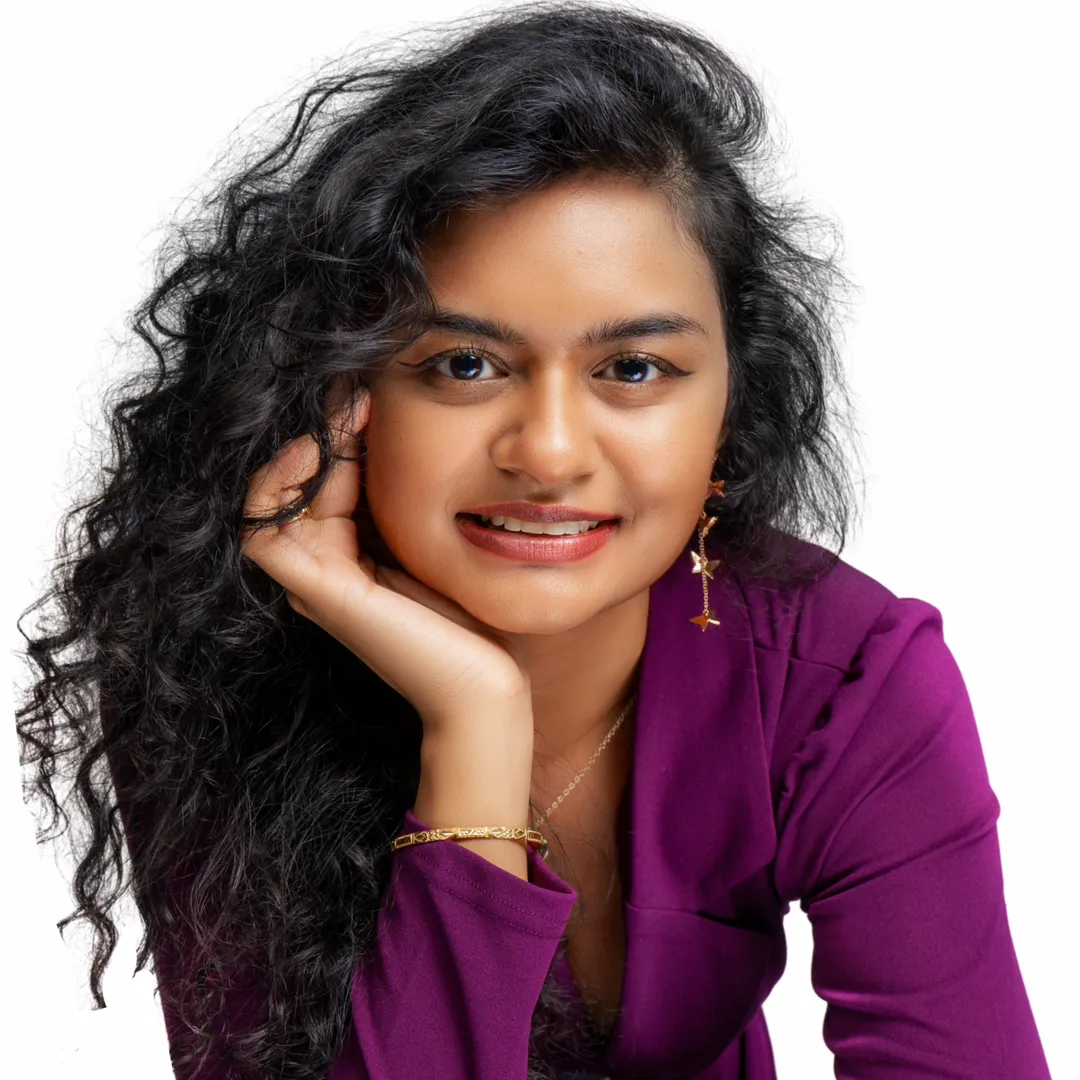
40.3Talking HeadStory Open hookAI Tools
Hook
The world order has changed,
@isvarim
58.9K followers · usually 811 views a post
Views
32.7K
Likes
3.5K
Comments
62
Shares
140
Why it worked
The video provides a concise and accessible explanation of complex geopolitical shifts, connecting them to practical advice for viewers. The use of clear historical examples and actionable takeaways makes the content relatable and shareable.
Summary
The speaker discusses the shift from a unipolar world dominated by the US to a multipolar world with multiple influential actors. They suggest that this change, exacerbated by factors like the rise of AI and political shifts, necessitates diversification of investments and community support for future economic and social stability. The speaker also advises considering a second citizenship as a measure of security.
Structure
- 1Introduction to the changing world order.
- 2Historical context of multipolar, bipolar, and unipolar world structures.
- 3The US's unipolar dominance post-Cold War and its impact.
- 4The shift away from unipolarity and the US's diminished global leadership.
- 5Consequences of this shift: economic upheaval, changes in free trade, and corporate behavior.
- 6Advice for individuals: diversify investments, focus on community, and consider second citizenship.
Call to action
Follow me for more.
On-screen text
The world order has changed,
Trump Has Changed The
World Order. Here Is What
It Means For You.
This is basically a free
masterclass in global
politics so you don't need
to pay $60K for an
international relations
degree.
In the 1900s, after Europe was
embroiled in multiple world wars,
most scholars agreed the world
became bipolar.
Between U.S. And Russia during the
Cold War,
that were dominating most
international conversations,
and impacting the economy
worldwide.
And no other countries came close.
After the end of the Cold War,
and really about midway through
the Cold War,
but definitely from 1989 onwards,
the world was considered a unipolar
world,
as in the United States was the
hegemon,
far and away the biggest power,
and it impacted everything.
Most sociocultural impact came
from America.
Most of the new tech came from
America,
from California, where I'm from.
American capitalism and
globalization
and standards of free trade took
over the world.
The American Navy kept the high
seas free for free trade globally.
American standards of the
economy were everywhere.
And other rising nations really
started pegging their success.
To the U.S. Dollar,
or Their currencies to the U.S. Dollar.
A lot of international development
was driven by U.S.
Backed initiatives and by a U.S.
led or backed United Nations.
Yes, there were other powerful
countries that didn't like this,
like Russia, but they had little to no
power to do anything about it,
because the U.S. Was just far and
away the most powerful country in
the world.
And because I grew up in the United
States,
and patriotism is served along with
your morning breakfast,
most scholars thought of this as a
good thing.
The U.S. Seemed to be a Liberal
democracy,
was relatively protecting the world,
doing things it didn't have to do
to make sure free trade worked
around the entire planet.
It was promoting women's rights
and liberalism.
It was a good thing, said most
people today.
Today,
I would say this year, as of 2026,
the world is no longer unipolar,
and America is no longer the
hegemon.
It no longer leads the free world,
no longer leads the European Union,
no longer leads our allies,
who we've basically been a jerk to.
The world is now run by a bunch of
different actors
depending on the topic we're
talking about.
And this is not just because of the
rise of China and India
and even Russia in some ways,
although, frankly,
Russia's destroyed its economy by
attacking Ukraine.
This is also simply because the US
has ceded its power.
With Donald Trump in charge.
The US has made all of our allies
feel like they can't trust us.
With the war in Iran, he basically
undid decades of the US
protecting and upholding the law of
free movement,
of travel. Right.
What he was doing with the Strait
of Hormuz is against international
law.
And with tariffs, he basically
attacked global free trade,
something America had long led.
This is because if you ask me,
America was never truly unipolar.
It's that it was a collection of
oligarchs.
That was the hegemon, not the U.S.
Government.
And this became really obvious
when the interests of the American
people
completely diverged from the
oligarchy, and it's the oligarchy that
won.
So here's what this means for you.
When the world goes through this
massive amount of up people
like a change from being multipolar
to a different set of multipolarity,
or from that to bipolarity during the
Cold War.
You know, a unipolar state,
you can expect massive economic
upheaval.
You can expect massive changes in
global free trade.
You can expect little to no reliance
on how corporations will behave
and what sort of, um.
What sorts of laws and regulations
and user agreements they're
actually going to follow.
And so from an investment
perspective,
one of the biggest things that you
can do is to diversify your portfolio
and to not trust that any one
specific country or company won't
go under.
This is also why now Is, I would say,
a particularly bad time to hold a ton
of money in cash.
It's probably a good time to invest
in the stock market
and ethical stocks and companies
and yourself.
That's really important.
It's also not a great time to just
count on your retirement.
It's possible many countries won't
be able to pay out in the way that
we thought.
When it comes to things like Social
Security or pensions,
pension growth. The second big
piece of advice I have for you, too,
is to invest in your community,
because this is going to be a time of
great upheaval and sociocultural
change.
And with the rise of AI,
we're going to need to figure out
how we're going to take care of
each other
and not assume that everyone is
going to traditionally earn a living
the way that people thought was
the case in the 1960s or 90s.
In the United States
and a lot of countries that don't
have a social welfare protection
unit.
A lot of this is gonna come down to
the people you know,
the people you're willing to care for,
who are willing to care for you,
and the way in which you can share
community knowledge and labour.
And number three is the hardest,
but possibly the most important.
Figure out how you can maybe get
a second citizenship.
If there's any way that you can
double the chances that you have
somewhere safe to go
that Someone's government is
responsible for protecting you.
That is a really important thing to
do.
And it is more accessible than most
people think.
And it is something that you do not
need to be in the 1% to do,
although it definitely requires some
privilege and luck.
But it's something you can strive for
and work towards,
and I think it's becoming more
valuable than ever.
So what do you think about this
world?
Enough people. And follow me for
more. If you're a superhero.
Original caption
Trump said America would take over Greenland by the end of his term. But who is he and America to say that anymore? #hegemony #america #unitedstates #globalpower #trump
More from @isvarim
More breakout videos from this creator.