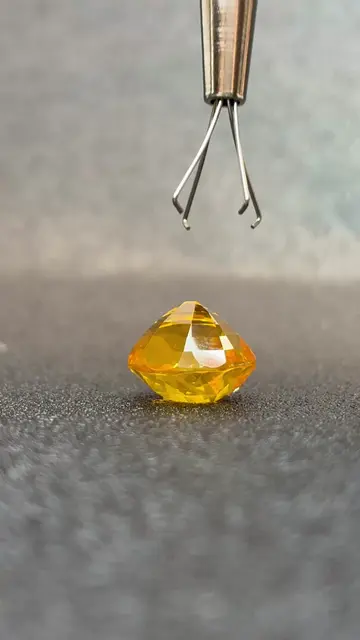
12 gemstones that will be worth a fortune in 2026. Never sell these! Part 1. Somewhere right now, someone is selling a gemstone they're going to regret for the rest of their life. Not because it belonged to their grandmother, not because it held sentimental value, but because they had absolutely no idea what was sitting in that jewelry box was appreciating faster than almost anything else they owned. And by the time they figured it out, it was already gone. It was sold for a fraction of what it was worth to someone who knew what they were looking at. Today, we're going to make sure that never happens to you. These are the 12 gemstones that you should never ever sell. Number 12: Unheated Burma Blue Sapphire. 95% of every blue sapphire sold in the world has been heated. That's not a scandal, it's standard practice. Heating a sapphire can dissolve inclusions, improve color, and make a middling stone look genuinely beautiful. The trade has accepted this for decades, which means the ones that were not heated exist in a completely different category. Less than 1% of sapphires remain unheated. Burmese sapphire from Mogok Valley is worth three times what the same stone fetches without that notation. Fine unheated examples of 5 carats or more routinely exceed $25,000 per carat. If you own a blue sapphire and you have never had a heat treatment test run on it, you may be sitting on the wrong number entirely. That single lab report could change your stone's value by a factor you are not ready for. Number 11: Red Spinel. Most people have never heard of spinel. The ones who have are buying everything they can find and not talking about it loudly. The Black Prince's Ruby, the famous red stone in the front of the Imperial State Crown of England, is not a ruby. It never was. It's a red spinel. For centuries, nobody knew the difference. In 2019, investment grade red spinel was trading around $1,000 per carat. By 2023, those same stones were reaching $25,000 to $30,000 per carat. Collectors are already in. The general public hasn't arrived yet. That gap is what every serious gem investment looks like. Right before the price changes permanently. Number 10: Tanzanite. There will never be another source of Tanzanite on Earth. Tanzanite is mined in a single location, the Merelani Hills in Tanzania, in an area covering roughly 7 to 14 square kilometers. The Tanzanian government has tightened export regulations because they understand what happens when those deposits are gone. The stone becomes something you can only buy from someone who already has one. Triple A grade stones appreciated 45% between 2019 and 2023. Single-source rarity. Top quality stones are now fetching $900 per carat. What separates Tanzanite from most investment stones is that it appears already known. The demand base is established yet. What isn't established yet is the full awareness of what a closed mine means. For prices to go up, and potentially skyrocket, over the next 20 years. A large, deeply saturated tanzanite is not a decorative purchase. It's a one-way door. The Tanzanian government has tightened export regulations because they understand what happens when those deposits are gone. The stone becomes something you can only buy from someone who already has one. Triple A grade stones appreciated 45% between 2019 and 2023. Single-source rarity. Top quality stones are now fetching $900 per carat. What separates Tanzanite from most investment stones is that it appears already known. The demand base is established yet. What isn't established yet is the full awareness of what a closed mine means. For prices to go up, and potentially skyrocket, over the next 20 years. A large, deeply saturated tanzanite is not a decorative purchase. It's a one-way door.