Why did Ukraine
intercept zero out of
twenty four missiles
this week?
The answer has
nothing to do with Ukraine.
The real answer is
a decision made two
thousand miles away,
in a war most people
attention to months ago.
Stick with me,
by the end of this,
you'll understand
why the next headline
out of Kyiv might
actually be a
headline about Iran.
TOP SECRE
the Pentagon doesn't
want printed in a
headline right now.
Not casualties.
Not dollars.
A stockpile count.
I'll give it to
you in a minute,
but first,
the timeline,
or the number won't
mean anything.
August fifth,
Kyiv.
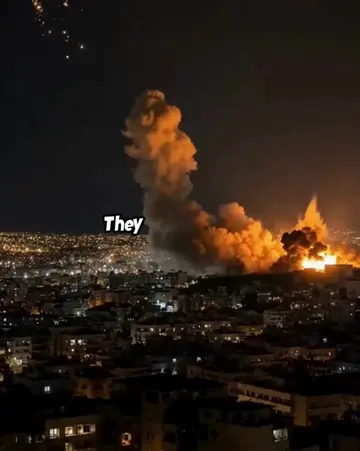
Russia fires
twenty four ballistic
missiles and four
Zircon hypersonic
cruise missiles.
Ukraine's Patriot batteries,
the only system that
can reliably stop an
incoming ballistic missile,
go active.
Nothing comes down.
Seventeen people
are dead by sunrise.
Officials call it
a critical shortage.
That phrase is
hiding a lot.
Most channels stop there.
Ukraine needs more weapons,
end of story.
We don't.
Because this isn't
a shortage.
It's a redirection,
somewhere else entirely.
Back up to February.
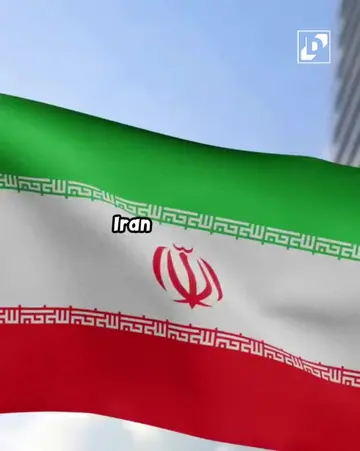
goes to war with Iran,
Operation Epic Fury.
A ceasefire holds
for a while,
but by July,
fighting flares
again around the
Strait of Hormuz.
Through both rounds,
Washington leaned on
the exact same weapon
Ukraine now needs.
Patriot interceptors.
A lot of them.
Before the Iran war,
roughly two thousand
three hundred Patriot
P A C three
interceptors in U.S.
stockpiles.
Today,
per CSIS analyst
Mark Cancian,
a retired Marine
colonel who tracks
this for a living,
the U.S.
sits between seven
hundred fifty and
nine hundred.
A two thirds collapse.
And THAAD,
the next missile
defense layer,
is down almost half too.
So the real
question isn't why
didn't Ukraine get more.
it's what happens when
the U.S.
itself runs low,
and a third crisis
breaks out somewhere
else on the map?
Washington's target,
two thousand new
interceptors a year.
Current output,
about six hundred.
At that pace,
the U.S.
doesn't hit its own
goal until twenty thirty.
And when new
interceptors do roll
off the line,
Ukraine isn't first
in line.
Here's who
actually is.
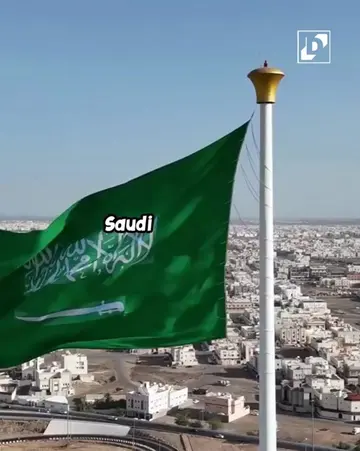
Saudi Arabia,
the U A E,
Qatar,
all burned through
their own Patriot
stocks fighting Iran,
all demanding
cash and decades old
alliances behind them.
Ukraine is
competing with oil
wealthy Gulf states
production line.
Guess who wins.
Zoom out.
One war in the
Middle East just
quietly decided the
outcome of a
different war in
Eastern Europe.
Nobody voted on that.
It happened
through a supply chain.
This is what
planners call overstretch,
one power projecting
force on too many
fronts with a finite arsenal.
Right now the U.S.
is arming Israel,
Gulf partners,
Ukraine,
and deterring China
in the Pacific,
all from the same
shrinking stockpile.
You can't
infinitely divide a
finite number of
missiles across four
wars and expect all
four fronts to hold.
This week,
in Kyiv,
seventeen people
found out what that costs.
Here's the part
almost nobody's
saying out loud.
Cancian's closing
point wasn't about Ukraine,
it was about who's watching.
Not just Russia.
Iran too.
If Washington's
own planners have
drawn a hard line,
we don't go below
eight hundred Patriots,
no matter who's asking,
that tells every
rival the U.S.
may not have the appetite,
or the capacity,
to open a third
front if fighting
with Iran resumes.
That's not our theory.
That's on the record.
Right now,
in Tehran,
Moscow,
Beijing,
someone is running
that exact calculation.
How thin is
America stretched,
really,
open up for us?
Three things to watch.
One Ukraine
likely pivots to
older Soviet S three
hundred systems from
third parties,
since U.S.
supply is
effectively closed.
Two expect
accelerated PAC
three production,
already underway
with a Lockheed
Martin contract worth
up to fifty eight
point six billion
dollars through
twenty thirty two.
Three,
the one that matters
most expect quiet
pressure for a
ceasefire in at least
one theater,
NEGO
TIATION
not for peace,
but because the
arsenal can't support
all of them at once.
Mainstream
coverage keeps
framing this as
Ukraine needs help.
It's not charity.
It's resource allocation.
Once you see it
that way,
every troop movement
and every urgent
funding request over
the next six months
makes a lot more sense.
Two wars.
One shrinking stockpile.
A supply chain
that just decided who
gets defended,
without a single
headline explaining why.
Kyiv lost that
competition this week.
The question
nobody in Washington
wants to answer on
camera which front
loses next?
Because at seven
hundred fifty
interceptors and falling,
someone has to.
Here we are,
The Deep File.
We don't follow headlines.
We follow the money,
and the math behind it.
Follow the page,
tomorrow,
we show you which
front is next.