Loading video…
All breakouts
14.7Talking HeadOther hookEducation
Hook
Chinese show
@samuelszuchan
80.8K followers · usually 36.0K views a post
Views
527.4K
Likes
55.6K
Comments
314
Shares
825
Why it worked
The video likely worked by presenting a compelling rags-to-riches narrative with a surprising twist about hidden wealth and a second family, tapping into public fascination with billionaire lifestyles and the contrast between perception and reality.
Summary
This video tells the story of Zong Qinghou, the founder of Wahaha, highlighting his humble beginnings, frugal lifestyle, and immense wealth. It contrasts his public image with revelations about his hidden second family and vast offshore assets, suggesting his 'modest' persona was a calculated distraction.
Free accountLocked — create a free account to open
Transcript, structure and on-screen text
5 beats, a 288-word transcript and 125 lines of on-screen text — the parts you need to write your own version.
Original caption
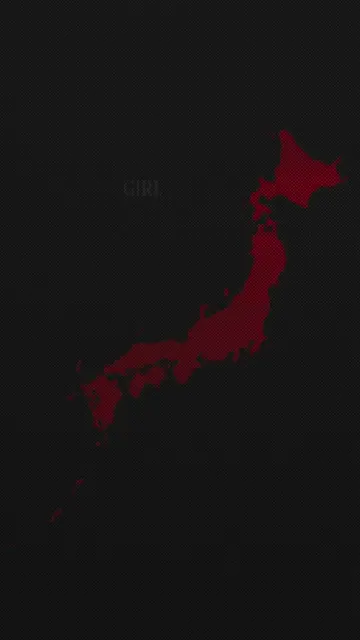
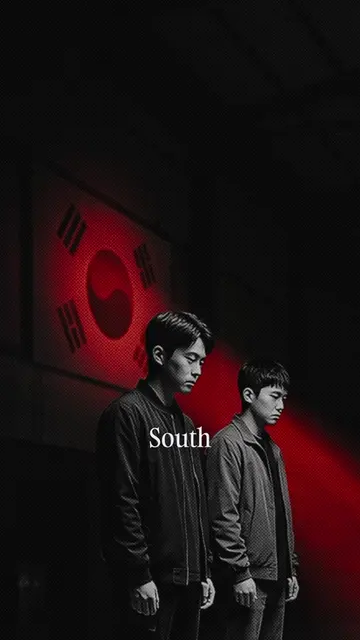
A billionaire was quizzed on TV about his own water bottle. On a Chinese TV show, a host held up a bottle of Wahaha water and asked the founder three questions: how many threads on the neck, how many ridges down the body, how many teeth around the cap. Zong Qinghou answered without stopping to think. Four threads, eight ridges, 18 teeth. The host checked on the spot. Every number was right. That performance fit the image perfectly. Chinese state media loved to call Zong 布鞋首富, the cloth-shoe billionaire. He wore shoes that cost about 30 yuan, roughly $4. He flew economy. He rode second class on the high-speed train. His office was under 50 square meters and didn't change for 30 years. By his own accounting, his personal spending ran under 50,000 yuan a year, about $7,000. He smoked 18-yuan cigarettes, about $2.50, until he quit. One wife, one daughter, one pair of cloth shoes. Three times China's richest person, and he made himself look like the most modest man in the room. Then Zong died in February 2024, and 10 months later, three people holding American passports, Jacky, Jessie, and Jerry, walked into the High Court in Hong Kong and said the accounting had been incomplete, meaning the public story of his life had left a few things out. See, there was a second family. Those three people were his other three children born between 1989 and 2017. An offshore trust at HSBC funded with $1.8 billion. A web of more than 100 companies. A former Hilton-family property in Los Angeles with 8 bedrooms and 16 bathrooms. None of it had appeared in the cloth-shoe story. No matter how humble or not he really was, the cheap shoes and the cheap cigarettes acted as a distraction. While the country was busy admiring how little he spent on himself, Zong was quietly moving $1.8 billion offshore for kids nobody knew existed. The "modest-guy" act wasn't a lie exactly. It was the reason nobody looked at anything else. So maybe here's the lesson. When a billionaire works this hard to look humble, that might be the trick. The 30-yuan shoes are the thing you're supposed to see. The $1.8 billion offshore might be the thing you're not.
More from @samuelszuchan
More breakout videos from this creator.