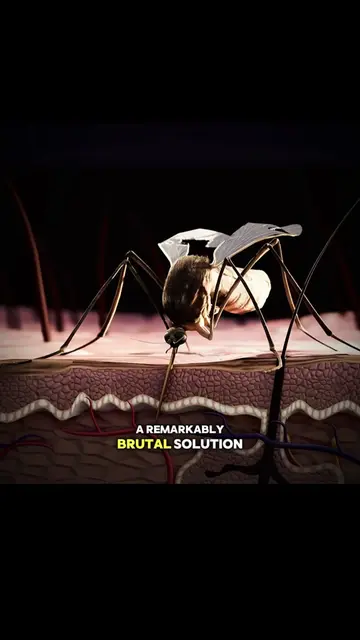
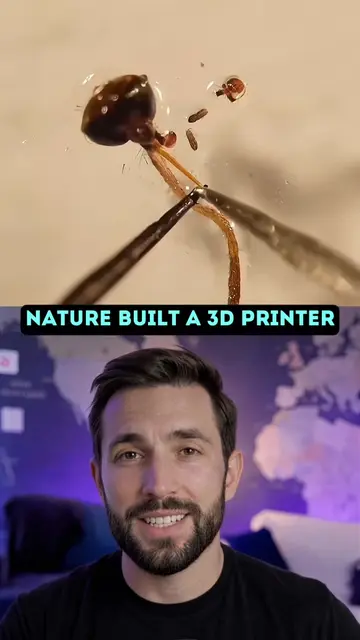
Number 5. The Albatross. This bird can fly 10,000 miles without flapping its wings once. Not gliding downhill, actually flying for weeks without moving its wings, not gliding downhill, actually flying for weeks without moving its wings. The Albatross figured out something that took human engineers over a century to understand. Wind doesn't blow at the same speed everywhere. Close to the ocean surface, water slows the wind down. Higher up, the wind is much faster. The Albatross serves between these two layers. It dives down toward the water to pick up speed, then pulls up into the faster wind layer, which launches it upward like a ramp, over and over. It's a rollercoaster that never stops. And the ocean builds the track for free. The bird's wings span up to 11 feet and lock into place like a folding table. The Albatross has a special tendon that clicks the wing open and holds it there with zero muscle effort. Engineers lost their minds a little and built autonomous drones that copy this exact technique. No engine, no battery, just wind layers. One drone flew over the Southern Ocean for 15 days straight without a single drop of fuel. The Albatross isn't calculating wind gradients or optimizing lift-to-drag ratios. It just flies. We needed supercomputers to catch up. Number 4. Whale fin turbines. Humpback whales are the size of a school bus, but they can do something that should be physically impossible. They can spin in tight circles underwater. An animal that weighs 80,000 pounds doing underwater donuts is not supposed to work. For a long time, engineers had no idea how they did it. Then someone looked closely at the front edge of a humpback's fin. It's not smooth. It's covered in large, uneven bumps running all the way down the leading edge called tubercles. Every aerodynamic textbook said bumps on a wing were bad because they create drag. Except the whale's bumps don't create drag. They break up the water into smaller channels. Each bump creates a tiny spinning current of water, keeping the flow attached to the fin longer. This means the whale gets more lift before the fin stalls out. It's how a massive animal spins on a dime. Wind turbine engineers spent decades trying to squeeze more efficiency out of smooth blade designs. Then they decided to copy the whale. They added tubercle-style bumps to wind turbine blades. The blades became 32% more efficient. That's the difference between powering a neighborhood and powering a city with the same equipment. The whale had been running this design for 30 million years. Number 3. The mosquito. You've been stung by a mosquito hundreds of times and barely felt it. Now think about the last time a doctor gave you a shot. You felt that one. The mosquito has been making a better one for 100 million years. A mosquito's needle isn't one piece. It's six separate interlocking parts working together, packed into something thinner than a human hair. Two of the six parts are tiny serrated saws. They don't push straight in. They alternate back and forth, cutting through your skin like a tiny zipper. Instead of one big push of pressure, you get hundreds of tiny micro-cuts. Your pain receptors barely register it. It's the difference between someone slowly pressing a finger into your arm versus tapping it 1000 times a second, really fast, before it even starts hurting. The mosquito injects a numbing chemical, giving you a free local anesthetic. Granted, it also gives you malaria sometimes, so it's not a perfect system. Number 2. The Namib Desert beetle. The Namib Desert gets about half an inch of rain per year. Your shower uses more water in 30 seconds than this desert gets in a year. And yet, the Namib Desert beetle isn't just surviving there. It's thriving. This grape-sized beetle has a bumpy back that is one of the most clever pieces of engineering on the planet. Every morning, fog rolls in from the ocean. The beetle climbs to the top of a sand dune and tilts its body forward, bowing to the fog. The tips of the bumps attract water, while the valleys between the bumps repel it. Tiny fog droplets hit the bumps, stick, grow bigger, and roll down the valleys straight into the beetle's mouth. It's basically a self-filling water bottle, no pump, no electricity, just bumps. Engineers copied the exact bump pattern to build fog nets that work the same way, set up in dry coastal regions. The nets collect fog droplets that run down into tanks below. One fog net the size of a volleyball court can collect hundreds of liters of drinking water per day from the air. Entire villages now get their drinking water this way because a beetle figured out how to do it 40 million years ago. Number 1. The pistol shrimp. There is a shrimp about the size of your finger that accidentally built a weapon that briefly reaches the temperature of the surface of the sun. The pistol shrimp snaps its claw so insanely fast that it shoots a jet of water at 60 miles per hour. That jet creates a cavitation bubble. When that bubble collapses, it releases a shockwave, a flash of light, and heat that reaches around 8,000 degrees Fahrenheit. For reference, the surface of the sun is about 10,000 degrees. This shrimp is operating at 80% of sun temperature with its claw. The snap is also one of the loudest sounds in the ocean, louder than a gunshot underwater. During World War II, submarines hid near colonies of pistol shrimp because the noise masked their own sound signatures from enemy detection equipment. The shrimp accidentally became a military asset. The pistol shrimp figured out how to weaponize the collapse of a bubble. Engineers are now studying this exact mechanism to build underwater cutting tools that require almost no energy. Instead of a blade or laser, you create a cavitation bubble in the right spot and let it destroy whatever you need destroyed. The military is genuinely trying to reverse-engineer what a finger-sized shrimp figured out by accident.