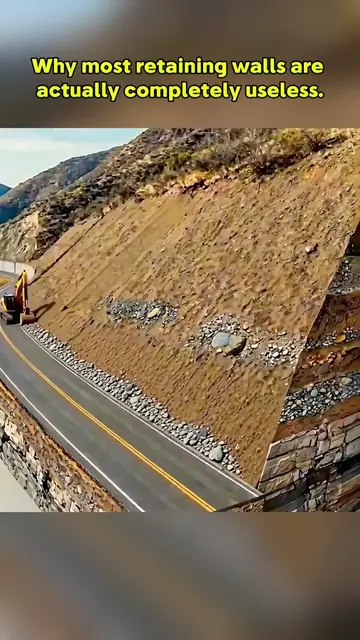
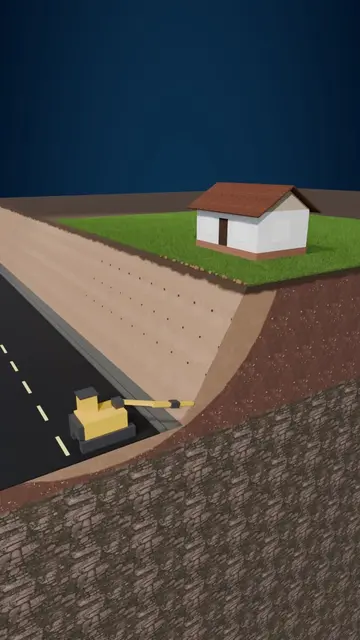
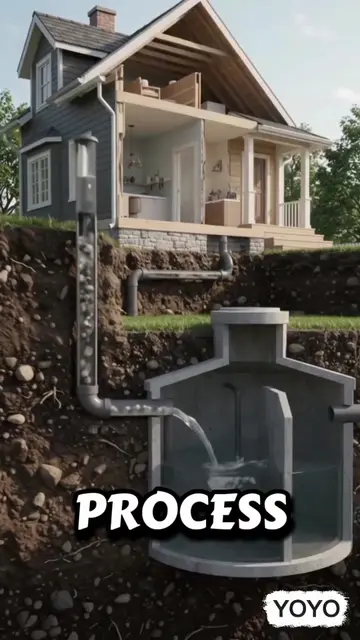
Can you believe it? A wall made with rebar, forms and concrete. The retaining wall looks solid like a fortress. What truly determines if it can last for decades may not be how thick the wall is, but it's actually this inconspicuous drainage pipe behind the wall. Many people, when building retaining walls, always think that as long as the foundation is big enough, the rebar sufficient and the concrete thick enough, they can keep all the soil behind the wall firmly in place. But the first scene will immediately show you things aren't that simple. Workers first prepare the foundation, tie the rebar, then set up the forms and pour concrete. The surface appears almost flawless, but when the heavy rainstorm truly arrives, the most dangerous things start to quietly emerge. Rainwater keeps seeping into the soil behind the wall. The originally loose soil gradually becomes saturated with water and the concrete wall traps the water inside without letting it drain. Many people think that behind the wall, it's just soil being held back, but in fact, as more and more water accumulates, the wall has to bear the extra and growing pressure from the water. Cracks start appearing on the wall surface. The stress at the bottom keeps increasing. Finally, the entire retaining wall gets slowly pushed outward from behind. In other words, what truly causes its collapse might not be insufficient concrete strength, but the focus during construction was only on holding back the soil, forgetting about drainage. So, reinforced concrete walls still need to be built, but you shouldn't directly backfill the soil behind the wall. Instead, leave a drainage space behind first, install a drainage pipe at the bottom, then surround it with a large amount of crushed stone. This crushed stone isn't just for filling gaps, there are plenty of voids between them. When rainwater enters, it can quickly percolate downward through these gaps, rather than staying trapped behind the wall for a long time. The drainage pipe underneath collects the water and promptly redirects it outside the wall. It's equivalent to installing a pressure relief channel behind the retaining wall. The wall's main task returns to simply holding back the soil mass, instead of confronting a big pile of accumulated water head-on. When heavy rain falls again, this time it'll be completely different. Rainwater will still enter the soil layers, but it will quickly flow down through the crushed stone layers, finally draining out through the drainage outlet behind the wall. It avoids forming large amounts of accumulated water. The wall remains unhurt.