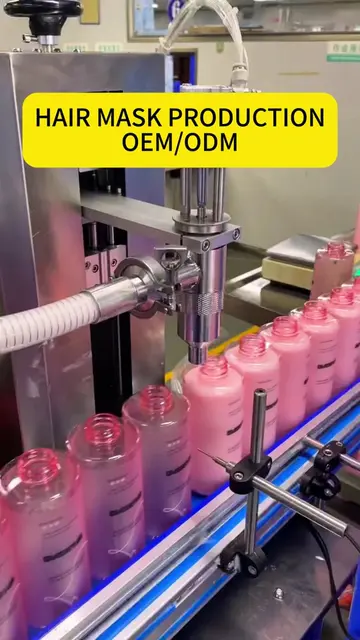
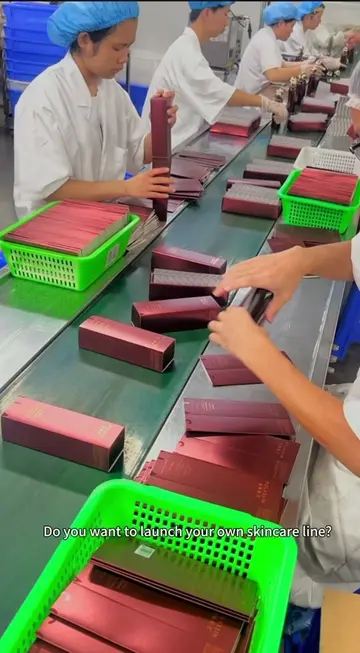
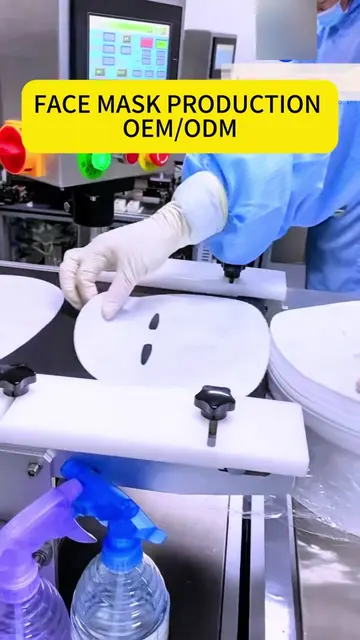
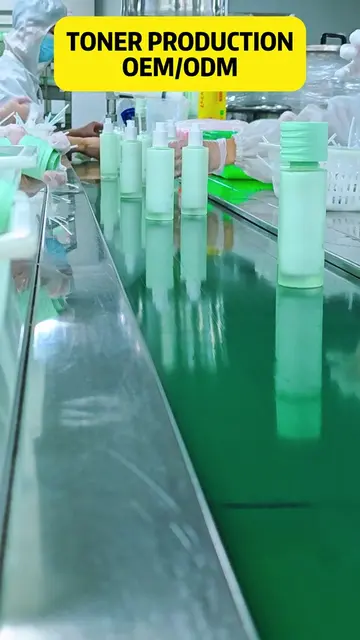
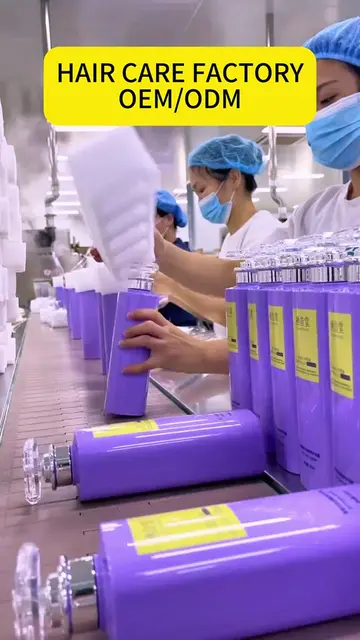
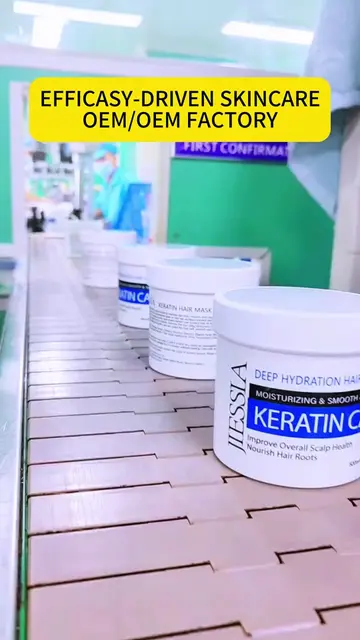
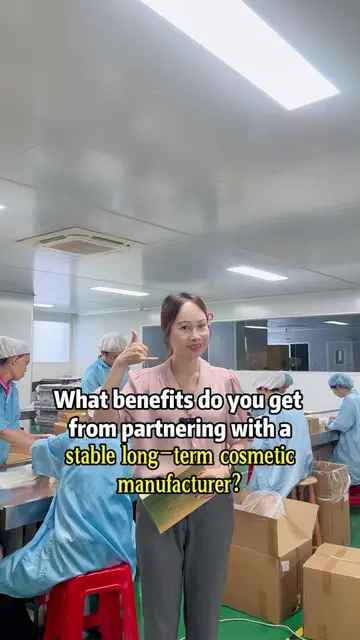
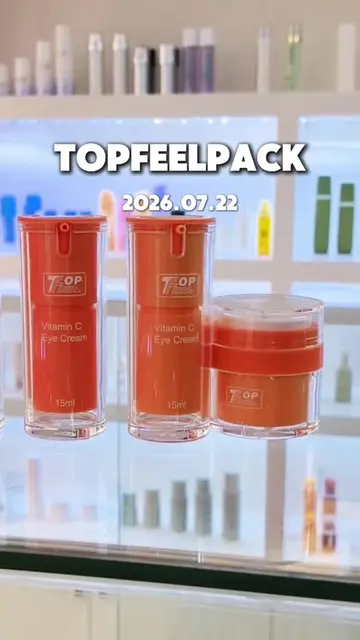
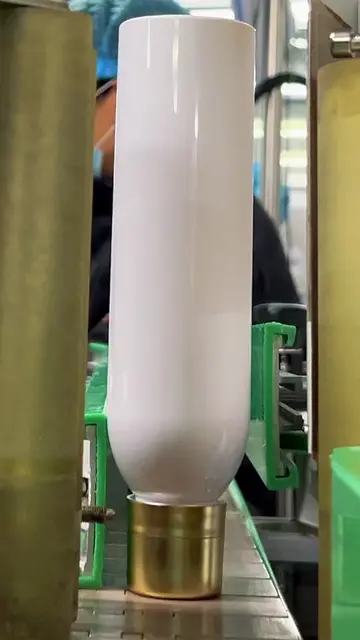
Do you ever wonder how the skincare products you use every day are actually manufactured? In this video, Kai will provide a one stop service tour showing you every step in detail. We're now at Kai's factory. The total area is around 3.3 acres. The floor area is 35,000 square meters with 4 buildings. The building in the center is our office. This largest one is our production workshop. That one is our cafeteria and the one on the far right is the staff dormitory. Now let me show you the most critical area. This floor is our R&D center. The total area is 1,500 m². Next I'll show you some of the achievements our factory has made in research and development. To date our factory has formed strategic partnerships with 10 research institutes worldwide, establishing joint labs and R&D centers here. Our research fields include organic plant applications, freeze dried powder production, natural active ingredients and yeast fermentation technology. We are currently involved in several cutting edge research projects here in China. What we're seeing now is the factory's observation corridor. It's a full 360 degree loop. Walking through it gives you a clear view of our emulsification workshop, a septic filling workshop and packaging workshop. I'm now standing in the heart of our factory, which is the emulsification workshop. Behind me are the emulsifying pots. There's a 100 kilogram one, a 500 kilogram one. This medium one is one ton and these two are two tons. Looking further ahead, these two giants are three tons each. There's seven or eight more of various sizes, making 15 emulsifying pots in total. Now come look at this. Can you guess what this massive tank is for? Look, Kai is 180 cm tall and I can't even wrap my arms around it. This is a 5 ton water storage tank. The equipment behind me is the legendary two stage Reverse Osmosis EDI water making system. The cost of the equipment and renovation for this emulsification workshop is enough to buy two Rolls Royces. Do you think it's worth it? We're about to enter the freeze dried powder aseptic filling workshop. Look at this line. This is for filling the lysozyme liquid for the freeze dried powder. After a series of steps, the bottles are washed and cleaned. Then they come out in a line to be filled with the lysozyme liquid. This is the semi finished lysozyme liquid. Once it leaves here, it's capped and labeled and then it's basically done. Let's go over and take a look at the freeze dried powder. Look, the initial process is the same, washing and air drying the bottles. They line up here too, but what's filled inside is the liquid that will become freeze dried powder. Check out the details. Since it needs to be freeze dried in a chamber, the silicone stopper is only pressed halfway down. I'll show you one. It's only pressed in this much at minus 42 degrees after 24 to 72 hours of freeze drying. The liquid turns into powder. That's the magic of it. Come take a look. This huge chamber here is the freeze drying chamber. It's 16 cubic meters. These trays of filled liquid are about to go inside for freeze drying. Let me show you. After 24 to 72 hours of freeze drying, this is what they look like when they come out. They're coming out now, so let me show you. Kai is 180 cm tall. Look at this door. Doesn't it look like a giant space capsule? Now our technician is taking them out. They're all frozen. Let's just grab one and take a look. Check out this fresh batch of freeze dried powder look. You can tell if freeze dried powder is good by its form. If it sticks to the walls, the process wasn't great. Ours meets a very high standard. Now let me show you the production process for single use vials. We start with polyethylene pellets, mold them, fill them with essence and then we have the finished product. I'll show you what you usually can't see. Let's look right inside the equipment. The film being blown right there is the polythene being shaped. Then it's processed, molded, and the essence is injected. From pellets to filled and sealed vials, it only takes 13 seconds. No extra preservatives are needed during this process. So these vials are nearly preservative free. This means the active ingredients from our library of 8,000 materials can work effectively. Let's go over there and see what the finished product looks like. Right ahead after the film is blown, it's molded and pressed together here and then it just drops out from the bottom. See that? It opens, then separates. The waste is discarded and the good parts are kept. And in here is our production and packaging workshop with 14 production lines in total. And over here is our fully intelligent sample retention room. It's quite impressive. Let's go in and take a look. Come in and look. These are the samples of the finished products manufactured in our factory. For instance, this mask has a three year shelf life. So we keep it here for at least three and a half years. This ensures we can trace it if any quality issues arise later. I'm now in the packaging material warehouse. This is the sixth floor. The fifth and sixth floors are 3,000 square meters each, totaling 6,000 and they're packed with materials. And the fourth floor is our finished goods warehouse. So after this tour, what do you think of the scale of Kai's factory? If you're interested in the beauty industry, you should definitely connect with Kai. You're very welcome.