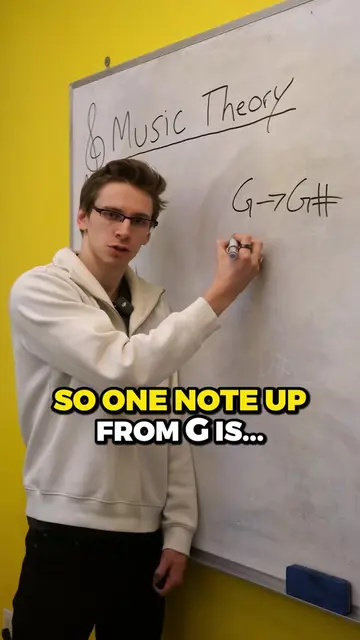
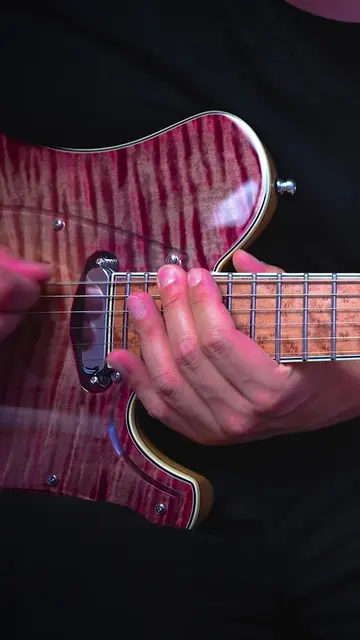
One of the main problems that a lot of guitar players have is they don't learn their scales properly. I've had so many clients who have been self-taught, learned a bunch of scale patterns, and they literally just stay as patterns and they don't know what to do with them. So how do we fix this? Well, first of all, you're going to save this video and you're going to send it to yourself so you never, ever have to second-guess yourself again. Today we're talking about the major scale and how that converts over to the minor scale. And this way you're actually going to understand all the terminology that those online guitar teachers throw out there and you're like you're supposed to understand it, minor thirds, flat fifths, and all that sort of stuff. We're going to learn the musical language, okay? And that all starts right here with the G major scale. That is also known as the Ionian mode. Yeah. So congratulations, you've learned a mode in the process here. Everything that you learn going forward will be based on this sort of default right here. A lot of the time when I throw the question out to students, you know, the difference between major and minor, they don't really have an idea. And it's quite simple. Major generally has a happy and uplifting sound. Minor is generally quite morose, melancholic, and sad. And it's that simple. So how do we take this happy scale pattern and turn it sour and sad? Basically, it's just a case of flattening notes. What does flattening notes mean? That means we just literally send them back. So first and foremost, you know, we're in the scale of G major, so we need to know what notes we've got available to us. So we write those down. We've got G, A, B, C, D, E, and F sharp. And then you're back to G again. And the formula for this is so, so simple. First of all, we're going to give ourselves a bit of a numbering system going on. So we've got 1, 2, 3, 4, 5, 6, 7, and then you're back to your, um, your root again, your octave, okay? Then what we're going to do is we're going to make a note of the notes that we need to change or flatten in order to make this minor. Some of the notes will stay exactly the same, okay? But some of them need to change in order to make this happy scale a sad scale. So it's this simple. We take the third note, we take the sixth note, and we take the seventh note from the scale, and we send them back by one fret each. We just flatten them, okay? So now when you hear these terms like flat third or minor third, or minor six, minor seven, you know where it's coming from. And that's going to give us a whole new scale to play with. The rest of it is going to stay exactly the same. Let me show you. So if we put this on the tab, we're going to have our root note, which is G. So that's 3. We are going to have our second note, which stays the same. So that's 5. But now what we're going to do is we're going to take our seventh fret and we're going to send it back by one fret, so that's going to give us 6 instead, okay? Then the next two, they stay exactly the same, so that's 3, 5. And then ding, ding, ding, look at that, we've got another note that we need to send back by one fret. We're flattening it. So that gives us the sixth fret again. And then the next note along, note number 7, that needs to be flattened as well, so that's going to give us what, third fret? And then we've got our octave point. And that is what's known as the minor scale, or the minor natural scale, or, if you like, the Aeolian mode. So congratulations, you've learned two modes in the space of what, six minutes or something like that. Then what you're going to want to do is definitely write the notes down, and this is how you can start to memorize the fretboard. If you start putting pen to paper and you write these notes down, it's going to become more memorable for you. So what have we got? Look for the commonalities. We've got G and A, okay? B, we've sent that back by one, okay? So that's going to become B flat, okay? Uh, the next note, what have we got? We've got a C, okay? Then we've got a D again. So these notes are the same, okay? And the next note along, what have we got? We've got an E, so that's an E flat. We've gone backwards, okay? And it's going to be the same thing for F sharp. Check that out. Now we've got what was F sharp, we send it back by one, that gives us an F, and then we're back to G again. And that's literally it. That's how you convert major over into minor. Even though these scales have got some common tones, some shared notes, it's amazing just what changing three notes will do. It's going to give you a complete different sound, a complete different vibe. Now, what you're going to do for yourself to stop second-guessing when it comes to music theory is save this video, send it to yourself for later on, go back and watch a couple of my other ones, and then head over to my bio and check out my Simple Guitar Theory system, so you never, ever have to second-guess yourself again when it comes to guitar theory. Check it out.