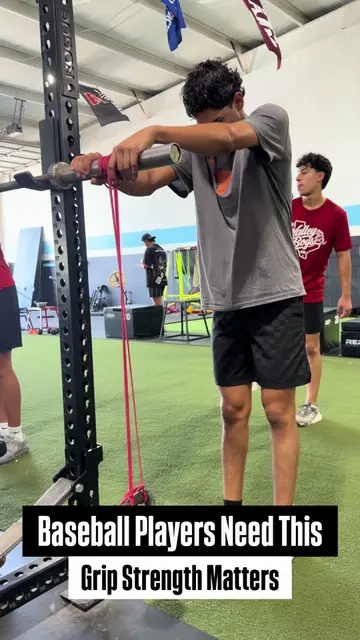
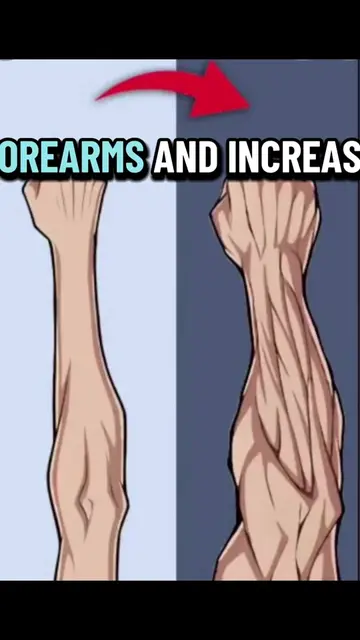
Forearms are the most visible muscle on your body. Every time you reach for something, shake someone's hand or roll up your sleeves, they are on display. And yet most people never train them directly. These five exercises will build bigger, thicker, more defined forearms than anything else you can do, with or without a gym. Before we start, drop a comment. Do you train forearms directly? Or have you been skipping them your whole life? Exercise 1: Dead Hang. The dead hang is the single most underrated forearm exercise that exists, and the most accessible. Grab any bar with an overhand grip, hang with arms fully extended, and hold for as long as possible. That is the entire exercise. And the forearm pump it produces within 30 seconds is unlike anything most people have felt from dedicated arm training. The sustained grip required during a dead hang forces every muscle in your forearm, the flexors, extensors and the brachioradialis to fire continuously under load for the entire duration of the hang. This sustained time under tension is what builds forearm size and grip endurance simultaneously. Start with three sets of maximum hang time. Build towards 60 to 90 seconds. Every second past the point where your grip wants to give out is where the forearm growth actually happens. Exercise 2: Towel Pull-Up. Take a standard pull-up and remove the bar. Replace it with a towel draped over a bar or door frame, one end in each hand. Now pull yourself up. The unstable thick grip of the towel forces your forearms and hands to work at an entirely different level than a standard bar because your fingers, wrists and forearms must stabilize the grip constantly throughout every single rep. This exercise directly targets the finger flexors and wrist flexors, the muscles responsible for the thick, veiny forearm appearance that grip-dominant training produces. Even if you cannot do a full pull-up with the towel, simply hanging and attempting to hold the position for time produces exceptional forearm stimulus. Perform three sets of maximum reps or maximum hang time with 90 seconds rest between sets. Exercise 3: Zottman Curl. Most people pick either bicep curls or reverse curls and miss half the forearm in the process. The Zottman curl is the only exercise that trains both the flexors and extensors of your forearm in a single movement, making it the most complete forearm builder available with a single piece of equipment. Here is how it works. Grab a dumbbell or any weighted object in each hand with an underhand grip, palms facing up. Curl both weights up toward your shoulders exactly like a standard bicep curl. At the top, rotate your wrists so your palms now face downward. Then lower the weight slowly back to the starting position in this reverse grip, taking three to four seconds on the way down. At the bottom, rotate your palms back to facing up and repeat. The upward phase with the underhand grip loads your biceps and forearm flexors. The slow downward phase with the overhand grip places your forearm extensors under eccentric load, the most powerful stimulus for muscle growth available in any exercise. That slow reverse lowering is the part most people rush through and the part that builds the most forearm size. Do not skip it. Perform three sets of 10 to 12 reps with 60 seconds rest between sets and feel both sides of your forearm working in a way no single curl variation has ever produced. Exercise 4: Reverse Wrist Hold. Most forearm training targets the flexors, the underside of the forearm. The extensors on the top side are almost universally neglected, which creates an imbalance that limits grip strength and leaves the half of the forearm underdeveloped. The reverse wrist hold fixes this directly. Place your forearm on a flat surface with your palm facing down and your wrist hanging off the edge. Raise your hand upward against resistance and hold the top position for 20 to 30 seconds. Training the forearm extensors produces the muscle definition visible on the top of the forearm. The separation and detail that makes forearms look genuinely developed rather than just thick. Balance between flexors and extensors also significantly improves grip strength, wrist stability and reduces the elbow and wrist pain that underdeveloped extensors cause over time. Perform three sets of 20 to 30 second holds per arm with 45 seconds rest. Exercise 5: Farmer's Carry. Pick up the heaviest objects you can carry. Dumbbells, water jugs, a loaded backpack held by the straps, anything with weight and a handle. Walk with them for 30 to 60 seconds keeping your wrists neutral, your shoulders back and your grip as tight as possible throughout the entire walk. Set them down only when your grip genuinely fails, not before. The farmer's carry builds forearm size, grip endurance, wrist stability and total body strength simultaneously because carrying heavy loads while walking forces every muscle in your hands, wrists and forearms to maintain maximum tension under real-world functional demand. This is the exercise that produces the kind of forearm strength that actually transfers to daily life, carrying bags, opening jars, moving furniture, not just the controlled environment of a gym. Perform three to four sets of 30 to 60 second carries with 60 to 90 seconds rest between sets. Five exercises, every part of the forearm covered. Dead hangs build the foundation of grip and forearm endurance. Towel pull-ups intensify the grip demand beyond what any standard bar can produce. Zottman curls train both flexors and extensors in a single movement. Reverse wrist holds build the extensor definition that most people never develop. And farmer's carries translate all of it into real functional strength that shows up everywhere. Train these three to four times per week. Progress your hold times and carry distances week by week. Within 30 days you will feel the difference in your grip. Within 60 days you will see it in your forearms. If this video showed you what dedicated forearm training actually looks like, subscribe.