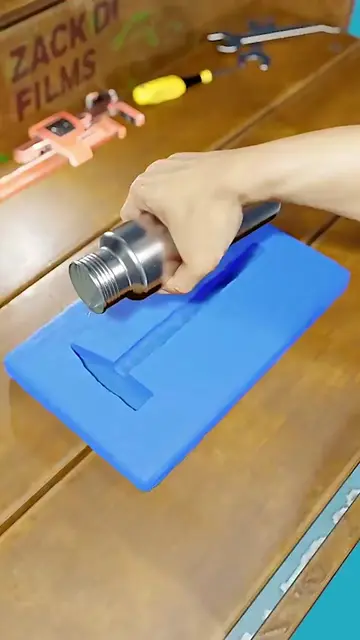
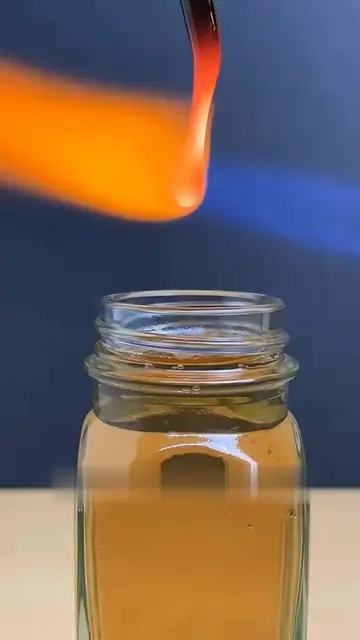
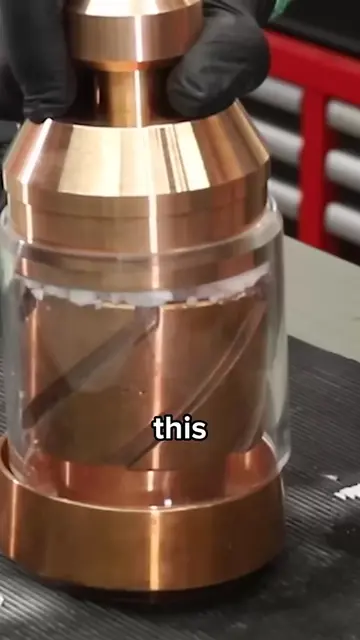
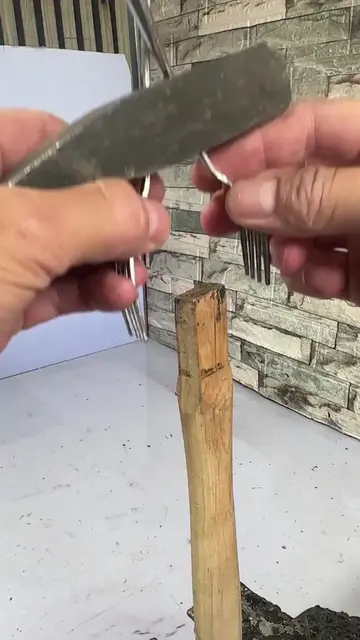
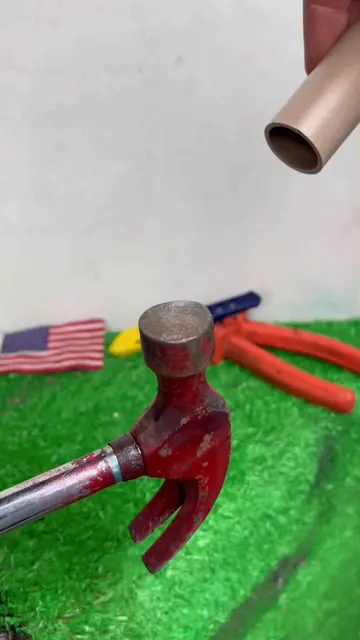
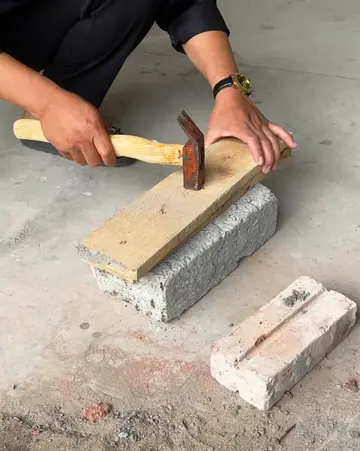
A regular ice hammer is pretty weak and breaks doing even the most basic of hammer things. However, ice doesn't have to be this weak. Adding just a few strips of paper towel before freezing turns it into a much stronger ice cube as you can see here. So I figured, let's take this principle to the extreme to see how strong and functional an ice hammer can be. And as you'll see later, this took me down quite the ridiculous rabbit hole. The first step to making the world's strongest ice hammer is to make the hammer mold. I used a silicone mold kit and after thoroughly mixing it and pouring it over an actual hammer, I left it outside for about 24 hours. This is my first time doing this by the way, so I apologize here if it looks a bit unprofessional, I was just trying to minimize the amount of silicone I needed. Anyway, with a few small adjustments to the mold, it was ready to go and after trying it with some water, the hammer freezes quite nicely, but of course it's not strong yet. Paper towels aren't the only thing you can add to ice to make it stronger, it's just the classic ones. So I wanted to do some testing to determine the best material to add and thought of eight possible options. For the first sample I decided to go with string. I don't actually think this will do that well, but this whole process reminds me of adding rebar to concrete, so I'm just really curious if something long, slender and good in tension will help at all. Next I had some leftover pillow stuffing called Oomph that's kind of foamy but also has strands of cotton. For the third one I got a bit experimental and grabbed some sawdust. It doesn't really have any long strands which might be critical, but it does absorb water so I was curious. Next I got basically another version of sawdust. These have larger pieces that also absorb water so I figured maybe they could interlock or something. Next are these cotton balls which should do pretty well, but I'm not sure if the ball shape will mess things up. Next I went for a slightly more rigid option that also absorbs, which is this sponge. Next I'll of course have to try out the paper strips just for comparison and maybe they'll do the best after all. And finally, the stringiest of string things, asparagus. I boiled this leftover asparagus I had and then shredded it a bit with forks before adding it. With these eight samples prepped, I just had to add water and fill with more material to make sure it was full, and then I placed them in the freezer overnight so that the next morning I'd be ready for strength testing. In engineering, accurate and consistent testing is absolutely critical, which is why the first and most common test of a material strength is the Robert J. Grankowski test. Looking more closely at this first trial and I was actually pretty surprised at how well the string seemed to help, at least when you compare it with regular ice which shatters into an insane number of pieces.