Loading video…
All breakouts
803Talking HeadContrarian hookHealth
Hook
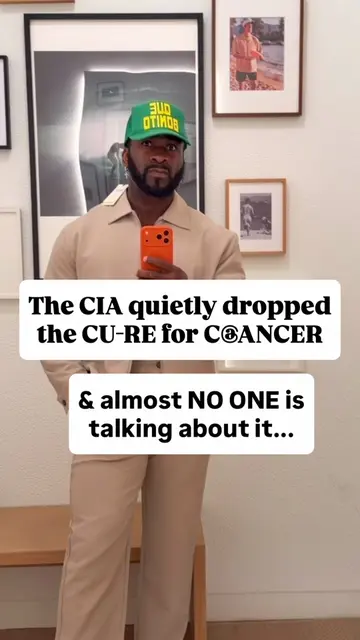
C@ncer is a parasite and the cure is $5
@victortroyikaniofficial
11.5K followers · usually 629 views a post
Views
504.4K
Likes
24.7K
Comments
773
Shares
10.0K
Why it worked
The video uses a highly controversial and provocative hook that challenges conventional medical wisdom, which naturally drives engagement and curiosity.
Summary
The video discusses the theory that cancer is a parasite and suggests that anti-parasitic drugs and natural remedies could be effective treatments. It cites various studies and claims that these treatments are ignored by major cancer centers due to the lack of patent potential.
Structure
- 1Introduction of the theory that cancer is a parasite.
- 2Explanation of how anti-parasitic drugs target cancer cells.
- 3Discussion of specific anti-parasitic drugs and natural remedies.
- 4Explanation of why this research is not widely adopted.
- 5Presentation of evidence from studies and case reports.
Product placement
Dr. Eric Berg (a) ACTS — he is the subject of the video, providing health advice and demonstrating his knowledge on the topic; removing him would change the video entirely. Ivermectin (a) ACTS — it is mentioned as a potential cancer treatment and shown on screen; removing it would change the core argument of the video. Fenbendazole (a) ACTS — it is mentioned as a potential cancer treatment and shown on screen; removing it would change the core argument of the video. Wormwood (a) ACTS — it is mentioned as a potential cancer treatment and shown on screen; removing it would change the core argument of the video. Black Walnut Hull (a) ACTS — it is mentioned as a potential cancer treatment and shown on screen; removing it would change the core argument of the video. Clove (a) ACTS — it is mentioned as a potential cancer treatment and shown on screen; removing it would change the core argument of the video.
Original caption
Here’s what most people don’t hear enough about when it comes to “detoxing” your body: Your everyday environment can expose you to heavy metals, pesticides, chemicals, and other contaminants—and your body has natural systems for processing and eliminating many of them. That’s why I take a whole-body approach instead of focusing on just one thing. I focus on supporting: • 🌿 Gut health & digestive function • 🧹 The body’s natural detoxification pathways • 🛡️ Healthy immune function • ⚡ Energy & overall wellness • 🧠 Healthy cognitive function My approach may include botanicals such as: 🌿 Wormwood 🌿 Clove 🌿 Black walnut 🌿 Ginger These herbs have a long history of traditional use, although research on their effectiveness for treating human parasitic infections varies. I also use clinoptilolite zeolite as part of my personal wellness routine. Zeolite is a naturally occurring mineral, but claims that it can remove every type of toxin, heavy metal, PFAS, mold toxin, or radioactive particle from the human body should be viewed carefully—the evidence depends on the specific substance and how the product is used. And if you’re doing any type of cleanse, more is not always better. Your body already has sophisticated detoxification organs—including your liver and kidneys—so safety, product quality, and proper guidance matter. 💬 Comment “CLEANHOUSE” and I’ll send you my parasite-cleanse protocol. Comment “RESET” for the zeolite I use in my daily wellness routine. 🎥 Speaker: Dr. Eric Berg #parasitecleanse #detox #zeolite #heavymetals #guthealth
More from @victortroyikaniofficial
More breakout videos from this creator.