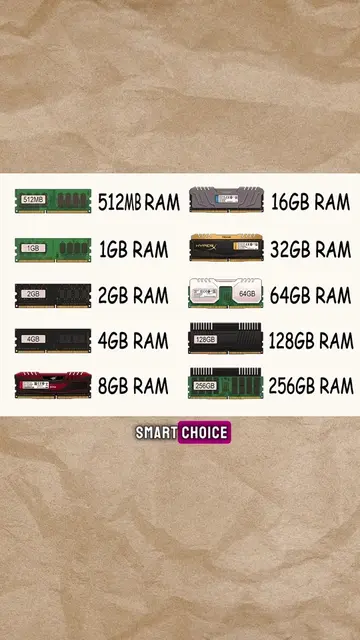
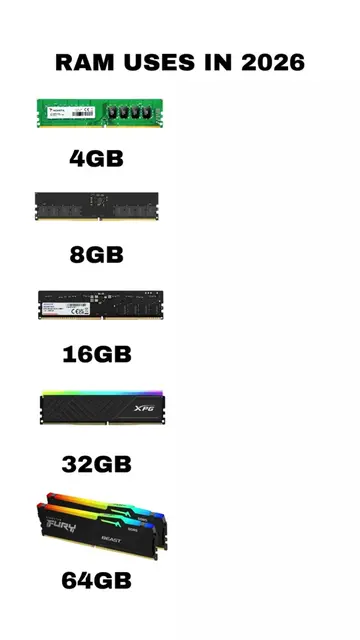
For years, 16GB was plenty was gospel. So a gamer walks into 2026, buys a 16GB machine to save money during the price spike. Loads up a new AAA title with Discord and a browser open behind it. The game starts hitching, stuttering, textures popping in late. Not because the graphics card is weak, because the desk is full and the system is frantically shoving overflow onto the much slower drive. That's the brutal shift nobody warns beginners about. In 2026, 16GB is no longer the sweet spot. It's the floor. Modern games now routinely ask for it as a bare minimum. Background AI features in Windows quietly sip from it, and a single browser session can swallow several gigabytes on its own. It still runs every day work and lighter esports games perfectly well. For a student writing essays or someone grinding Valorant, 16GB genuinely still does the job. But if you game seriously or create anything, treating 16GB as enough is how you buy a machine that feels tired. So what's the number that actually breathes easy today? It costs more than ever. Get one. 32GB. This is the size that lets you stop thinking about memory. With 32GB, a gamer can run a demanding title while streaming to Twitch, Discord, Spotify, and a wall of browser tabs all alive in the background and nothing chokes. A young video editor can cut 1080p footage, push through large Photoshop files, and run a virtual machine on the side. It's the amount modern game consoles are built around, which is exactly why developers now aim their games at it. Here's the part that stings. Thanks to the shortage, a 32GB DDR5 kit that sold for around $100 in 2025, now routinely runs 3 to 400. And an analyst doesn't expect real relief until 2027 or later. So this is where the fearmongering is actually justified. If you're building now, do not impulse-buy a bloated amount you'll never use and do not cheap out and 16GB to dodge the price and regret it in six months. 32GB is the honest, right-sized target for almost everyone who games or creates in 2026. One quiet trap while you're spending this much: if your board has four slots, don't fill all four with small sticks to reach 32GB. By two larger sticks instead. Cramming four modules in often forces your memory to run slower, so you'd pay premium prices for worse speed. So 32GB is the smart buy. But there's a bigger number that a specific kind of person genuinely needs and a much larger crowd wastes money chasing. 64GB. Where everyday computing ends and specialist work begins. It exists for a real reason. A creator editing 8K video, a 3D artist rendering heavy scenes in Blender, or a developer loading a local AI model on their own machine. These people watch their memory meter climb past 32GB for real, and for them, 64GB isn't flexing. It's the difference between finishing the job and watching it crash. Now the fearmongering flips direction, because the danger isn't too little, it's overpaying. During a shortage this severe, 64GB can cost close to $900. A casual gamer who buys it to be safe has just spent the price of a graphics card. RAM, graphics card. Half of it glowing for nothing. If your software doesn't consistently push past 32GB, you will not feel a single extra frame. So the honest rule: buy 64GB only if a specific program demand. Program. Honest rule. Program. Above this, we leave normal people behind entirely. 128GB and up. 128GB, 256GB, and beyond aren't really PC numbers anymore. They're workstation and server territory. This is for visual effects studios rendering movie frames, research machines running scientific simulations, and developers training serious AI models locally. Those people watch their memory meter climb past 70 gigabytes or more just to wake up. The reason to even mention a spec sheet number intimidates you. If you spot a secondhand office server stuffed with 256GB, don't wonder if your gaming PC is somehow behind. It isn't. This much memory needs special motherboards, expensive workstation chipsets like Threadripper or Xeon, and can cost as much as a used car. For anyone reading this to build or buy a computer, this whole tier is background noise. You'll never touch it, and that's completely fine. Never. Touch. It.