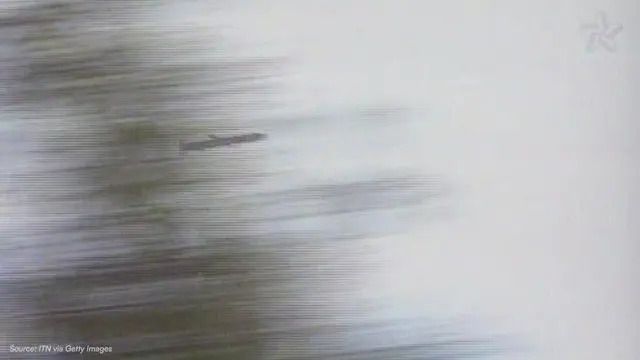
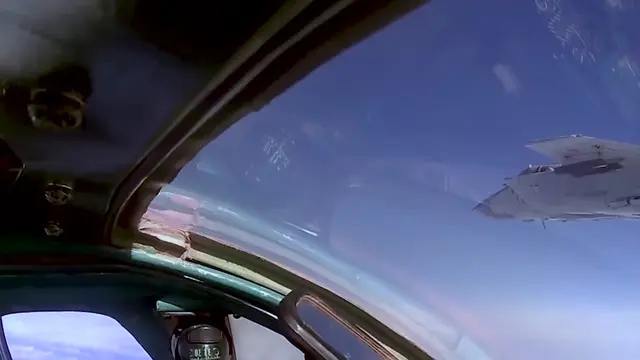
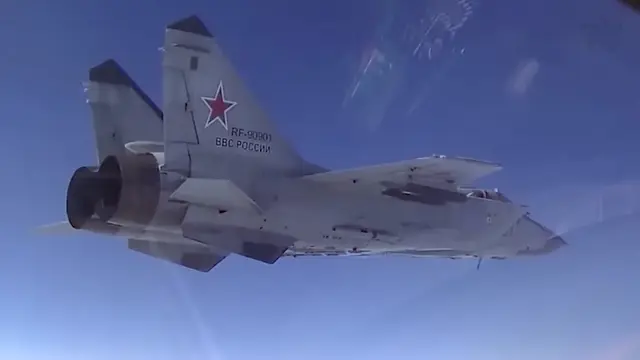
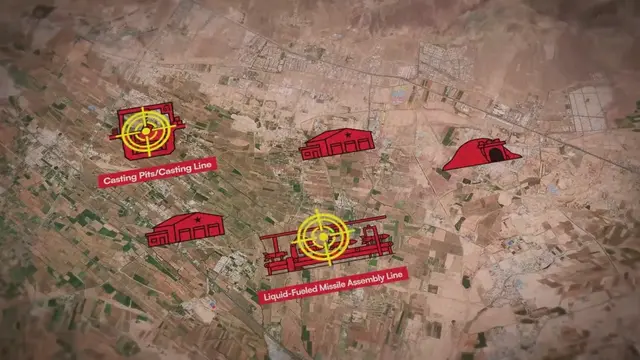
When you come for a US warship, you better not miss, because you won't get a second chance. At 0200 local time on January 14, 2024, a modified anti-ship ballistic missile streaks upward from a mobile launcher in Hodeidah, Yemen. At a speed of 3.4 kilometers per second, in less than a minute, it will intercept its intended target, the USS Laboon. As it continues skyward, the missile's GPS guidance system locks onto pre-programmed coordinates that an Iranian ship in the Red Sea passed along to them. The Houthi operators, shielded in a reinforced bunker two miles from the launch site, monitor telemetry data through encrypted Iranian communication systems. While they grin with excitement at the thought that they may finally hit a US ship, they don't realize that the missile's inertial navigation system is drifting by 0.5 degrees. While not enough to be noticeable now, this minor deviation will have major consequences as the weapon arcs for the Gulf of Aden. The missile you see screaming towards the Laboon is a modified Iranian Khalij Fars missile the Houthis have repurposed into an anti-ship missile. Due to its maximum range of just 186 miles, Houthi operators must position launchers dangerously close to the coastline. And while this move makes it easier to hit US targets, it also makes them much more vulnerable to US sensors and counter-battery fire. It is a risk they take since they feel this is the best shot they have at the Laboon, since it all comes down to a simple math problem. You see, the missile's circular error probable, a fancy word for its accuracy, is about 150 meters or 450 feet. With the Laboon's length of 510 feet, that means the vessel must either be at anchor or moving extremely slowly to hit. If moving any faster than a few knots, this missile won't have a snowball's chance in hell at hitting anything. Unfortunately for the Laboon, the missile is coming at exactly the wrong time. Although destroyers like the Laboon have four massive gas turbine engines that can propel the ship at more than 30 knots, they come with a major downside. While the ship has a fuel tank capacity of 450,000 gallons, at full power, the ship will burn a staggering 6,500 gallons per hour. This means the ship can't run around as fast as it can all the time, or it'll run out of gas pretty quickly. Additionally, running the engines 24 hours a day means at some point, the engines have to be tagged out for mandatory routine maintenance. Often to save fuel and perform this required maintenance, ships like the Laboon will come down to what is called trail shaft. Trail shaft is when all the engines except one are offline. During this time, the ship is severely limited in speed and maneuverability, and it is at this worst possible time the Houthis strike. Back on the Laboon, all is quiet as people are trying to pass the time on an otherwise boring mid-watch. As the ship is steaming along at 3 knots, she is barely moving faster than the current, which essentially means the ship is almost stationary. During this time, the quiet calm of the early morning is shattered as a track from almost 200 miles away splashes across their radar screens. Although not yet picked up on their own sensors because of the distance and foul weather, the crew confirms the quick calculations via their own Aegis combat system that this track is indeed fast, hostile, and barreling straight at them. But how can they shoot something they can't even see themselves? Thankfully for the Laboon, they are getting an assist from this plane here. This aircraft is the E-2D Hawkeye, and it is currently orbiting the Red Sea at 27,000 feet. Within seconds of the missile's launch, its massive AN/APY-9 radar dome picks up the threat and instantly knows it's a missile due to the contact's course, speed, and flight pattern. With its scan rate of six revolutions per minute, the plane can search hundreds of square kilometers of territory at a time and provide updated position data every 10 seconds. The Hawkeye's crew almost instantly began passing the missile's track via Link 16 to the Laboon as the missile climbed. Because the Hawkeye is up something called Cooperative Engagement Capability with the Laboon, the aircraft can keep passing tracks to the destroyer and use this data for a fire control solution, even if the ship can't see it with their own sensors. And although they have the track data, they now have just 30 seconds to respond. As the Houthi missile reaches apogee or the highest point, it turns over and begins its terminal dive phase. The purpose of this is to conduct what is called a high-dive attack. This is when a missile aims to exploit a critical weakness in most ship's defense networks, where barreling from straight over the top will seek a blind spot in the ship's radar. However, the SPY radar protecting the Laboon.