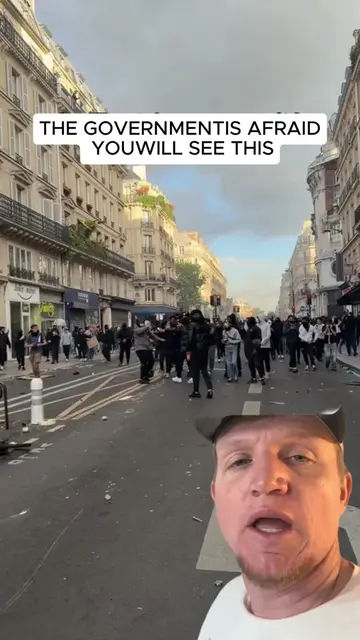
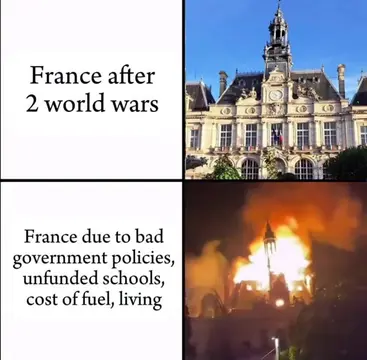
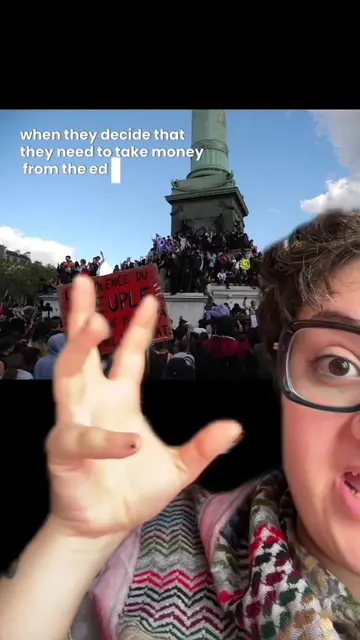
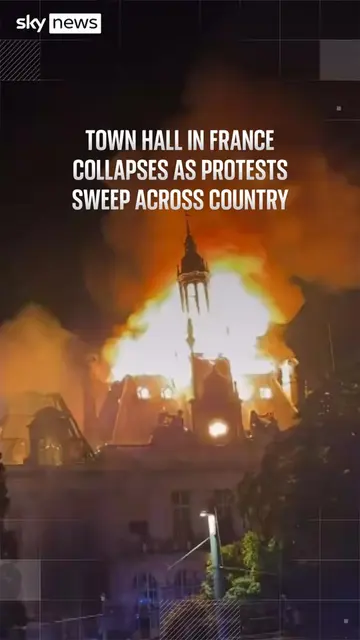
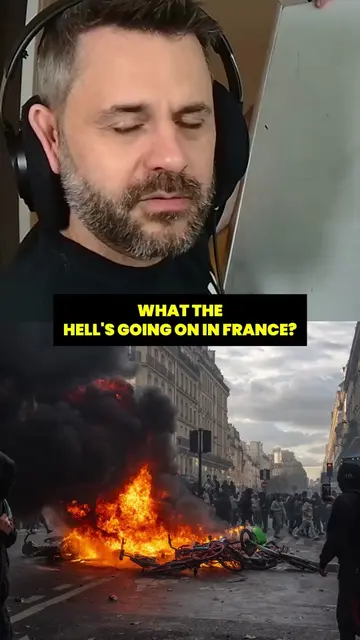
Breaking right now, France is losing control of its own country. So let's just look at what's unfolding here, shall we? Schools are burning, firefighters are being attacked, police officers are being beaten in public, public transport's been stopped, hundreds of schools closed, kids aren't at school, they're burning down their schools instead. Roughly 3,000 people arrested. 3,000. 2,000 in a single day. And this isn't just some distant country on the other side of the world. Let me just remind you where it is. It's our friendly, cooperative neighbors across the channel, France, one of the richest countries on Earth, a nuclear power, a G7 economy, 20 miles from Britain. Britain, I would say, don't you dare look away tonight because France has spent decades conducting one of the biggest experiments in mass migration and integration in Europe. And tonight, while its politicians argue about education funding, the state is fighting to restore order on its own streets. Now, I want to be precise. We don't know that the people carrying out these attacks are migrants, so I'm not going to tell you that, but neither should we pretend the wider argument about France's social cohesion doesn't exist. I'm just stunned actually watching that clip back again. I've seen it a few times today, but it is completely abhorrent. That is a police officer in Belfort on the floor, surrounded, kicked repeatedly, including kicks to the head. He loses consciousness. It's terrible. It's unforgivable. Now, an investigation into attempted murder has been opened. But let's be frank, this isn't a protest in France. This is a challenge to the state. This is a challenge to the very fabric of France's identity. A school isn't merely somewhere you have lessons, it's an institution of the state, and a fire engine isn't the government, it's there to save your life. And a police officer isn't some abstract symbol of Emmanuel Macron. So when all three become targets, you need to start asking a much bigger question, such as who is actually running the country, perhaps? The government or the streets? And now comes the part that should really worry you, I argue. The government has started conceding. They're backing down because one of the measures opposed by students has been completely scrapped. Meetings with student representatives have been granted, given the green light. A French news outlet, Le Monde, is describing it as the government's first retreat, quote unquote. Now, listen carefully, because the students peacefully protesting may have legitimate grievances. They're talking about teacher shortages, overcrowding in classrooms, complaining there's 30 to 35 children in a classroom. I mean, goodness me, look in Britain and we've had that for decades. Poor facilities and so on and so on. The list goes on. No aircon, it's been a hot summer, boohoo. They have every right to protest. I grant them that. And there's no evidence that the peaceful student demanding a better school is the same person setting fire to it, nor can we establish that violence caused this concession. But what does the rioter really think? What does that person who's burning down a school or a fire engine or beating a police officer or setting a fireman to a light? What does he really think about it? What does the thug behind the burning barricades see? Well, they see chaos, arrests, police injured, schools closed, emergency meetings, complete anarchy. And then the government moves, they adjust and they back down. So what lesson has he just learned? I guess make enough noise and somebody listens, somebody caves in, cause enough chaos and somebody negotiates, make the state lose control and somebody gives you something in return. Because if that becomes the perception, if that becomes the norm, rioting has just acquired political value. And once this order appears to get results, well, you get more disorder. France's government says the movement has changed in nature over the past couple of days. What began as legitimate school protests has now, in the government's own words, become urban violence. You can say that again. Think about what that means though, urban violence. The rioter causes the chaos and the ordinary family loses the school. The rioter attacks public transport and the ordinary worker loses the bus. The rioter attacks the police and the whole neighborhood gets a riot squad. The violent minority creates the problem and the peaceful majority pays the damn price. And there's something else here as well to think about. These aren't grizzled revolutionaries, they're mostly teenagers. So what are these kids learning? What values and lessons have they got to take into adulthood? The democracy means persuasion, elections and peaceful protest, or maybe they're beginning to think that if you cause enough trouble and the people in charge, well, they'll start moving and backing down. Because once that lesson takes hold, the next riots already started. And now let's add in politics as well. Hard left parties in the country are driving and encouraging this violence. We saw the mayor of Saint-Denis going down to pretty much celebrate with rioters and excusing some of the violence he saw. That bother way is reportedly according to government intelligence, even though the parties deny it. Britain, here's where I want you guys to pay very close attention. Because France, just like Britain, is having its own enormous argument about mass immigration. It's been going on for a few decades now. The question for the government is whether the country successfully integrates that change. And that is why these pictures matter to Britain. This is why it's so pertinent to Britain. France demonstrates how serious the question of cohesion becomes once a country's already deeply divided over immigration. We're talking about identity and belonging, and then serious disorder arrives on the top of it. So if that sounds familiar, the West seriously needs to think about this. Who makes the rules? Who obeys them? And who enforces them? And what happens when somebody decides the rules actually don't apply to me? Does the state stand firm or does the street discover that disorder actually works and gets results? Britain should be asking that question before we ever find ourselves staring at pictures like this, say, from Birmingham or Manchester or London, because it could be one of those cities, the images you're seeing on your screen now. Not afterwards, before, long before. Because our politicians keep asking, how many people can Britain take? I'd say, perhaps that's the wrong question. In fact, it definitely is the wrong question. Ask them this, how much immigration can Britain successfully integrate while remaining a cohesive country? Because those two numbers won't be the same, I can guarantee you. And if ministers can't tell us how integration keeps pace with immigration, if they can't explain what newcomers and their descendants should expect from Britain and what Britain expects in return, if they can't tell us what holds everybody together when politics gets angry, then they're not managing immigration. In my opinion, they're gambling with your country and with our future. And once you lose the value of law and order, the question then becomes, what will the government give them to make it stop? How will they back down? It's the most dangerous thing a government can teach, is that a mob gets results.