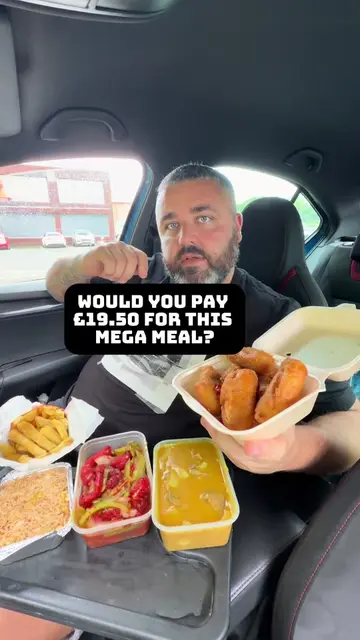
Right now, somewhere in Britain, a family is handing over 30 pounds for a Friday-night Chinese, and feeling like they've treated themselves. But that bag of foil containers cost the takeaway less than a fiver to fill. The chicken balls are mostly batter, the curry sauce came from a tub of powder, and the prawn crackers, pure profit. Tonight, I'm revealing 20 secrets the trade would rather you never learned, because once you see them, you can never unsee them. Let's countdown from 20. Number 20, the prawn crackers that cost almost nothing. Start with the thing that lands on your table before you've even unfolded the menu. Those prawn crackers feel like a free gift, a little kindness from the kitchen. They are nothing of the sort. A catering sack of uncooked prawn cracker pellets costs a takeaway around 8 pounds and holds enough to fill a thousand of those small white bags. Do the maths and each bag works out at under 2 pence in raw materials. They puff up in hot oil in about 4 seconds, tripling in size, which is the whole trick. You are not buying prawns. There is barely a trace of prawn in them, mostly tapioca starch, a little flavouring, and a great deal of air. Yet add them to your order as a side and you will pay 1 pound and 50 pence, sometimes 2 pounds. That is a markup of around 90 times. When a chippy sells you a bag of chips, the potato is a real cost. When a Chinese takeaway sells you crackers, you are paying for fried air and the sound of a crunch. The clever part is psychological. A free handful while you wait softens you up, makes the place feel generous, and nudges you towards spending more on everything else. The crackers are a loss leader that isn't even a loss. Next time you crunch one, remember you just ate the most profitable item in the entire shop. Number 19, you are paying for the foil. Lift your whole order out of the bag and look at what it actually is. Five foil containers with cardboard lids, two paper bags, a fistful of napkins, a couple of sauce sachets, and a set of wooden chopsticks you will never use. That packaging is not thrown in for love. A foil container with a lid costs the takeaway roughly 8 to 12 pence. Multiply across a family order and the shop has spent perhaps 60 pence putting your food in boxes, and that cost is quietly built into every dish price. Here is the part that stings. The portion sizes are designed around the container, not around your appetite. The standard foil tub holds a set volume, and kitchens fill it to a line, not to a weight, rice especially. A scoop of rice that costs the shop about 15 pence fills that tub to the brim and sells for 2 pounds and 80 pence as special fried rice. You are buying a box, and the box is mostly the point. Restaurants learned decades ago that people judge value by how heavy the bag feels walking back to the car. So the containers are generous in size and modest in contents, and the weight in your hand does the selling. The food settles, the lid comes off at home, and suddenly it looks like rather less than you remembered. That is not your imagination. That is container economics, and every takeaway in the country runs on it. Number 18, egg fried rice and special fried rice are the same rice. This one makes people genuinely cross when they realise it. On almost every British Chinese menu, egg fried rice sits at around 2 pounds and 60 pence and special fried rice at around 3 pounds and 50 pence, nearly a pound between them. You would assume the special is a different, grander dish. It is not. It is egg fried rice with a small handful of frozen peas, a few cubes of that pink barbecue pork, and sometimes three or four tiny prawns stirred through at the end. The base is identical, cooked in the same wok from the same vat of pre-boiled rice sitting by the hob. The special additions cost the kitchen maybe 12 pence. For that 12 pence of frozen veg and scraps, you pay nearly a pound more. The genius is in the word itself. Special tells your brain this is the treat version, the one you order when you are being good to yourself on a Friday. Rice, by the way, is the single cheapest thing in the building. A 20 kilo sack of long grain costs a takeaway around 18 pounds and yields well over 200 portions. That makes each portion of plain boiled rice cost about 9 pence to the shop and sell for 2 pounds and 50 pence. The rice is where the real margin lives, which is exactly why every set meal on the board quietly nudges you toward ordering more of it.