Loading video…
Sound

original sound - assianskincarefactory
Assian Natural Cosmetics · Original audio
0:00–:––
Playing this video’s own audio, so you’ll hear the creator over the sound.
We didn’t find a product being promoted in this video. Its hook, format and structure below still show why it took off.
Browse products winning on TikTokThe video uses a visually striking, chaotic 'fail' moment to hook the viewer, then immediately pivots to educational, expert-led content that establishes the creator's authority in manufacturing.
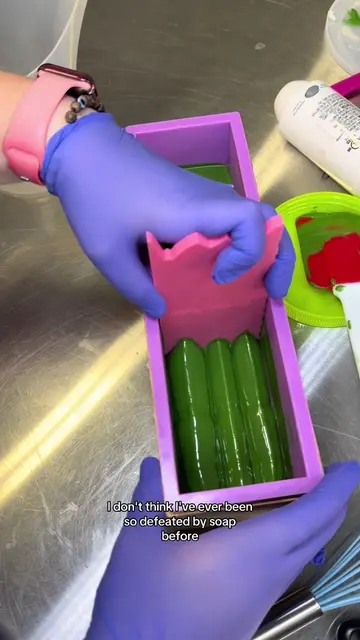
The creator explains the chemical process behind a 'soap volcano' that occurs during the soap-making process when using the heat transfer method. They demonstrate the reaction in their factory and provide advice on how to handle the overflow.
SOAP VOLCANO!!! So, what you are seeing here is a soap volcano! Most times, when we want to speed up the soap-making process, we use what we call the heat transfer method. And sometimes, this can result in a volcano reaction. What is happening here? It is a chemical reaction involving the lye solution and the oils, which generates heat. When there is too much heat in the soap batter, it can expand rapidly and create what we call a soap volcano. Now, when this happens, you need to know how to manage it. Let me tell you what happened here. I think this was about the eighth batch of soap we were making that day. We usually mix two drums at a time, and this was our last batch. Because we covered it for too long, the volcano had already started before we could react, and the soap began to pour out! But is it the end of the world? No! You can still salvage some of the soap, provided your production environment is clean and the soap has not been contaminated. Unfortunately, because this was white soap, we couldn't salvage everything. Any portion that had fallen onto a dirty surface or picked up colour or foreign materials had to be discarded because it would show on the finished soap. Now, here is something interesting about the volcano reaction. The heat generated can help cook the soap batter, which is why some soap makers use controlled heat during production to speed up the process. When properly managed, this can influence how quickly the soap reaches trace and how the soap develops. As the reaction progresses, you need to monitor the batter closely and stir when it is safe and appropriate to do so. Think of it as managing a cooking process. You need to understand what is happening at every stage. Depending on your formulation and processing method, heat can influence the hardness, texture, and appearance of your finished soap. So, a soap volcano can become a production mishap when you are unprepared for it. Understanding the process, however, helps you recognise what is happening and respond appropriately. I hope you have learnt something new from this experience! And if you want to perfect your soap-making craft, take your skills to the next level, and learn how to troubleshoot production challenges when things don't go as planned, we have a personalised soap-making class for you. Don't just learn how to make soap. Learn how to understand your formulations and handle production challenges with confidence. Send us a DM today to enquire about our personalised soap-making training!
SOAP VOLCANO!!!
Introduction to the soap volcano phenomenon
Explanation of the heat transfer method
Scientific breakdown of the chemical reaction
Practical advice for managing the overflow
Playing this video’s own audio, so you’ll hear the creator over the sound.
Outliers and viral hits: their videos on Overshot, all time.