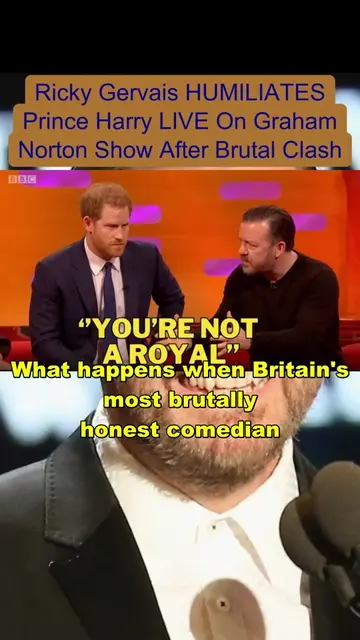
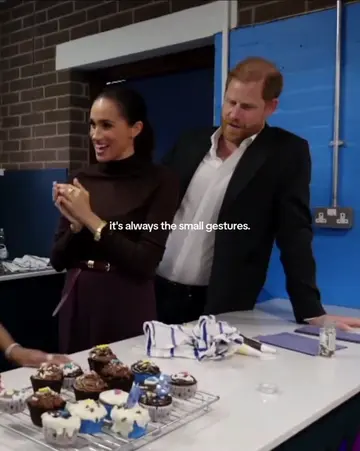
I hear Meghan Markle told people I'd personally invited her. Well, that was news to me. I think there's a difference between wanting to know someone and pretending you already do. And uh, showing up at a private party doesn't magically make you a guest. Meghan Markle appears to have mistaken the BFI London Film Festival VIP gala for an event where a royal title serves as an invitation. She turned up at Julia Roberts private reception expecting the doors to open simply because she was there. Get her out. She was never invited. Julia Roberts said it to an event manager in a private reception at Royal Festival Hall, with a glass still in her hand and a director mid sentence beside her. She did not raise her voice. She said it the way you settle a question rather than the way you win an argument. And she had turned back to the conversation before the manager finished answering. Thirty seconds later, Megan was walking the length of that room with the manager half a pace ahead of her and two security officers close enough behind that nobody watching could mistake what was happening. They did not touch her. They did not need to. Three men and one woman moving in a straight line through a crowded private party says everything on its own in a language every person in that industry reads fluently. The walk took 51 seconds. She did not look at a single face. Now hold on to one thing because it is the thing that makes this story worth your time. Julia Roberts greets strangers for a living. She has spent 35 years being approached at festivals by people she has never met, and a photograph with a famous woman costs her four seconds and nothing else. She has given away thousands of them. She would not give this one. And she decided that in about four seconds, standing there with the glass in her hand, because of something she worked out in those four seconds that nobody else in the room could see. The 70th BFI London Film Festival is real. Royal Festival Hall is real. So is the interview in 2017 in which Megan named Julia Roberts as the first actress who made her want to act. Here is what Julia saw. Two days after that evening, a junior employee in the festival's communications office opened a folder of materials that a production team had circulated ahead of the festival, hoping to reach financiers. Most of it was ordinary, a format description, a sample episode structure, a list of names. On page 9, under a heading about the London festival, there was a caption, a finished caption written in the past tense, describing a photograph of Megan and Julia Roberts standing together and the conversations about future creative work that the two women had shared that night. Beneath the caption was a rectangle, empty, sized for a landscape image. The photograph had never been taken. The sentence describing it had been written first. That rectangle is the whole story. It is why four seconds was worth an argument in front of 80 people. It is why a woman who hands out photographs like business cards refused to hand out one more. And Julia Roberts worked out that such a document had to exist before anybody found it, from a single request in the time it takes to put down a glass. But here is the part I cannot get past, and it is the reason I spent two weeks on this instead of two hours. Nobody lied, not at the door, not in the emails, not to Julia's publicist, not to the festival, not to the producer from Los Angeles who walked away believing the two