21.4Kviews29.6×
Posted Feb 27, 2026
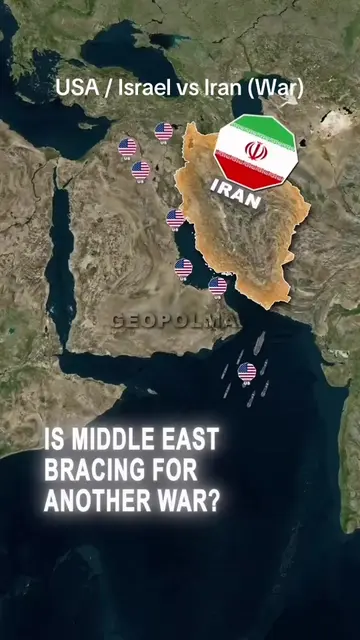
WAR IMMINENT: THE CLOCK TICKS TOWARD A REGIONAL INFERNO The Middle East appears to be edging toward a conflict that could metastasize into a full scale regional war with global consequences. The United States has authorized the departure of non essential personnel and urged Americans to leave Israel. Governments do not issue such directives lightly. When diplomats are withdrawn and civilians are told to go home, it is often because the calculus of risk has shifted from hypothetical to imminent. A substantial American military presence now surrounds Iran. Carrier strike groups, long range bombers and layered missile defence systems form a lattice of deterrence that can rapidly convert to offence. Tehran, for its part, has signalled that any strike on its nuclear or military infrastructure will be met with force. This is no longer theatre. It is a live wire. There are several plausible scenarios, none of them benign. In the first, Israel or the United States conducts precision strikes on Iranian nuclear facilities and command structures. Iran retaliates with ballistic missiles and drone swarms directed at Israeli cities and American bases across the Gulf. Hezbollah opens a northern front against Israel. Militias in Iraq and Syria target Western assets. What begins as a contained exchange quickly becomes a multi front war stretching from the Mediterranean to the Strait of Hormuz. Civilian infrastructure becomes collateral damage. Energy markets convulse. Global supply chains fracture. In a second scenario, Iran refrains from immediate large scale retaliation and instead moves asymmetrically. Shipping through the Strait of Hormuz is disrupted. Cyber operations target financial institutions and critical infrastructure. Oil prices spike beyond historical thresholds. Insurance markets freeze. The economic aftershocks reach North America and Europe within days. Inflation surges. Political instability follows economic shock. The war is fought as much through markets and data centres as through missiles. A third possibility is the most dangerous of all. A limited strike triggers miscalculation. Early warning systems misread intent. Escalation ladders are climbed too quickly to descend. Regional powers are compelled to choose sides. What was framed as a preventive operation becomes an entrenched confrontation with no clear exit. Once mobilizations are set in motion, domestic political pressures in each capital reduce the space for compromise. War acquires its own inertia. As an Canadian watching from a distance, it is tempting to imagine insulation by geography. That assumption would be naive. Canada is economically integrated with the United States and dependent on stable global trade. Energy shocks, refugee flows, financial contagion and alliance obligations would not respect oceans. The reverberations would be immediate and profound. When a superpower advises its citizens to leave a theatre of tension, it is a signal flare in the night. The coming days will determine whether this flare marks a warning that leaders heed or the first spark of a much wider blaze. The window for de escalation appears narrow. The world should be on high alert. GQ