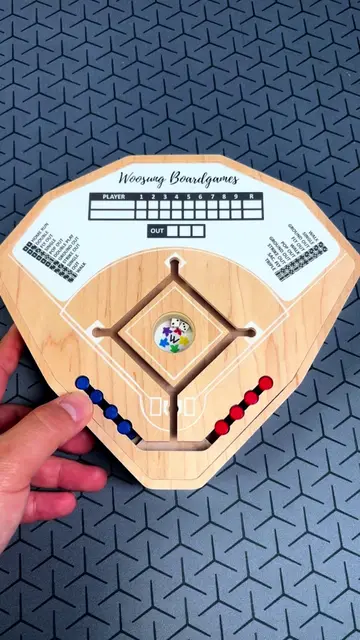
I used to work in baseball, and now one of the ways that I watch baseball is, hopefully I don't get banned for life for showing a part of a baseball game on, anyway, I will watch the pitch that happens and then I will plot on my little graph here where I think the pitch was in terms of its movement, horizontal movement, vertical movement, 20 inches, 20 inches, these are lefties, righties. Oh we missed that one, okay. But that first one was a breaking ball, I believe it was called a sweeper. To be honest I wasn't paying attention, I'm going to need to watch another pitch, but I'll show you how it works. So I watch so many pitches in my life and this is what like the answer key looks like. So this is a different pitcher, don't worry about that, we're going to look at that at the end. Okay, here's one, that was a crappy changeup, okay. So we're going to look, we know changeups generally are in this area, so the question is, did that have any, I actually didn't get much info from that, so I'm going to pick like the average, the average changeup for a lefty there. Based on his arm slot we can get some pretty good, oh that was a fast, four-seam fastball right there, 92 miles an hour, pop out, the hitter was under it, it would probably had some good. So you got to understand, the base rate, the base rate is whatever, or like the, you know, the, what you should assume is about in line with whatever the guy's, arm slot was. So this guy throws, Matt Strahm kind of throws kind of sidearm, so you should assume that his four-seams are around here. I don't know if you can see that, but he got, you know, it's going to be actually a little bit higher, a little closer up here, than the base rate because he, the guy popped it up. So if the guy popped it up that means he swung under it, which means the pitch went higher than expected, higher than expected. Okay, so we've seen a bad changeup in the dirt and one four-seam fastball, let's check this one out, probably a sweeper. Yep, oh slider. Slider's move less than sweepers, so sliders are usually here, sweepers are usually here. Was that above or below? Oh no, I'm just going to plot it there so we can watch the next pitch. Oh he tried it again, absolute terrible pitch, directly down the middle. Shout out to, this is where I used to work when I worked for the Twins, right up there, that's where I took my lunch break. That slider also didn't give us much information, I'm doing, I'm not going to do well on this because I'm doing multiple things at once here. What do we got? No way he goes slider again, he went crappy fastball up, kind of everything he throws is is low-key crappy. I don't, okay, these these are FF, four-seam fastball, these are slider. Hard to draw S's and L's when you are doing what I'm doing. Anyway, boom, crappy, oh changeup again, okay, he has no feel for the changeup, why are we still calling that pitch? I'm just, this is, I'm not happy with my performance here. One more pitch then we're going to look up the answer, okay, so if you're playing along, if you're playing along, that's what we're doing here. Four-seam bottom of the zone, gets a grounder on two strikes. Whatever, whatever, not that interesting. So, when you're done playing, you want to give an X coordinate and a Y coordinate for each of these pitches. That's your final. Okay, here's my final guesses, it doesn't really line up with where my dots were, but minus 15, 12, minus 17, 6, and 8, 4. Let's see how we did. Shout out my friend Jeremy Maschino for MLB Pitch Profiler. This is the best public tool that is most similar to what teams have internally. Every team has an internal website that shows all of this type of information about every player. This is the best publicly available one, please support his work if you'd like. I do every time I play this game. So here's Matt Strahm's page, we're going to come down here, oh my goodness, okay. So, that is the answer. How'd we do? Well, let's see. We're going to go to the middle of the four-seams, the answer was 18 and negative 14, or I guess negative 14, 18. Wow, so we were, what I like to do is, sorry for the camera work here, what I like to do is draw a circle where the right answer dots would have been. Okay, changeup was actually like insanely depthy, it was, it was below zero when it comes to induced vertical break. So the right answer was negative 14, negative 4, so we were, we were talking here. And then lastly the slider, so he throws a cutter too, we didn't see the cutter in this outing. Correct answer 7, 3. Hey, that's pretty darn close, 7, 3 would have been like, you know, one sec, boom boom, it would have been like there. So, that's your answer, and I only check when the pitcher is done for the night, or when I'm done playing the game. And then over time, you can start watching baseball and seeing the pitches and just see a pitch and automatically understand where that pitch would be on a movement plot, which helps you with your evaluation of is that a good pitcher or not. You can mix that in with your knowledge about the velocity of the pitch, and pretty soon you're watching baseball on a whole new level.