Loading video…
All breakouts
16.2Talking HeadContrarian hookOther
Hook
The era of the United States caring about human rights in other countries is officially over.
@bloombergopinion
334.1K followers · usually 8.1K views a post
Views
55.9K
Likes
5.1K
Comments
234
Shares
224
Why it worked
The video provides expert, high-level commentary on a significant current event, using a clear, authoritative, and opinionated tone that resonates with viewers interested in politics and law.
Summary
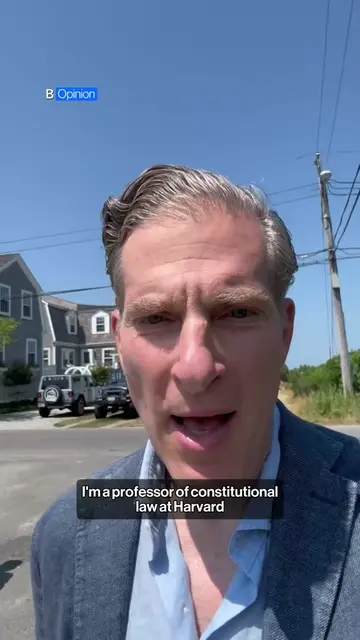
Noah Feldman, a legal columnist and Harvard Law Professor, discusses a recent Supreme Court ruling that prevents non-US citizens from suing in US courts for international human rights violations. He argues that this decision signals a shift in the US approach to human rights, reflecting a decline in the court's willingness to address fundamental issues of the rule of law.
Structure
- 1Introduction to the Supreme Court ruling
- 2Explanation of the Alien Tort Statute
- 3Context of the Cisco Systems case
- 4Analysis of the shift in conservative judicial philosophy
- 5Conclusion on the implications for the rule of law
On-screen text
B Opinion
Noah Feldman
Legal columnist
and Harvard Law Professor
The era of the United States caring about human rights in
other countries is officially over
and the Supreme Court made that clear today.
In a 6-3 decision along the usual ideological lines
the court closed the door to lawsuits
under the Alien Tort Statute
which is an old law
that enables non-US citizens to sue in US courts
for violations of human rights
that take place outside of the United States.
That decision reversed a 20-year-old precedent
an opinion written by Justice David Souter
whom I clerked for.
Under precedent, it was hard to bring such a human rights lawsuit
but most important, it wasn't impossible.
That is the United States recognized that our court should
under some circumstances be a forum for considering
whether human rights have been egregiously violated.
Under the court's new ruling
there are literally zero circumstances
where you can get into US court
to allege a human rights violation
taking place in another country.
The case involved an allegation that Cisco Systems
had built for the Chinese Communist Party
the computer system that surveilled
investigated
and ultimately lead to the arrest and torture
of members of the Falun Gong religious movement.
Lawsuits like that
have always had the objective of naming and shaming
human rights violators and potentially
deterring corporations
from actually cooperating with torturing countries.
Justice Scalia long had the view
that the United States courts should not be a forum
for considering human rights claims.
And today's opinion
written by Justice Amy Coney Barrett
who clerked for Justice Scalia
decided things in the way that Scalia would have wanted.
The technical details don't matter too much
but the key point is that the court said that
anytime the courts might get involved
in determining a human rights claim of this kind
it's going to necessarily implicate our national
foreign policy interests.
Foreign policy is the job of Congress and the president
said the Supreme Court.
So the courts shouldn't get involved with it.
We're living in an era
where the president has no qualms
about violating international law
invading countries
assassinating leaders
just to name a few.
What today's decision signals is that the courts are
basically OK with the same approach to human rights
that the Trump administration is involved in
namely not our problem
not our business
not something we care about.
Things weren't always this way.
Whether you like neo-conservatives
or hate neo-conservatives
they agreed with liberal internationalists
that human rights actually matter
and part of the job of the United States
is to stand up in the world
and protect those human rights.
Cases in court under this statute
were one way of vindicating human rights
internationally here in the United States
and they're over now.
Conservatives like Justice Scalia
long believed
that courts should stay out of all kinds of matters
and particularly
matters involving international affairs.
So the decision is consistent with that.
But what's changed is that the conservative movement
as a whole now
just isn't even interested in the fig leaf
of the idea
that human rights should be a relevant consideration.
This decision won't make a lot of headlines
but the truth is that it should.
It's a sign of the times
and it's a sign of the decline
in the Supreme Court's willingness
to take on matters that really matter
fundamentally to the rule of law
domestically and in the world.
Original caption
The #SupremeCourt ruled that non-US citizens can no longer sue in #US courts over #international human-rights violations. The American government’s abandonment of the cause is now complete, Harvard Law’s @Noah Feldman says. #humanrights
More from @bloombergopinion
More breakout videos from this creator.