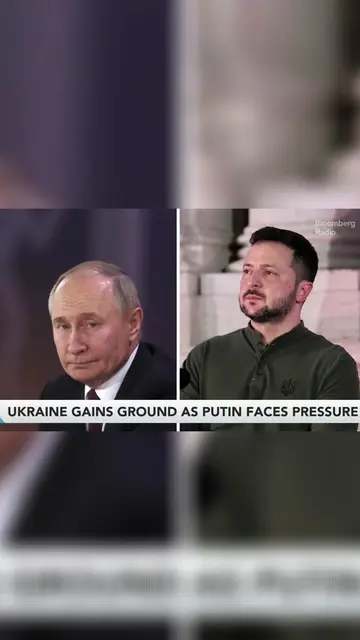
Why is Vladimir Putin suddenly under pressure?
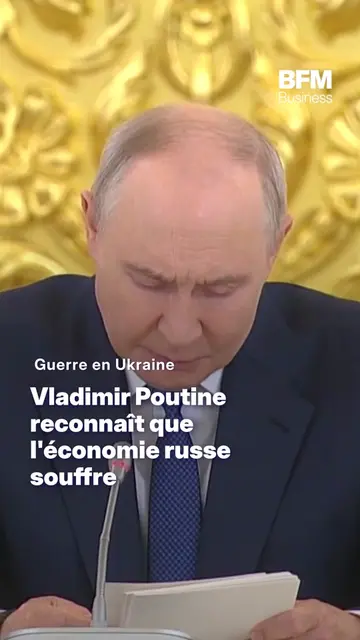
The economy is showing strain. Frustration and fatigue are building across all parts of Russian society. The elites are starting to question whether Vladimir Putin has any plan. The background to it is the absence of any gains on the battlefield. Russia is hardly moving. While it's throwing more bodies at this war, it's not gaining anything. What's even more important, is that Ukraine has effectively opened the second front in this war. It's now able to strike deep inside Russia— hitting oil refineries, hitting infrastructure, hitting industrial assets. The danger for Putin is that he will seem like a failed tsar, that he has achieved nothing, that he has created in Russia a sense of emergency, that he has spoiled the lives of millions for no gain and with no vision of Russia's future. One clear manifestation of this frustration came not from a politician, not an activist or a journalist, but from a lifestyle blogger, Victoria Bonya, who lives in the south of France and normally promotes her line of cosmetics, appealed to Putin. People are really struggling, businesses are dying. She addressed Putin with all the things that worry ordinary Russians: the flooding in Dagestan, the oil spills and Anapa, and particularly the clampdown on the internet, which affects absolutely everybody. People get tired of being afraid, them that people get tired of being afraid, of being squeezed into a spring and one day that spring will just shoot back. But more significant than the post itself is the reaction to it. It was watched 30m times. It attracted 85,000 comments. Most of them are messages of support, asking for Putin to listen. This frustration and the sense of a dead end is starting to burst out in different forms, in different circles. Vladimir Putin is losing his grip on Russia. His every move to preserve power accelerates decay, writes a former senior official in the Russian government May 6th 2026. IT ARRIVED NOT as an event but as a sensation, felt everywhere at once: Vladimir Putin has led Russia into a dead-end and nobody has a map for what comes next. The first manifestation is a shift in the language used by senior officials, regional governors and businessmen: they have stopped using the first-person plural when talking about the actions of authorities in the country. As recently as last spring, everything was "we" and "ours". Mr Putin's war on Ukraine may be reckless and failing, but it was shared. "We" were inside it, and it would be better for all of "us" if it ended sooner. Now they describe what is happening as "his" story, not "ours". Not our project, not our agenda, not our war. Decisions are described as "strange". Even stranger is the fact that he decides anything at all. It is not only about approval ratings. The future will unfold independently of him—and possibly already without him. This shift in language does not signal a rebellion. The authoritarian system can survive for a long time on fear, inertia and repression. It still has a monopoly on shaping the future. In the past, the regime, for all its lies, had some project it could tout: "restoring statehood", reasserting itself as an "energy superpower". There was even "modernisation" before the U-turn to ultra-conservatism and war. The irony is that Mr Putin started the war to preserve power and the system he has created. Now, for the first time since the conflict began, Russians are starting to imagine a future without him. This is down to a confluence of four factors. First is the growing cost of fighting. The war in Ukraine was meant to be a special military operation conducted by selected groups who received financial incentives for their trouble, while the rest of society carried on as normal. This model crumbled as the war grew in length and scale. It has led to higher inflation and taxes, neglected infrastructure, increased censorship, endless prohibitions. It is not a national war, but it is paid for nationally—and society is not being offered any purpose in return. Second is a growing demand for rules among elites who have been forced back into Russia, along with their capital. Previously their property rights were outsourced to the West. They used London courts, offshore structures and international arbitration to resolve conflicts or seek protection. Now conflicts must be resolved domestically, without functioning institutions. Demand for rules grows more urgent as redistribution of assets gathers pace. In the past three years assets worth around $60bn roubles ($60bn) have been seized from private businessmen and either nationalised or handed to loyalists and cronies, the largest redistribution of property since the mass privatisation of the 1990s. It is not that the elites have suddenly discovered a taste for the rule of law or democracy. But even those loyal The Kremlin still has a monopoly on violence. It still has an enormous repressive machine. The fear is there. But the consensus which is building up, there is the realisation that Vladimir Putin has lost the monopoly on Russia's future.