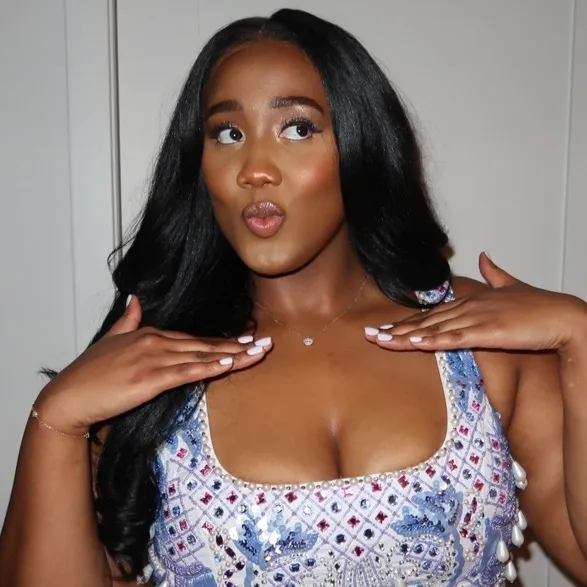
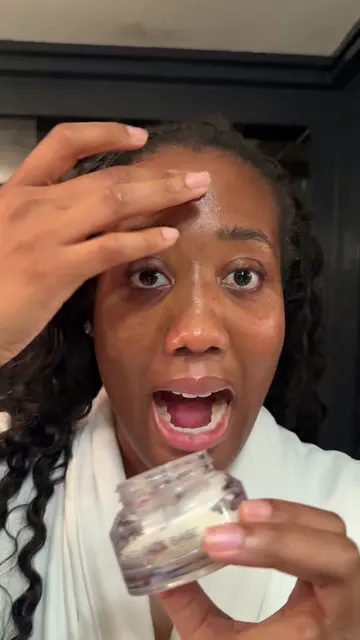
The video combines a high-authority 'get ready with me' format with actionable, high-value financial advice, making the product recommendation feel like a helpful tip rather than a sales pitch.
Summary
The creator explains the benefits of high-yield savings accounts over traditional bank accounts while applying makeup. She specifically recommends Wealthfront as a high-yield option to help viewers maximize their savings interest.
Structure
1Hook about saving $400k by 28
2Explaining why traditional bank accounts are suboptimal
3Introducing high-yield savings accounts as a better alternative
Original caption
Personal Finance 101: what type of account do you use to save? 🚀🤑 #financialfreedom #finance101 #PersonalFinance #money #personalfinanceforwomen
More from @pawla_ama
More breakout videos from this creator.
4
Specific mention and recommendation of Wealthfront
5Differentiating between checking, high-yield savings, and CDs
6Call to action to check current interest rates
Product placement
The creator explicitly mentions using Wealthfront for her high-yield savings account and explains why she prefers it.
Call to action
Find out what the current interest rate on your savings account is, and if it's under 1%, you 100% deserve better.
On-screen text
$400,000 by 28. You can do it too
$40 USD ☹️☹️
Transcript
I'm 28 years old, I have $400,000 saved up, and I want women to talk about money more. Today you're going to get ready with me while we talk about the different types of savings accounts. You probably have a traditional savings account at a big bank, whether that's Chase, Bank of America, or Wells Fargo. But what you probably don't know is that your bank is taking your deposit and investing that money into the stock market. The bank puts all of our money into the stock market, gets double-digit returns, if not more, and that's how they make their money. In exchange for getting rich by playing around with our savings, the bank typically offers an interest rate to give you a return on the money that they've invested. The interest rate from traditional banks is generally less than 1%. When I had a traditional savings account, mine had a 0.4% interest rate, meaning that for every $10,000 I had in that bank account, I would get $40 a year back. All of that is to say, if you do have a traditional savings account, your bank is making a bag off of you. A much better option and what I use is a high-yield savings account. High-yield savings accounts are generally only offered by online-only banks. So something like Wealthfront, or Marcus by Goldman Sachs, SoFi, Ally, any of those type of banks are the ones where you'll be able to get a high-yield savings account. Because these banks don't have any physical locations, they can operate at a lower cost and ultimately pass those savings on to you. I personally use Wealthfront, which has a 3.3% interest rate right now, and what that means is my same $10,000 is earning $330 a year rather than $40. Your money that's in a high-yield savings account is still FDIC insured up to $250,000, so you don't need to worry about losing money even if you're using these online accounts. There are two other types of savings accounts worth knowing about. The first is a money market account, and a money market offers the same privileges as a high-yield savings account along with debit card and sometimes check writing privileges. But overall, I think that a high-yield savings account is just easier and simpler to make and own. The next option is a CD or certificate of deposit. You give your money to a bank for a set amount of time and they give you a guaranteed interest rate, usually a 4 to 6%. However, you should only be using a CD when you are 100 million thousand percent sure you will not need that money, because if you try and withdraw money from a CD early, you will incur a penalty. I would not encourage anyone to open a CD until they have a fully funded 3 to 6 month emergency fund and they are fully sure that they will not need any of those funds anytime soon. Here's exactly what I do. I have two accounts. The first is a checking account, just a standard checking account and I use this for all of my daily expenses, bills, groceries, anything I'm doing for fun is coming out of this checking account. If you have a debit card, this is likely tied to a checking account and I never keep more than a month's worth of expenses in here. My other account is a high-yield savings account, which I have through Wealthfront. In this high-yield savings account is where I keep 6 months worth of emergency expenses. When you withdraw from a high-yield savings account, it does not trigger a taxable event like an investment account would. With all of that being said, a high-yield savings account is not a way to build long-term wealth, it's just a way to make sure that your money is stored and protected and working as hard as it possibly can be in the meantime. We're going to talk about investments and brokerage accounts soon because that's how you actually build wealth, but in the meantime, I have some homework for you. Find out what the current interest rate on your savings account is, and if it's under 1%, you 100% deserve better. Look into some of the savings accounts I mentioned earlier and decide if any of them are right for you. Switching over shouldn't take more than 20 minutes, but could make hundreds of dollars of difference this year alone. Your money should be making you money even while you sleep, and making sure that your money is properly stored and invested is the best way to do so. In the next episode, we're going to talk about developing a savings mindset so that you have something to even put in the bank account you just set up.